
Before auditing an avionics calibration laboratory, an auditor gathers the lab's quality manual, applicable regulatory requirements, and customer contract specifications to use as the benchmark for evaluating lab practices. In audit terminology, what do these documents represent?
Select an answer to reveal the explanation.
Short Explanation
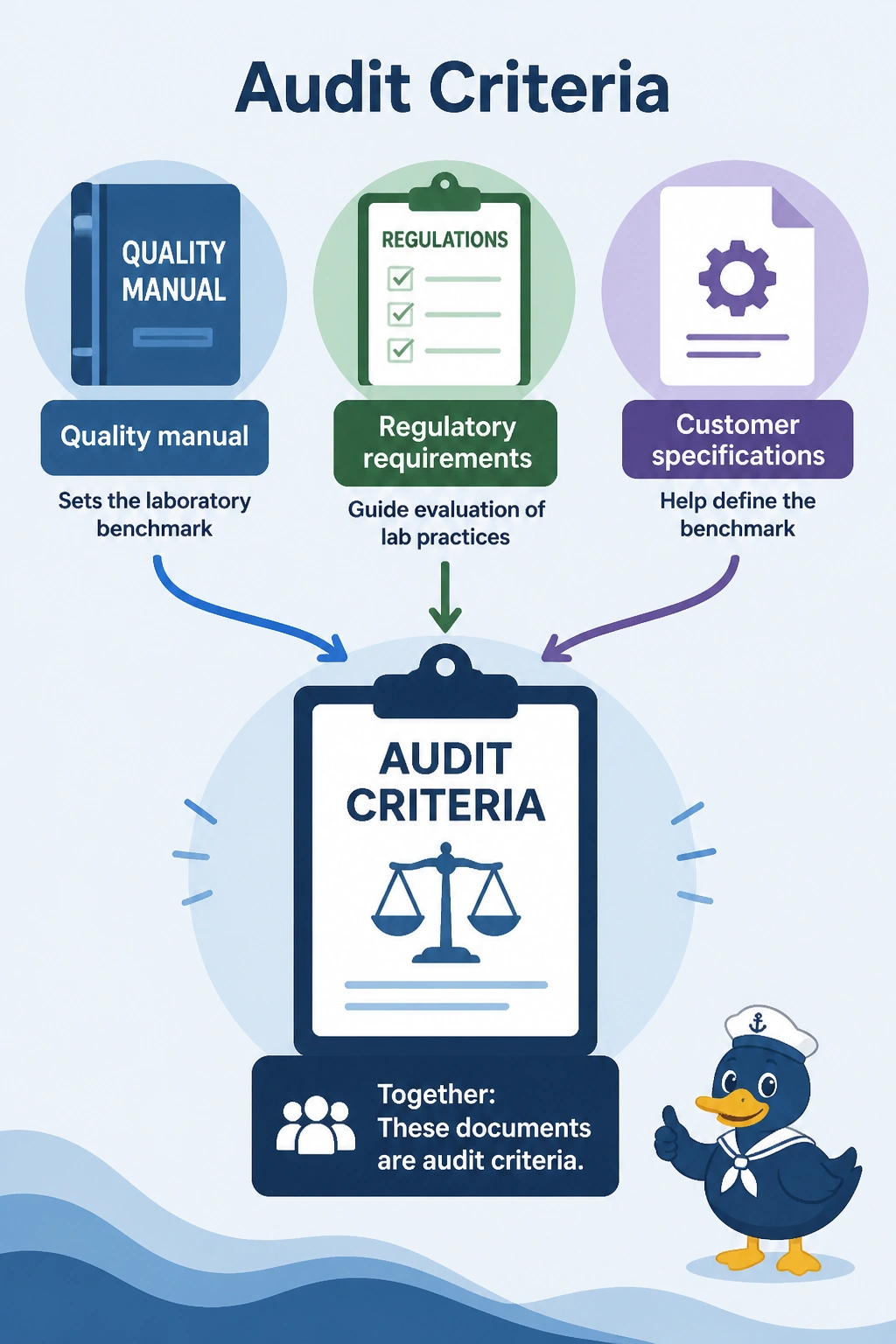
You use audit criteria as the rulebook for judging the laboratory’s practices. The requirements are your yardstick, not the records you collect, the conclusions you reach, or the areas covered by the audit.
Full Explanation
Understanding core audit terminology keeps planning, fieldwork, and reporting consistent. In quality auditing, the policies, procedures, standards, regulatory requirements, and contractual specifications against which actual performance is compared are called audit criteria. These documents establish what should be happening in the laboratory, so the quality manual, applicable regulatory requirements, and customer contract specifications serve as the benchmark. Audit evidence, by contrast, consists of verifiable records, statements of fact, and observations collected during the audit to show what is actually happening. Audit findings are the results of evaluating that evidence against the criteria, indicating conformity or nonconformity. Audit scope items define the physical locations, organizational units, processes, and time period covered; they describe the audit’s boundaries, not the requirements being tested. As a caveat, an auditor should not substitute personal preferences for criteria: every nonconformity must map to an agreed, documented requirement. Before the opening meeting, verify with the auditee that the latest approved revisions of all applicable criteria are listed in the audit plan.
Prefer to study offline? Printable PDF study book + test engine ($7.50, unofficial). These questions stay free here.