
A quality engineering lead who designed and approved a software company's automated deployment pipeline three months ago is assigned to lead the internal system audit of that same release process. What should the audit program manager do before the audit begins?
Select an answer to reveal the explanation.
Short Explanation
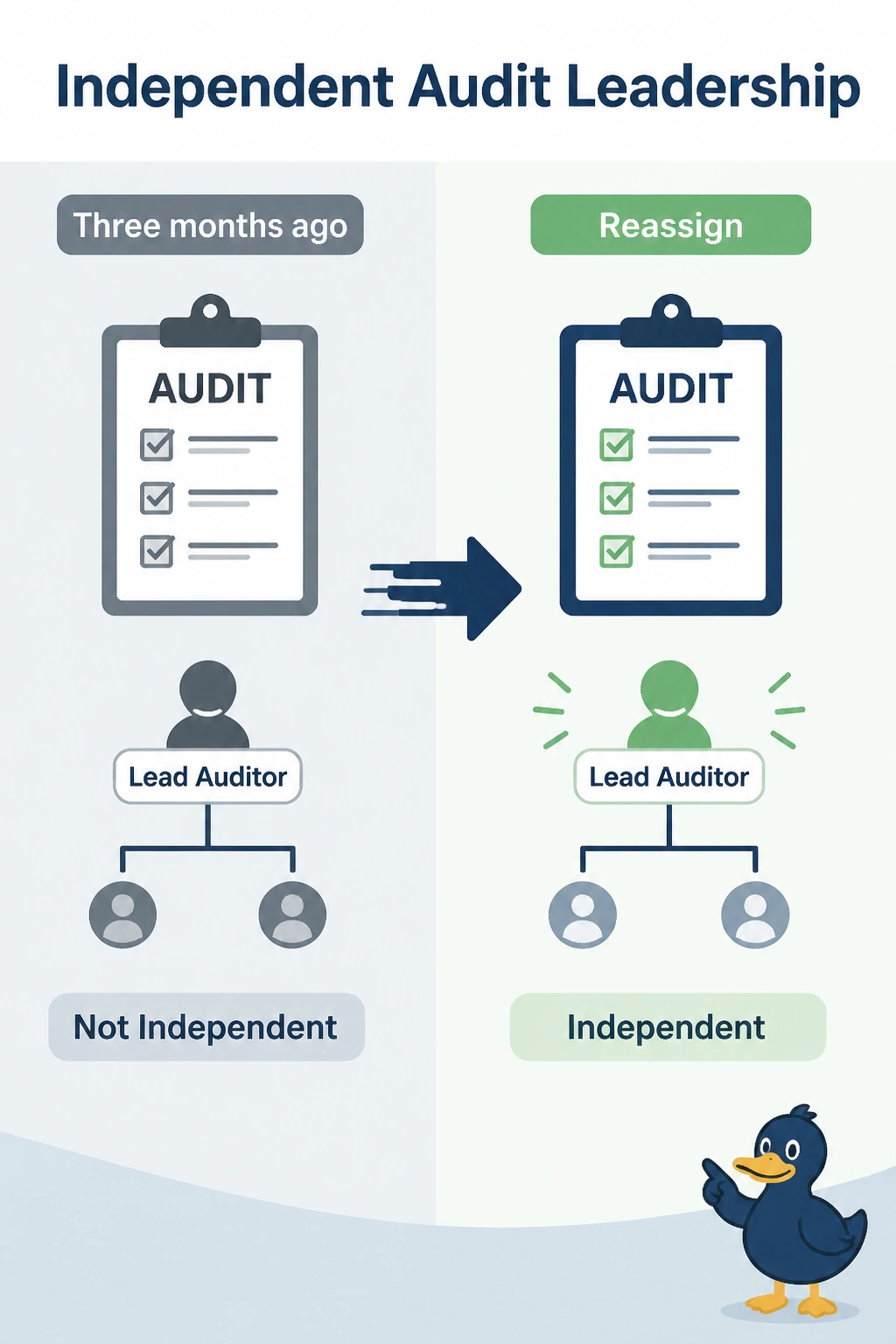
You know how easy it is to miss blind spots in work you helped shape. Since the lead recently designed and approved this process, you need an independent qualified auditor; a disclosure, observer, or documentation-only review won’t remove the self-review conflict.
Full Explanation
Auditing depends on objectivity and impartiality: an auditor must be free from bias and conflicts of interest when evaluating a process. The quality engineering lead designed and approved the deployment pipeline just three months ago, giving them direct ownership of the controls under review and making it difficult to assess their effectiveness objectively. Reassigning the lead auditor role to an independent qualified auditor with no recent operational responsibility for the release workflow protects the audit’s credibility. Requiring the lead to sign a conflict-of-interest disclosure and proceed documents the bias but does not remove it. Allowing the lead to conduct the audit with a technical observer still leaves the conflicted individual in charge of sampling, questioning, and conclusions. Limiting the lead’s review to documentation rather than live interviews also fails to eliminate self-review bias, since the lead approved the procedures being reviewed. As an exam caveat, a former process owner may still serve as a subject-matter advisor to explain system architecture, provided they do not evaluate evidence or determine findings. Before issuing the audit schedule, check each assigned auditor’s recent work history against the audit scope to verify independence.
Prefer to study offline? Printable PDF study book + test engine ($7.50, unofficial). These questions stay free here.