
After a sudden spike in warranty returns involving fractured suspension bolts, an automaker schedules an unannounced inspection focused specifically on its supplier's heat-treatment controls and lot traceability. Which audit type best describes this activity?
Select an answer to reveal the explanation.
Short Explanation
Not every audit waits politely on the annual calendar. When field failures suddenly spike, you are not running a routine checkup—you are investigating a specific, urgent trigger, so watch out for labels that describe scheduled or pre-contract reviews.
Full Explanation
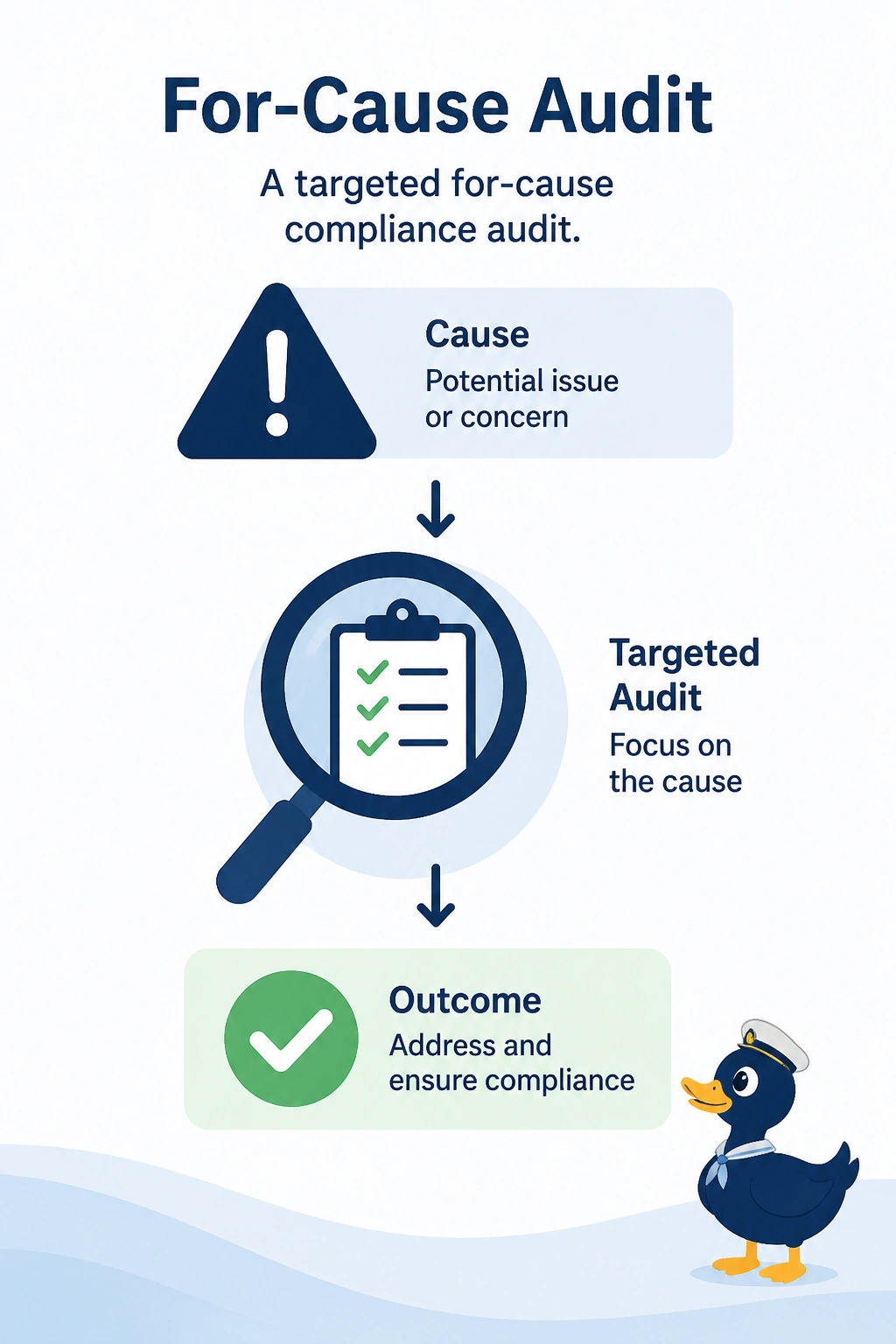
Audits are classified by their purpose, timing, and relationship between the auditing and audited organizations. When an unexpected event such as a surge in warranty returns, customer complaints, or regulatory alerts prompts an immediate, focused investigation, the activity is driven by a specific risk trigger rather than a routine schedule. This scenario describes A targeted for-cause compliance audit aimed at verifying heat-treatment controls and traceability at the supplier. It is not A routine surveillance system audit, because surveillance audits follow a planned periodic cycle to monitor ongoing conformity across the broader management system rather than reacting to an acute failure. It is also not A pre-award capability desk audit, which evaluates a prospective supplier's submitted documentation before a contract is awarded. Finally, it is not A first-party internal process audit, because the automaker is auditing an external supplier rather than its own internal operations. As a caveat, a for-cause audit can still uncover systemic weaknesses beyond the immediate failure, which may warrant expanding future surveillance scope. When planning an unannounced or urgent supplier visit, verify contract right-of-access terms and clearly define the focused scope in the audit notification.
Prefer to study offline? Printable PDF study book + test engine ($7.50, unofficial). These questions stay free here.