
During a break on day one of a scheduled process audit at a food-packaging plant, a line operator privately tells the auditor that night-shift workers routinely bypass metal-detector checks. The topic falls within the audit scope. What should the auditor do next?
Select an answer to reveal the explanation.
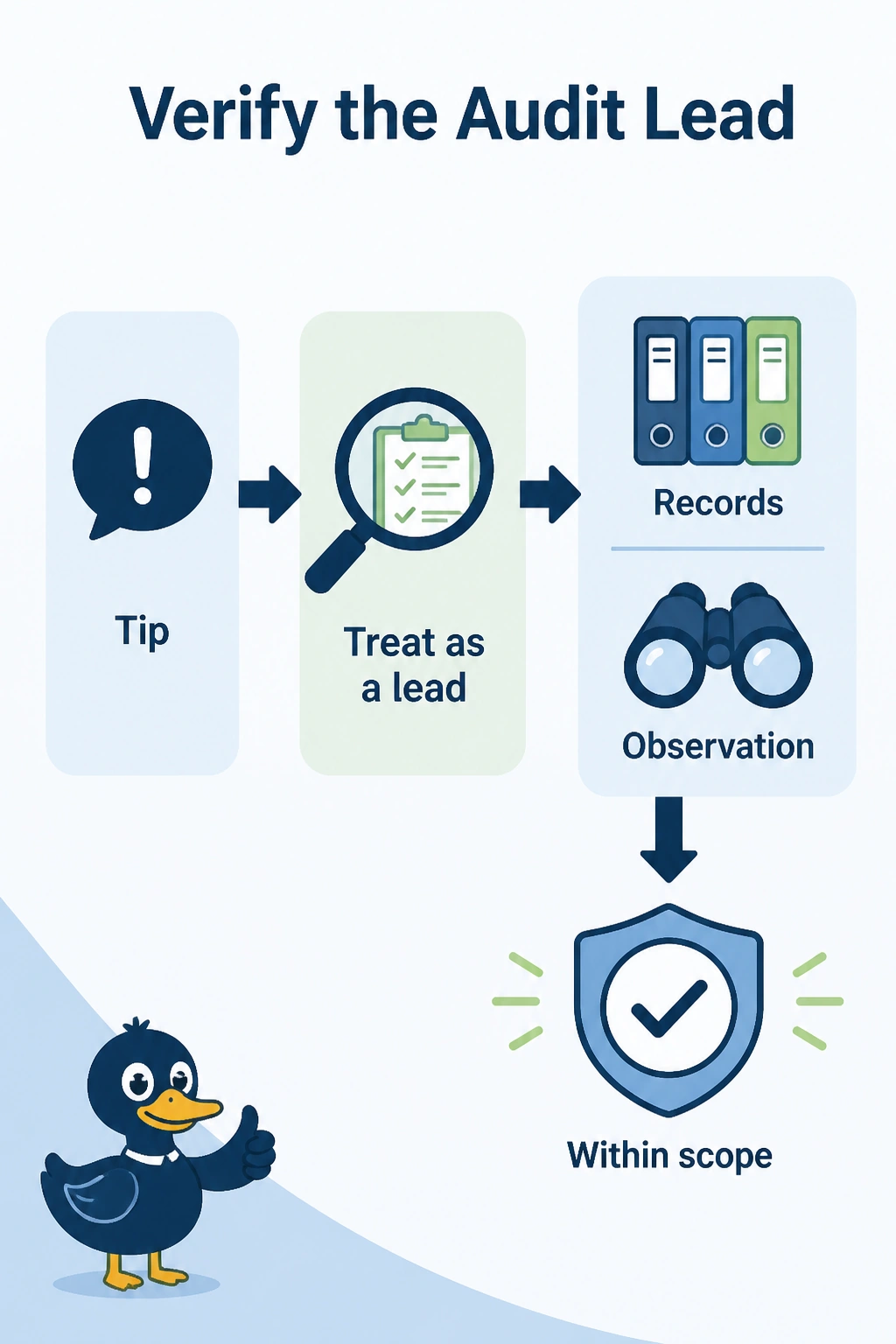
Short Explanation
A whispered tip in the breakroom is a trailhead, not the destination. You should follow a credible risk within your scope, but you can’t write a finding on hearsay alone; seek objective evidence before deciding what it shows. That way, you neither overreact without proof nor walk past a real safety signal because it wasn’t on your checklist.
Full Explanation
Audit findings must rest on verifiable objective evidence rather than uncorroborated hearsay, so treat the operator’s report as a lead and seek records or observation within scope. Checking night-shift metal-detector test logs, reject-bin records, or arranging direct observation can confirm a nonconformity with solid evidence or fairly rule out the rumor. Writing a major nonconformity immediately based on the candid verbal report fails because a single unverified statement cannot substantiate a finding. Ignoring the comment because informal breakroom remarks are not planned samples fails professional care: a potential product-safety gap has surfaced within scope and warrants follow-up. Asking the plant manager to discipline the night-shift supervisor before fieldwork ends crosses the boundary from independent fact-finding into operational management and could expose a confidential source. One caveat is that an immediate food-safety hazard confirmed through records or observation must be escalated promptly to site leadership. As a practical check, sample night-shift verification logs and compare their timestamps with production run sheets.
Prefer to study offline? Printable PDF study book + test engine ($7.50, unofficial). These questions stay free here.