
Two weeks before a scheduled quality system audit of a pharmaceutical packaging plant, the auditee's quality manager emails the lead auditor requesting the exact list of 25 batch numbers to be inspected so staff can pull the binders ahead of time. How should the lead auditor respond?
Select an answer to reveal the explanation.
Short Explanation
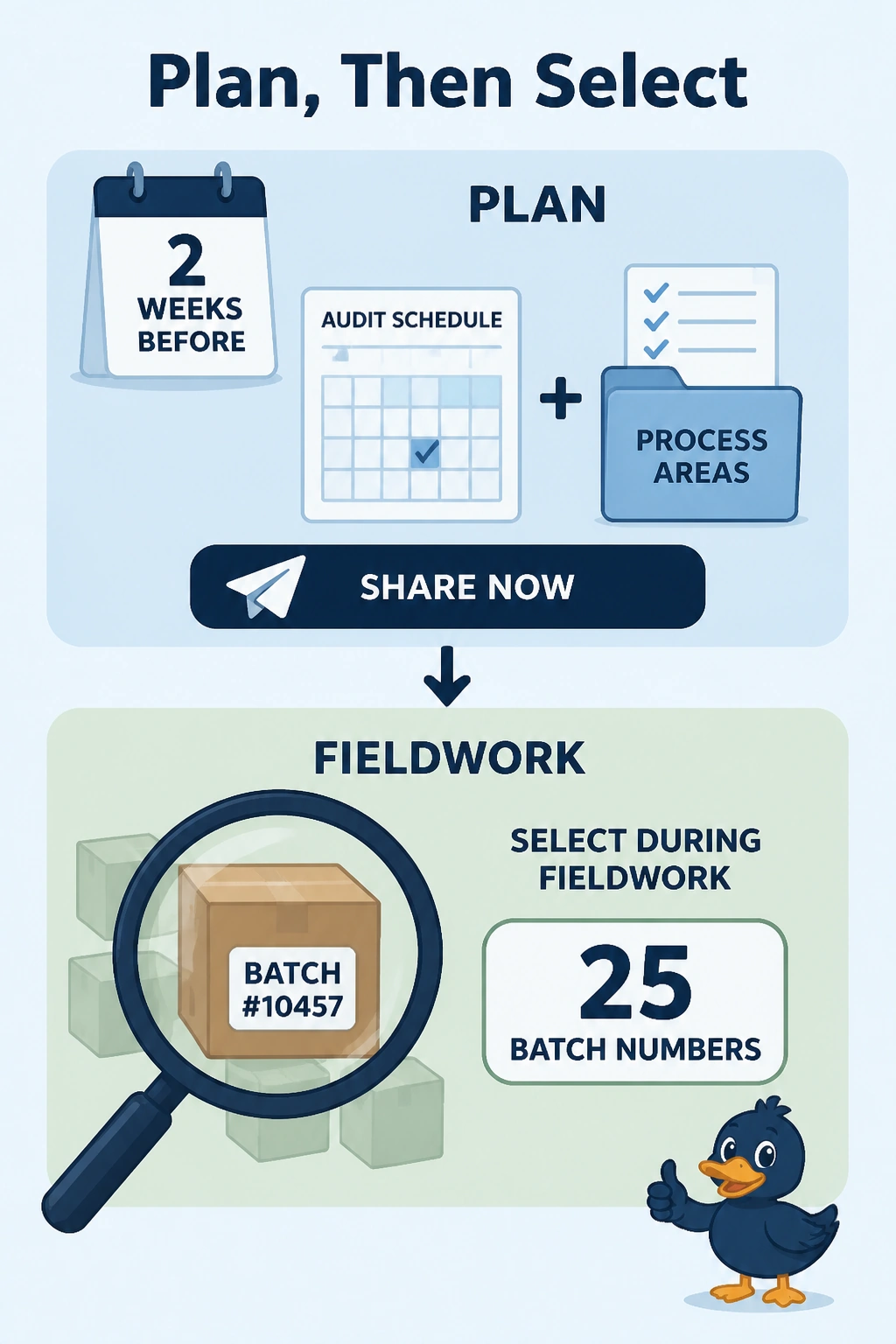
Sharing the exact batch list two weeks early is like telling a restaurant which dish the health inspector will test: that sample may get special treatment. You can share the schedule and process areas in advance, then choose specific records during fieldwork to protect unbiased sampling. That gives staff useful notice without pre-verifying named batches or letting the auditee choose the sample.
Full Explanation
Unbiased sampling gives you a realistic picture of routine process compliance. Sharing the audit schedule and process areas now while selecting specific batch numbers during fieldwork gives the auditee time to arrange escorts, conference rooms, and system access without compromising sample integrity. Choosing records on site helps prevent selective cleanup or cherry-picking. Sending the exact 25 batch numbers immediately so the auditee can pre-verify every signature invites pre-audit staging that can mask everyday documentation gaps. Refusing to share any audit dates or department names until the opening meeting disrupts logistics and wastes fieldwork time while you wait for unavailable personnel. Allowing the quality manager to choose 25 representative batch numbers surrenders sampling control to the auditee and introduces severe selection bias. One caveat: for massive archives stored off-site, you may request access to the master batch index in advance so you can draw your own random list shortly before arrival. As a practical check during fieldwork, verify that the pulled records match the batch identifiers you independently selected.
Prefer to study offline? Printable PDF study book + test engine ($7.50, unofficial). These questions stay free here.