
After an internal audit cites a contract sterilizer for inconsistent cycle-parameter reviews, the quality manager submits a corrective action plan proposing an automated software interlock to eliminate manual entry errors. However, the plan omits an owner, completion date, and verification method. How should the auditor respond?
Select an answer to reveal the explanation.
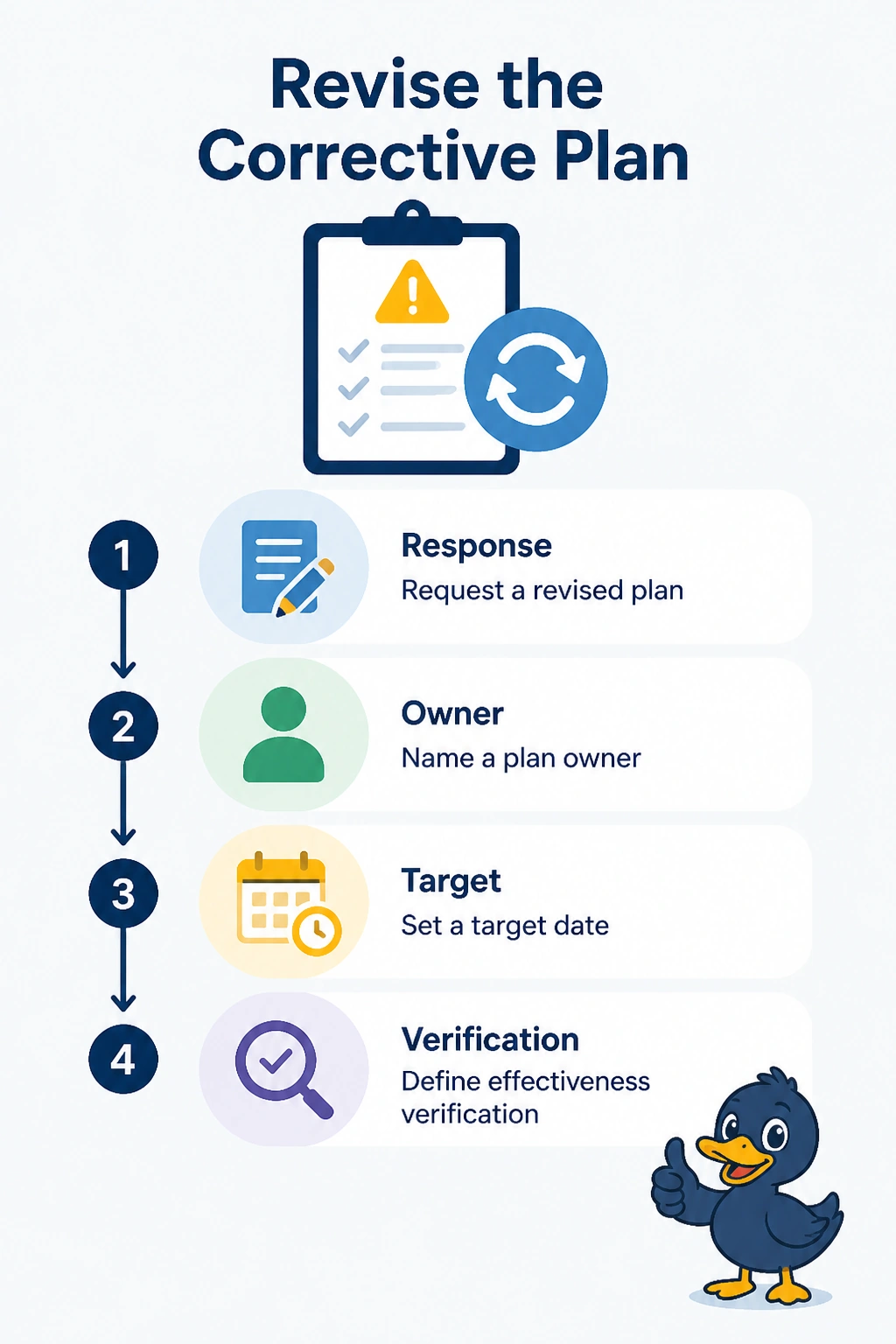
Short Explanation
A great engineering idea without a deadline or owner is just a wish list! The trap is accepting a strong technical fix on paper without knowing who will build it, when it goes live, or how you will prove it works. Send it back for those missing accountability details.
Full Explanation
A complete corrective action plan must define not only the systemic fix, but also clear accountability, timelines, and objective proof of success. The auditor should request a revised plan with an owner, target date, and effectiveness verification method so the organization can track execution and confirm the interlock actually prevents cycle-parameter errors. To close the finding immediately because the proposed automated interlock addresses the root cause confuses a planned future change with implemented, verified control. Choosing to write the missing implementation dates and verification steps yourself to keep the audit on schedule violates auditor independence by taking ownership of management's remediation process. Attempting to downgrade the nonconformity to an observation until engineering approves its capital budget improperly alters finding severity based on internal funding delays rather than objective risk. Caveat: while waiting for the software interlock to be deployed, the auditee should maintain interim containment controls so no unverified sterilization cycles are released. As an operational check, confirm the revised CAPA milestones align with your audit program's follow-up escalation schedule.
Prefer to study offline? Printable PDF study book + test engine ($7.50, unofficial). These questions stay free here.