
After an internal audit finds frequent missing torque marks on assembled brake calipers, the production manager submits a corrective action plan that adds a second full-time inspector at the end of the line to check every caliper visually. Why should the auditor challenge this corrective action plan?
Select an answer to reveal the explanation.
Short Explanation
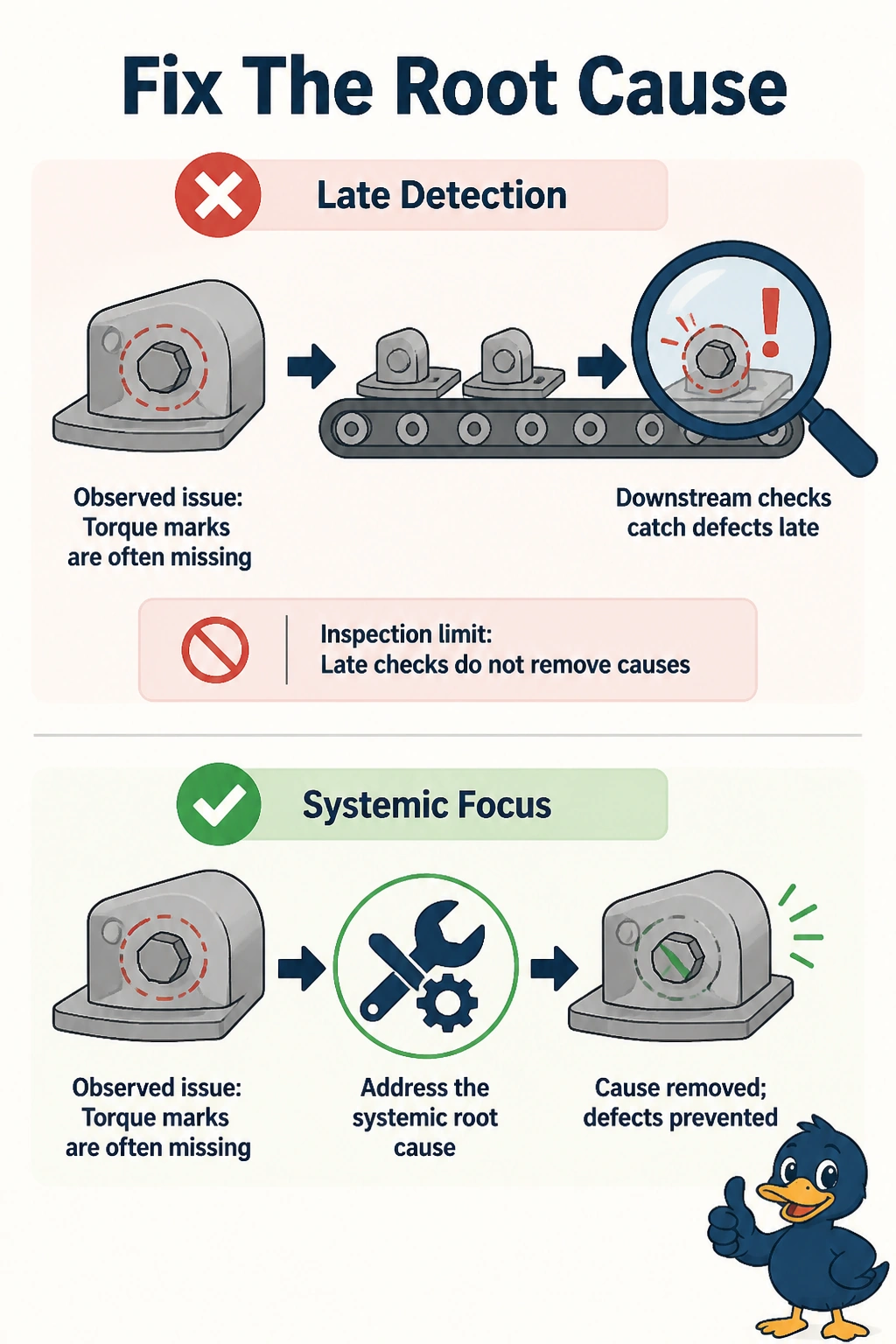
Adding another pair of eyes at the end of the line is like putting a bigger bucket under a leaky roof instead of fixing the shingles. The trap is mistaking extra detection for true prevention. When a corrective action plan only adds inspection, you must challenge it because the underlying process flaw will keep producing errors.
Full Explanation
Effective corrective action must identify and eliminate the root cause of a nonconformity so the problem does not recur. Challenging the plan because Adding downstream inspection catches defects late instead of removing the systemic root cause targets the core flaw: relying on human visual screening after assembly neither fixes why torque marks are missed nor prevents defective calipers from being built. The other reasons miss the real audit criterion. Claiming that Adding a second inspector increases appraisal labor without updating the quality manual's org chart focuses on minor administrative paperwork rather than process effectiveness. Claiming that Visual inspection is never an acceptable verification method for mechanical assembly operations overstates the issue, since visual checks can serve as containment or supplemental verification when paired with process fixes. Claiming that The production manager must wait until the next annual management review to authorize new inspection steps invents a governance barrier that does not exist for operational containment. One caveat is that adding temporary 100% inspection can be valid as immediate containment while engineering implements a permanent fix such as a torque-wrench interlock or automated mark sensor. As an operational check, ask the process owner for their root-cause analysis and verify that the permanent corrective action prevents missed torque steps at the workstation itself.
Prefer to study offline? Printable PDF study book + test engine ($7.50, unofficial). These questions stay free here.