
While reviewing draft working papers from a three-day audit of a medical-device sterilizer, the lead auditor sees a note reading 'Lot 408 failed bioburden review—major finding,' with no reference to the record ID, specification, or interview source. Why must this working paper be revised before closing?
Select an answer to reveal the explanation.
Short Explanation
Vague audit notes are like a treasure map without landmarks—nobody else can follow them later. If your working papers lack record IDs and criteria references, the finding will collapse under challenge. Tie every conclusion to exact, traceable evidence.
Full Explanation
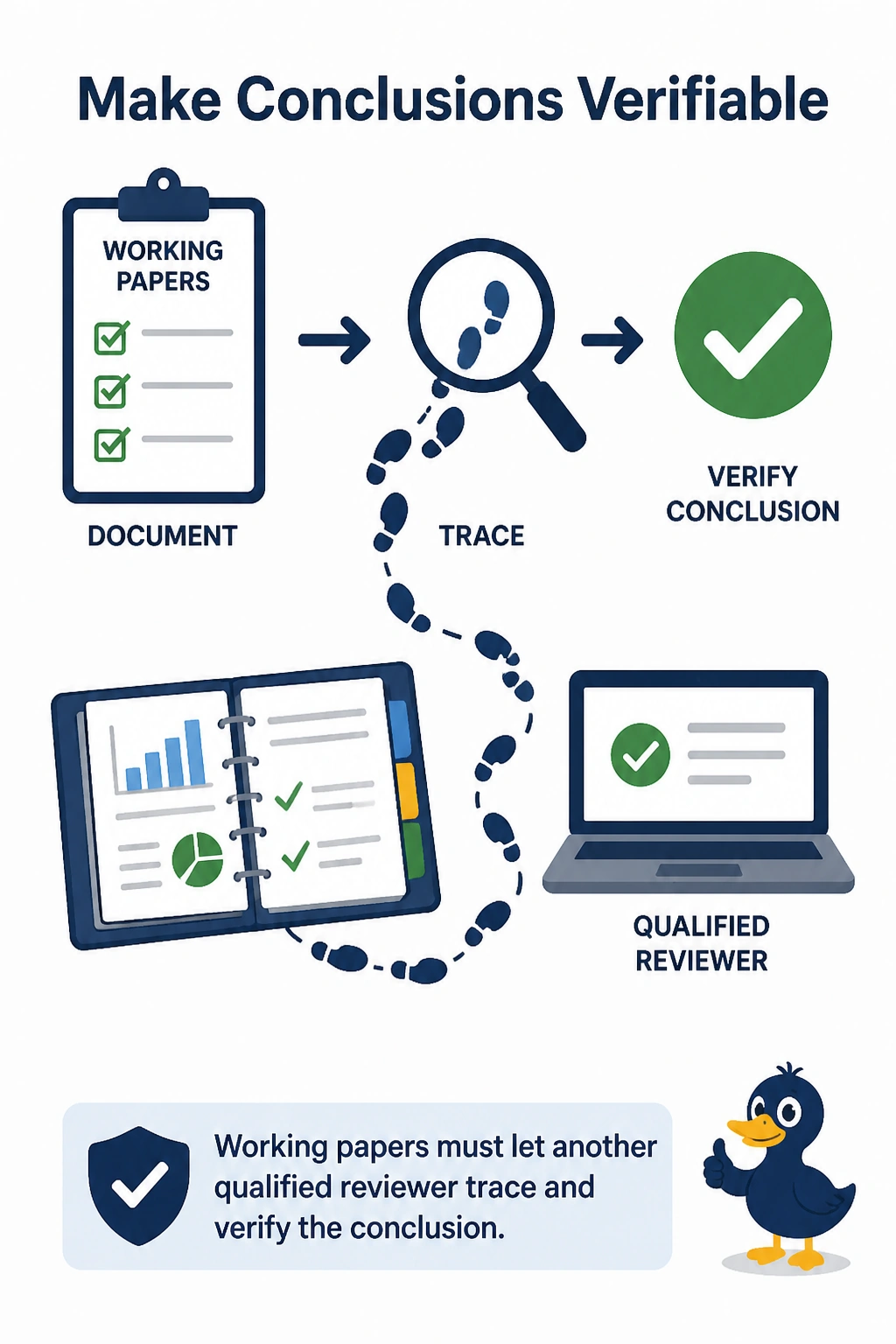
Audit working papers form the permanent evidentiary bridge between raw field observations and the formal audit report. They must be revised Because working papers must let another qualified reviewer trace and verify the conclusion using the exact record identifiers, applicable criteria, and corroborating sources. The claim Because audit working papers must include full names and badge numbers of every operator on shift is incorrect because audits evaluate processes rather than individuals, and job roles or document IDs suffice without naming bystanders. The idea Because working papers are always distributed directly to external customers is false because working papers are internal audit records governed by confidentiality rules, whereas customers or clients typically receive only the formal report. The statement Because a major finding is invalid unless at least ten consecutive lots failed testing invents an arbitrary threshold; a single severe failure affecting product sterility can justify a major nonconformity. Note that incomplete working papers also weaken defense during post-audit disputes. Before leaving an audited area, verify that every note cites a specific document number, lot or sample ID, and criterion.
Prefer to study offline? Printable PDF study book + test engine ($7.50, unofficial). These questions stay free here.