
An internal audit previously cited Packaging Line 1 for missing heat-seal temperature checks. During CAPA verification, the auditor sees Line 1 is fixed, but finds the same gap on Lines 2 and 3, which use the same equipment and SOP. What should the auditor do?
Select an answer to reveal the explanation.
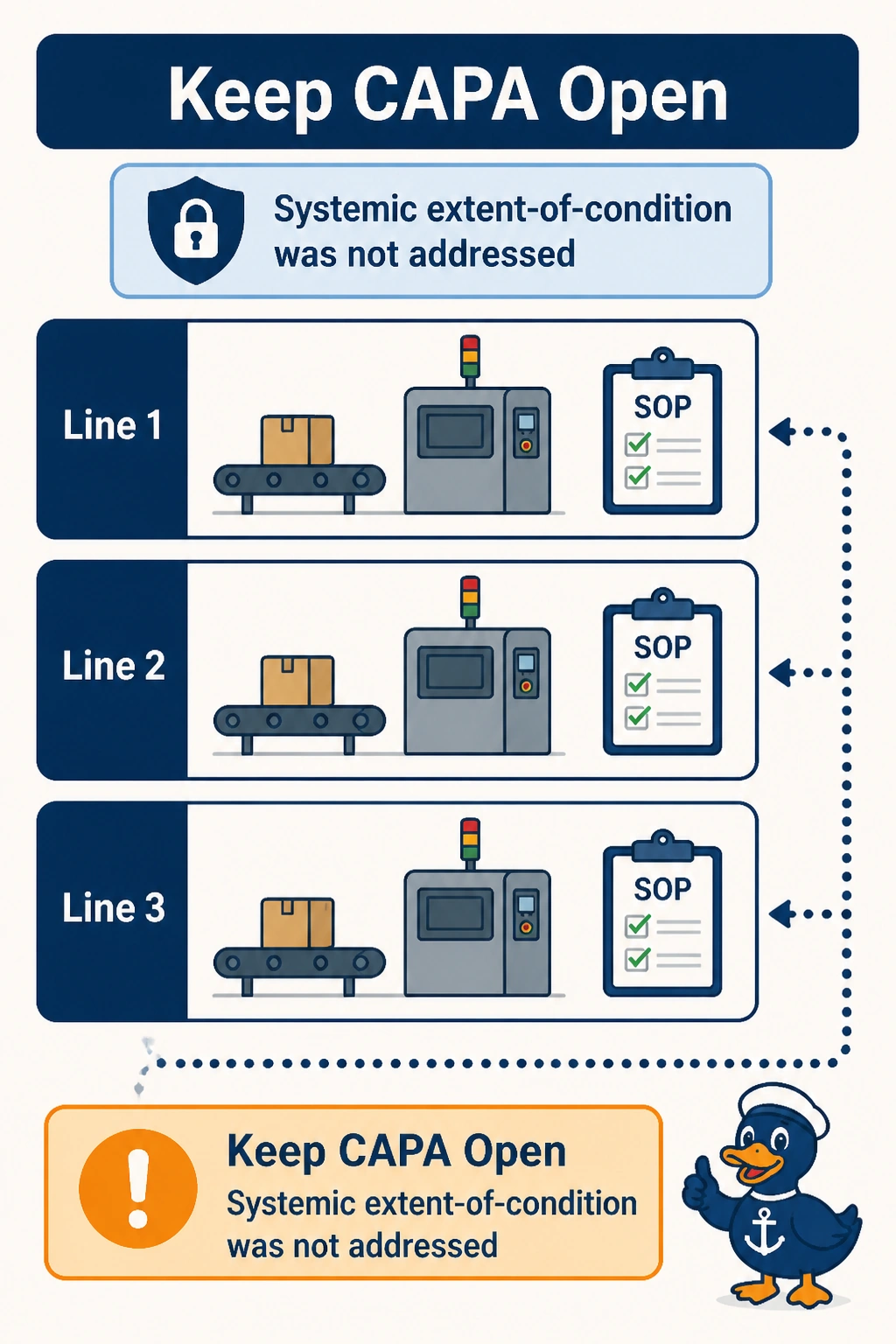
Short Explanation
Fixing one leaky pipe while two identical pipes next to it are still dripping does not solve the plumbing problem. The trap is assuming CAPA verification stops at the single line named in the original finding. You must verify that the corrective action addressed the systemic extent-of-condition across all similar processes before closing it.
Full Explanation
An auditor must Keep the CAPA open because systemic extent-of-condition was not addressed when the same root cause remains active on parallel lines using identical equipment and procedures. Effective corrective action requires eliminating the cause of a nonconformity across the affected system so it does not recur elsewhere. Choosing to Close the corrective action because Line 1 passed its verification check ignores clear evidence that the underlying procedural or control failure persists on Lines 2 and 3. Choosing to Downgrade the finding to an observation since the original defect was fixed is improper because an active, verified gap against the SOP remains a nonconformity regardless of partial remediation. Choosing to Approve the CAPA and schedule a routine audit for next year leaves unaddressed product-quality risk operating in the meantime. As a caveat, extent-of-condition applies to genuinely similar processes or sites sharing the same root cause, not unrelated workflows. As an operational check, inspect the CAPA root-cause analysis and compare the scope of implemented fixes against all lines, shifts, and sites governed by the same controlled procedure.
Prefer to study offline? Printable PDF study book + test engine ($7.50, unofficial). These questions stay free here.