
While auditing a medical-device soldering station, an auditor reviews signed classroom attendance sheets for a revised work instruction, yet observes two operators using the superseded flux method. What should the auditor evaluate next?
Select an answer to reveal the explanation.
Short Explanation
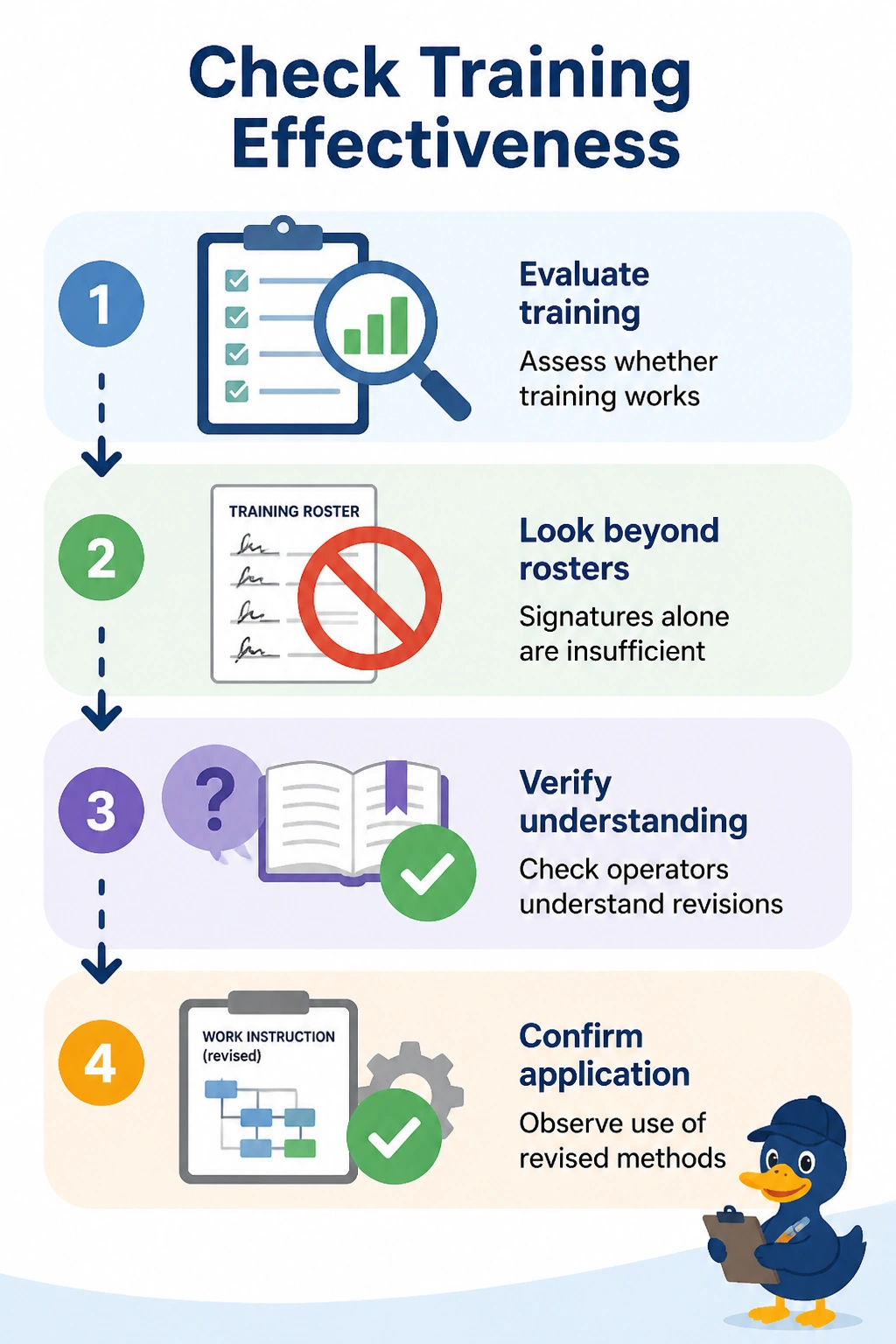
A signed attendance sheet proves someone sat in a chair, not that they learned how to solder the new way. The trap is equating training paperwork with actual job competence. When floor practice contradicts the roster, you need to check how the organization verifies training effectiveness on the job.
Full Explanation
The auditor should Verify whether training effectiveness is evaluated beyond signed rosters, because competence requires demonstrating that personnel can apply revised procedures accurately in practice, not merely attending a briefing. Choosing to Close the training review because every operator signed the sheet mistakes administrative attendance records for proof of capability while defective work continues on the floor. Choosing to Accept the attendance sheets if the trainer can describe the revised flux method from memory confuses the trainer's knowledge with operator competence while observed practice still uses the superseded method. Choosing to Require the company to double classroom lecture hours for all line staff prescribes a specific training method—which compromises auditor objectivity—and may still fail if hands-on demonstration and post-training checks are missing. As a caveat, the gap could also stem from an unposted revision at the workstation rather than training alone, so check document availability too. As an operational check, inspect competence-assessment records, observe additional operators performing the flux step, and confirm whether supervisors verify new methods on the line after training.
Prefer to study offline? Printable PDF study book + test engine ($7.50, unofficial). These questions stay free here.