
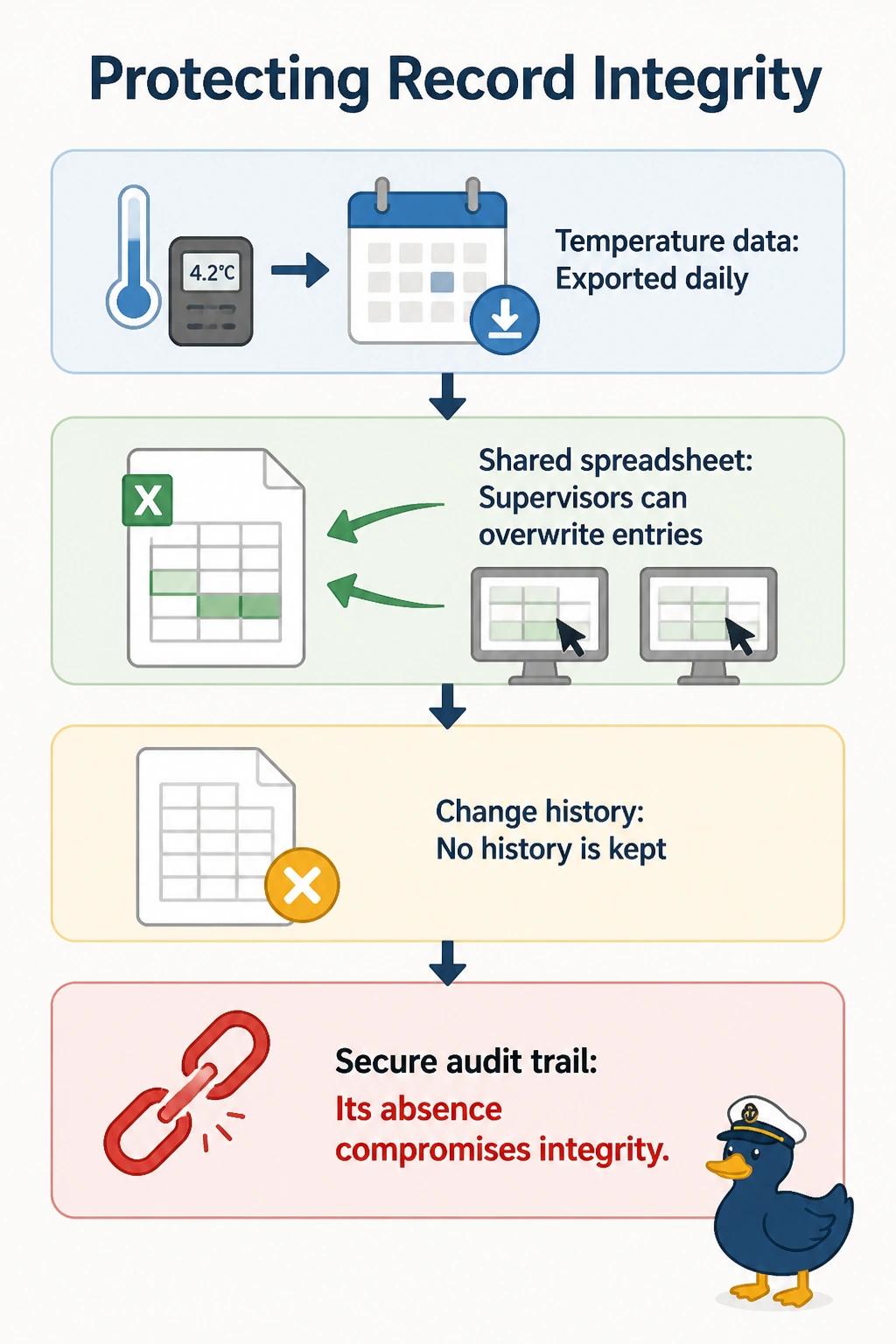
During an audit of a food-safety testing laboratory, an analyst demonstrates that temperature-monitoring data are exported daily into a shared spreadsheet where supervisors can overwrite entries without leaving a change history. What is the primary audit concern with this practice?
Select an answer to reveal the explanation.
Short Explanation
If anyone can type over a number in a shared spreadsheet without leaving a footprint, you can no longer trust whether the record reflects reality or a late cleanup. The trap is blaming the export schedule or supervisor review instead of the missing change history.
Full Explanation
The core issue is that "The absence of a secure audit trail compromises record integrity". Reliable quality records must remain attributable, legible, contemporaneous, original, and accurate, which requires preserving who changed an entry, when the change occurred, and why—alongside the original value. Claiming that "Daily data exports violate standard retention schedules for paper logs" misses the point, because exporting electronic data is acceptable when original records and change histories are protected. Stating that "Temperature records must be stored exclusively in cloud-hosted databases" invents a technology requirement that does not exist; local validated systems can be compliant if properly controlled. Asserting that "Supervisors are prohibited from reviewing routine laboratory data" is incorrect, since supervisory review is an important control as long as reviewers cannot silently alter raw measurements. Note the caveat that an auditor should verify whether the underlying monitoring instrument still retains an uneditable original log before grading the severity of the finding. As an operational check, ask the analyst to display a sample correction or edit in the system to verify whether original values and timestamps remain visible.
Prefer to study offline? Printable PDF study book + test engine ($7.50, unofficial). These questions stay free here.