
A precision-stamping supplier closed an audit nonconformity by installing optical sensors on its press line to prevent double-blank feeding and updating its setup checklist. How should the lead auditor verify closure of this corrective action?
Select an answer to reveal the explanation.
Short Explanation
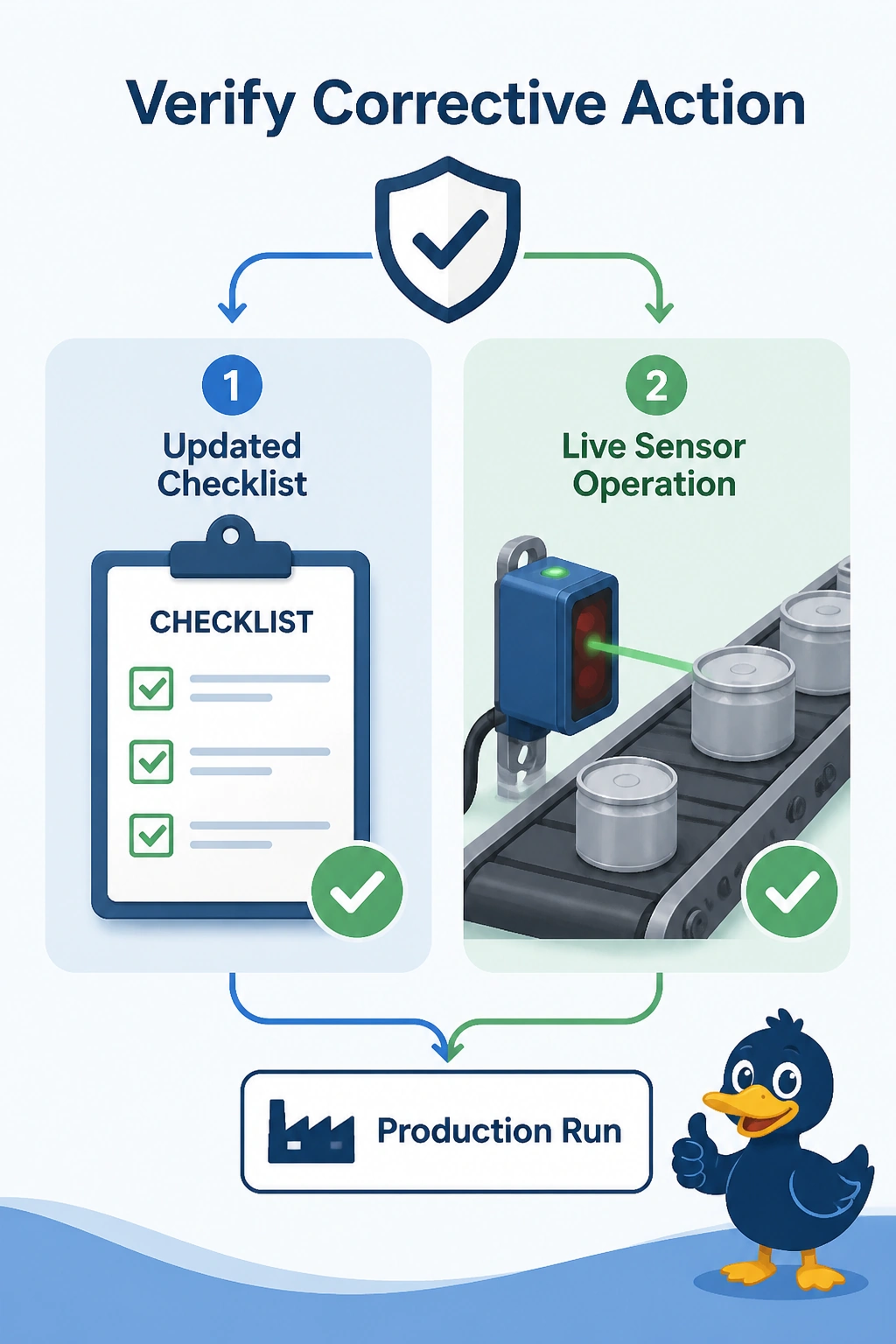
You’ll want to confirm the safeguard works, not just that it was purchased or documented. Verify the updated checklist and observe the optical sensors operating during production runs; that gives you objective evidence before closing the finding.
Full Explanation
Effective corrective-action verification confirms that a change is documented, implemented, and operating well enough to prevent recurrence. Verifying both the updated checklist and live sensor operation during production runs provides objective evidence of the paperwork and the physical control’s effectiveness. Accepting the supplier’s emailed invoice for the optical sensors as sufficient proof of closure establishes only that equipment was purchased; it does not show that the sensors are installed, correctly configured, or preventing double-blank feeding. Closing the finding immediately upon receiving the revised setup checklist PDF confirms a document was updated but leaves the safeguard’s operation unverified. Waiting until the next annual surveillance cycle before reviewing any closure evidence delays follow-up on a known risk and leaves the corrective action’s effectiveness uncertain. As an exam caveat, the auditor should assess the control under representative production conditions, since a sensor that works in a demonstration may not perform reliably during normal runs. As a practical check, observe a controlled challenge with a simulated double blank, confirm the press responds as intended, and review recent setup checklists before closing the finding.
Prefer to study offline? Printable PDF study book + test engine ($7.50, unofficial). These questions stay free here.