
During a two-day internal audit of an insurance claims center, an auditor discovers three systemic nonconformities on the first afternoon. When should the auditor first inform the auditee's process owner about these findings?
Select an answer to reveal the explanation.
Short Explanation
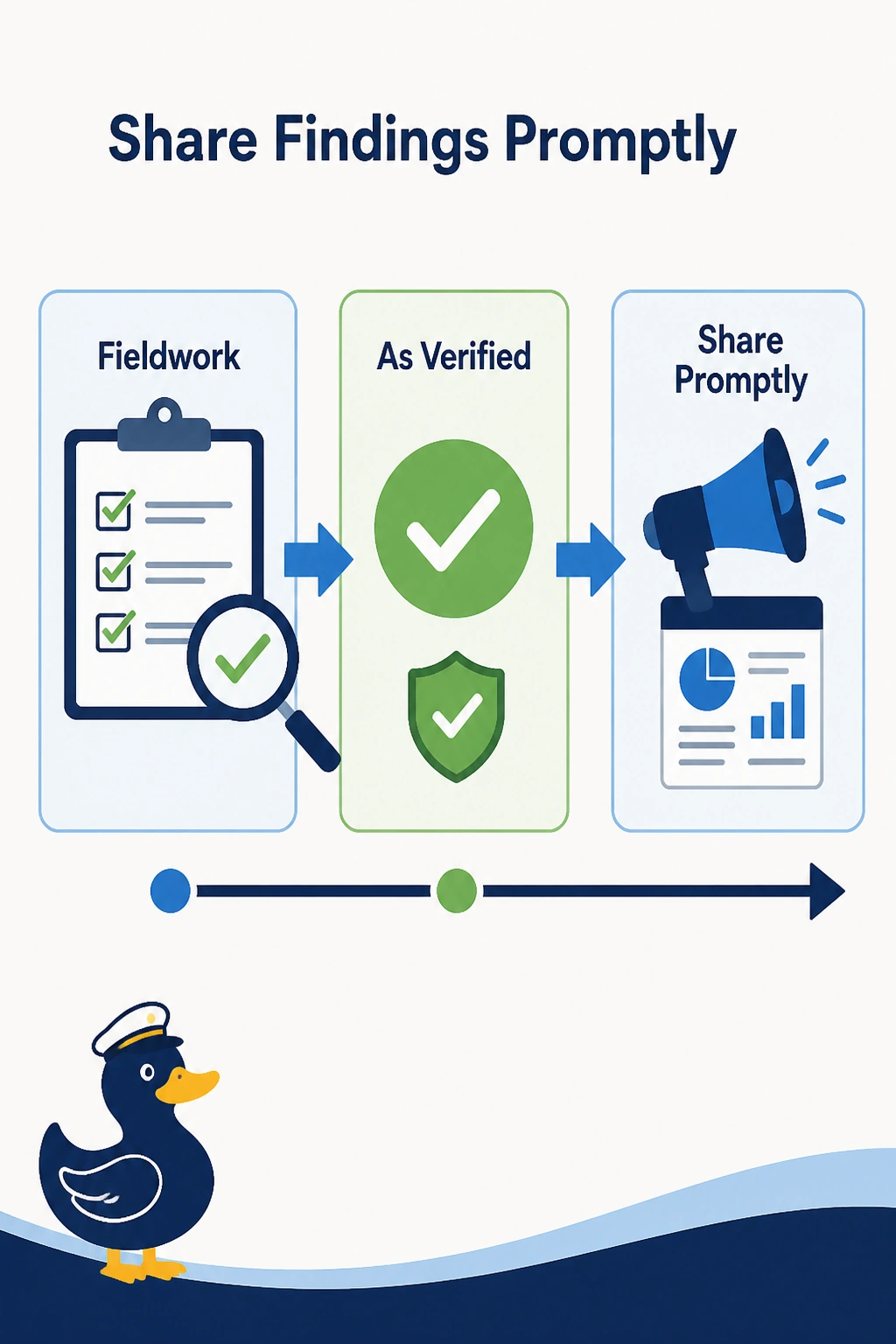
Nobody likes being surprised in front of leadership at the end of an audit. When you verify a finding, share it promptly during fieldwork so the process owner can clarify facts early; that transparency is fairer than waiting for the closing meeting or written report.
Full Explanation
Transparent, ongoing communication during an audit builds trust, prevents unnecessary conflict, and helps resolve factual misunderstandings before conclusions are finalized. When you verify a nonconformity early in a multi-day visit, promptly inform the process owner during fieldwork so they can confirm the facts, understand the risk, or provide overlooked records. Waiting until the formal closing meeting can trigger defensiveness and turn a constructive wrap-up into a dispute over details. Waiting for the final written report denies the auditee timely awareness and delays immediate containment of active operational risks. Deferring notice until the next annual review defeats timely corrective action and allows defects to compound. As an exam caveat, make clear that preliminary findings remain subject to final team review before the closing meeting. As a practical check on a multi-day audit, schedule a brief end-of-day wrap-up with the auditee liaison to review verified observations and confirm next-day logistics.
Prefer to study offline? Printable PDF study book + test engine ($7.50, unofficial). These questions stay free here.