
A pregnant patient with a large body habitus brings a fussy toddler who needs a KUB, while the mother herself needs a shielded lumbar spine series. Staff debate dose, shielding, and cooperation tactics. Which patient-centered dose strategy best reflects Image Wisely, Image Gently, and pregnancy safety?
Select an answer to reveal the explanation.
Short Explanation
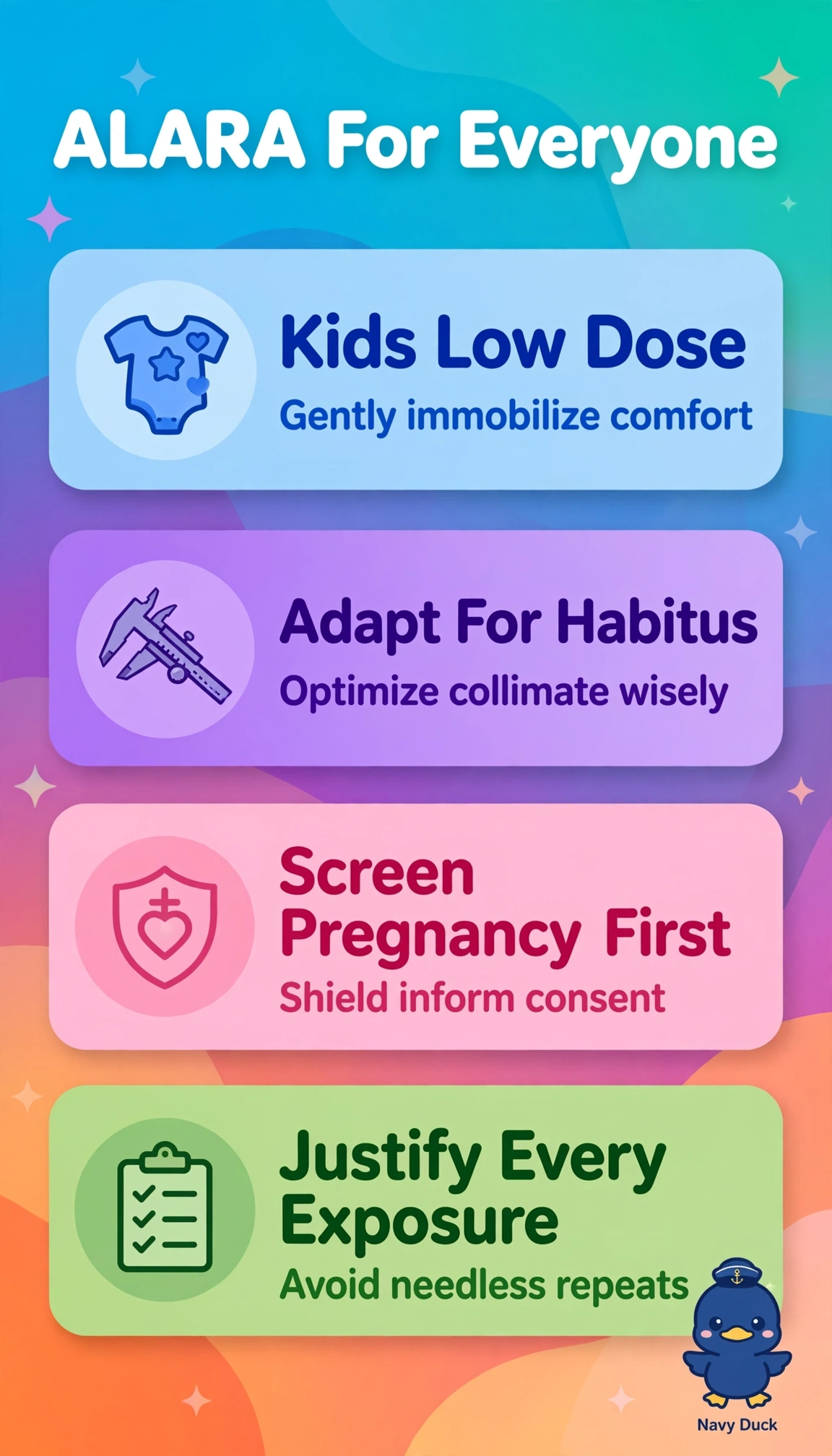
You’re balancing the toddler’s needs, the mother’s body habitus, and pregnancy safety without skipping a safeguard. ALARA means tailoring the technique to each patient, not using one setting for everyone.
Full Explanation
Tailoring the toddler’s KUB with pediatric low-dose technique and immobilization helps prevent motion and repeat exposures. Adapting technique for the mother’s large body habitus, including appropriate kVp, mAs, and grid selection, supports a diagnostic first exposure; pregnancy screening and appropriate shielding address fetal safety during the lumbar spine series. Pediatric low dose with parental comforting, habitus-adapted exposures, and pregnancy screening and shielding covers the other needs, but comforting alone cannot reliably keep a fussy toddler still, so motion blur may lead to repeat exposures. A toddler KUB tailored with low dose and immobilization plus pregnancy screening and shielding is also appropriate, but using standard lumbar exposure for dose control in a large body habitus can cause under-penetration and image noise, resulting in non-diagnostic images and repeats. Tailored pediatric and habitus techniques with collimation alone omit pregnancy screening and shielding; collimation limits field size and scatter but does not establish pregnancy status or provide the expected shielding. Exam caveat: a good measure such as comforting, dose restraint, or collimation does not replace an omitted safeguard. Practical check: document the pregnancy screen, keep shielding clear of essential anatomy, prepare pediatric immobilization aids, and select habitus-adjusted exposure factors before the first exposure.