
A 19-year-old outpatient with type 1 diabetes waits for a wrist study, now sweaty, shaky, and confused with rapid pulse after missing lunch, while another patient nearby recovers from a brief seizure. The student asks how to separate the cases. Which emergency response should the technologist prioritize to address this suspected diabetic reaction?
Select an answer to reveal the explanation.
Short Explanation
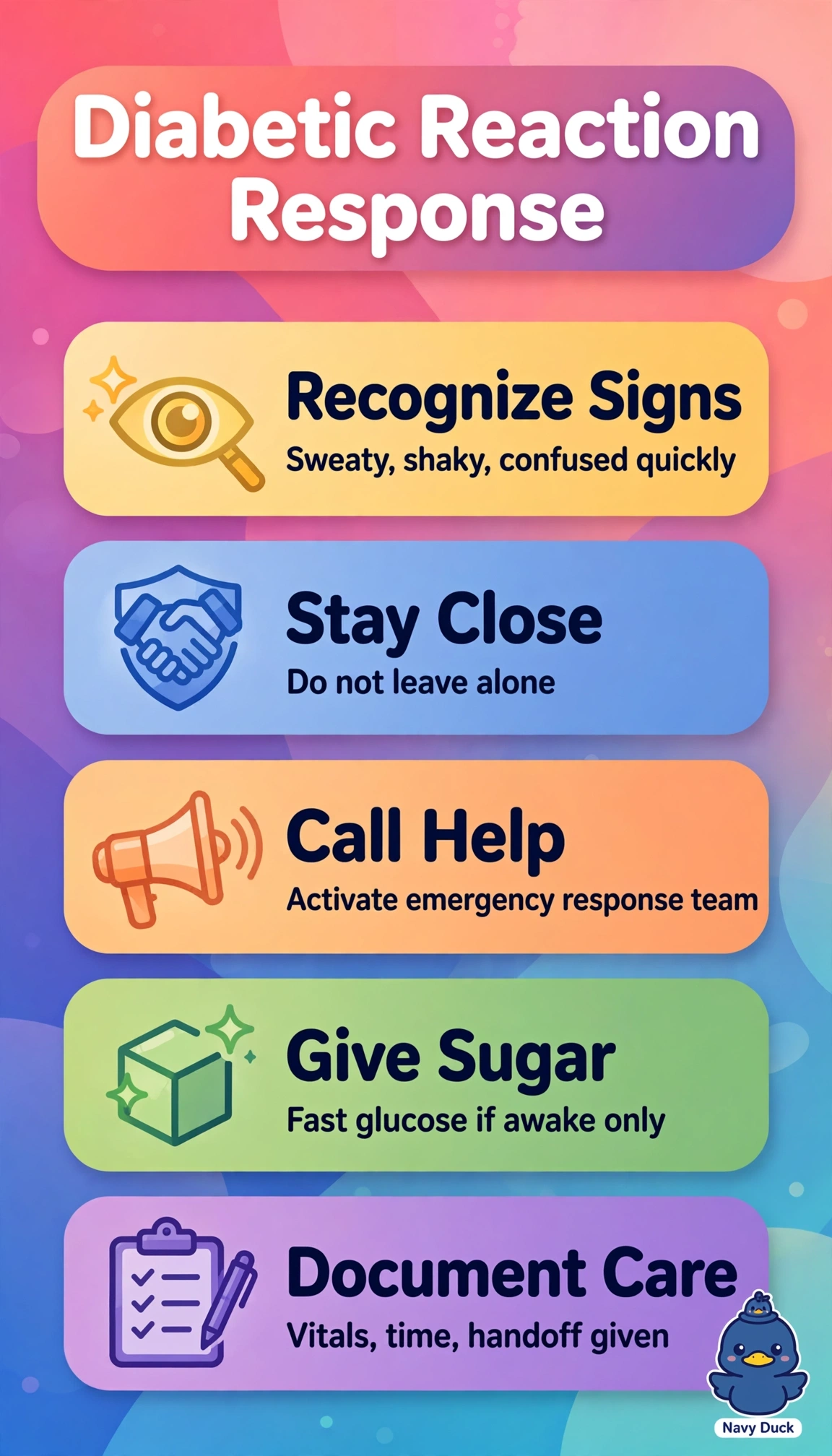
You’re recognizing a likely low-blood-sugar reaction, not treating the nearby patient’s seizure. Stay with the patient, call for help, and give fast-acting glucose by mouth if they’re awake and can swallow safely.
Full Explanation
Missed lunch in a person with type 1 diabetes, together with sweating, shakiness, confusion and a rapid pulse, strongly suggests acute hypoglycemia rather than hyperglycemia or primary seizure activity. Stay with the patient, call for help, pause imaging, and give fast-acting oral sugar only if the patient is awake and can swallow safely, following protocol. Giving supplemental insulin fails because insulin lowers blood glucose and could deepen hypoglycemia, risking loss of consciousness. Placing the patient in the lateral recovery position fails because airway protection and postictal monitoring address the nearby patient recovering from a seizure; that measure alone does not correct the diabetic patient’s falling glucose. Providing a balanced solid meal fails because protein, fat and fiber delay absorption, while hypoglycemia calls for 15–20 g of fast carbohydrate, such as glucose tablets, juice or regular soda, followed by a prompt recheck; obtaining a meal wastes time. An exam caveat: distinguish hypoglycemic shakiness from tonic-clonic activity, and never give oral intake to someone who is unconscious or at aspiration risk; that situation requires qualified emergency treatment. As a practical check, remain at bedside, summon the emergency team, verify identity, obtain bedside glucose if permitted by your scope and equipment, document the time, symptoms and intervention, and hand off to nursing. Do not restart the wrist study until the patient is cleared.