
A busy fluoroscopy suite has lead aprons and thyroid shields shared across staff, with one apron showing a creased outer cover but no known drop. Annual inspection is due. Which quality-control action should the technologist take to test apparel integrity and handle any malfunction?
Select an answer to reveal the explanation.
Short Explanation
You cannot trust a cover to tell you about hidden cracks. Peeking inside with fluoro is your X-ray vision that keeps faulty lead out of rotation.
Full Explanation
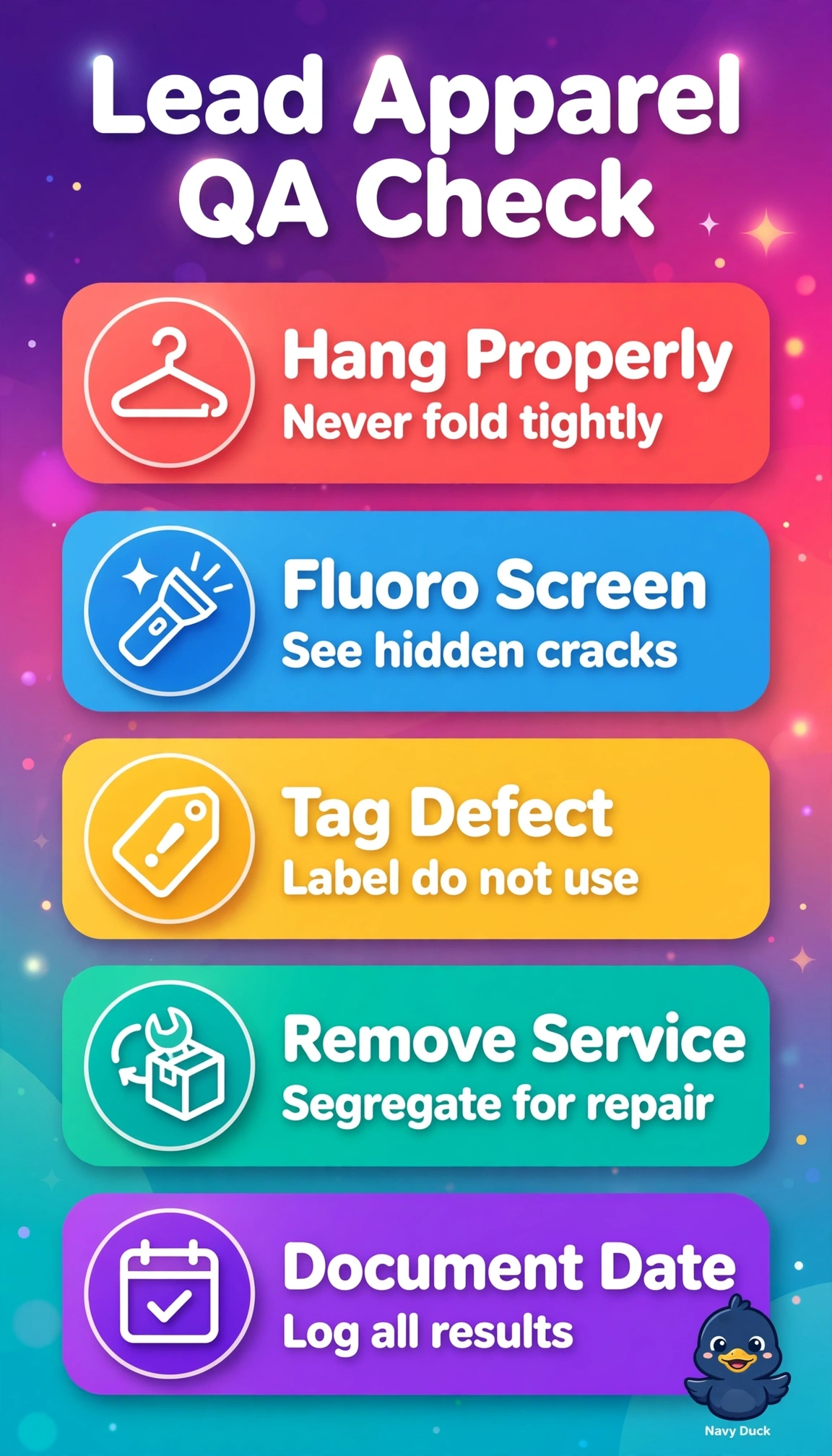
The correct action reflects standard apparel quality control requiring annual fluoroscopic examination of every apron and thyroid shield to reveal internal cracking that a creased cover alone cannot confirm or exclude, followed by tagging and removal from service with documentation for repair or replacement to prevent continued exposure. Relying on visual inspection with selective fluoroscopy only for visibly damaged or dropped items fails the completeness principle because intact fabric can hide fractured shielding and shared fluoroscopy apparel needs universal imaging regardless of history. Extending fluoroscopic screening to every two years fails the frequency principle because annual testing is due and a busy shared inventory accumulates flex stress that can progress from crease to crack within months. Screening annually but isolating defects without tagging or log entry fails the control principle because untracked quarantine invites inadvertent reuse and breaks the audit trail needed for corrective action and compliance verification. An exam caveat is not to confuse interim care such as visual checks, cleaning, and hanging unfolded on racks with the annual integrity test, which specifically requires imaging plus tag and remove. As a practical check, fluoroscope each garment with slight overlap, look for dark intact areas interrupted by light branching lines, immediately attach a defective tag with date and initials, move the piece to quarantine, and record findings in the quality-control log.