
A portable radiograph at 40-inch source-to-image distance looks correctly exposed at 10 mAs, but the next bed cannot move closer than 80 inches in an isolation room with the same kVp and grids. Which exposure principle should the technologist apply to maintain receptor exposure while distinguishing beam quantity, quality, and remnant radiation?
Select an answer to reveal the explanation.
Short Explanation
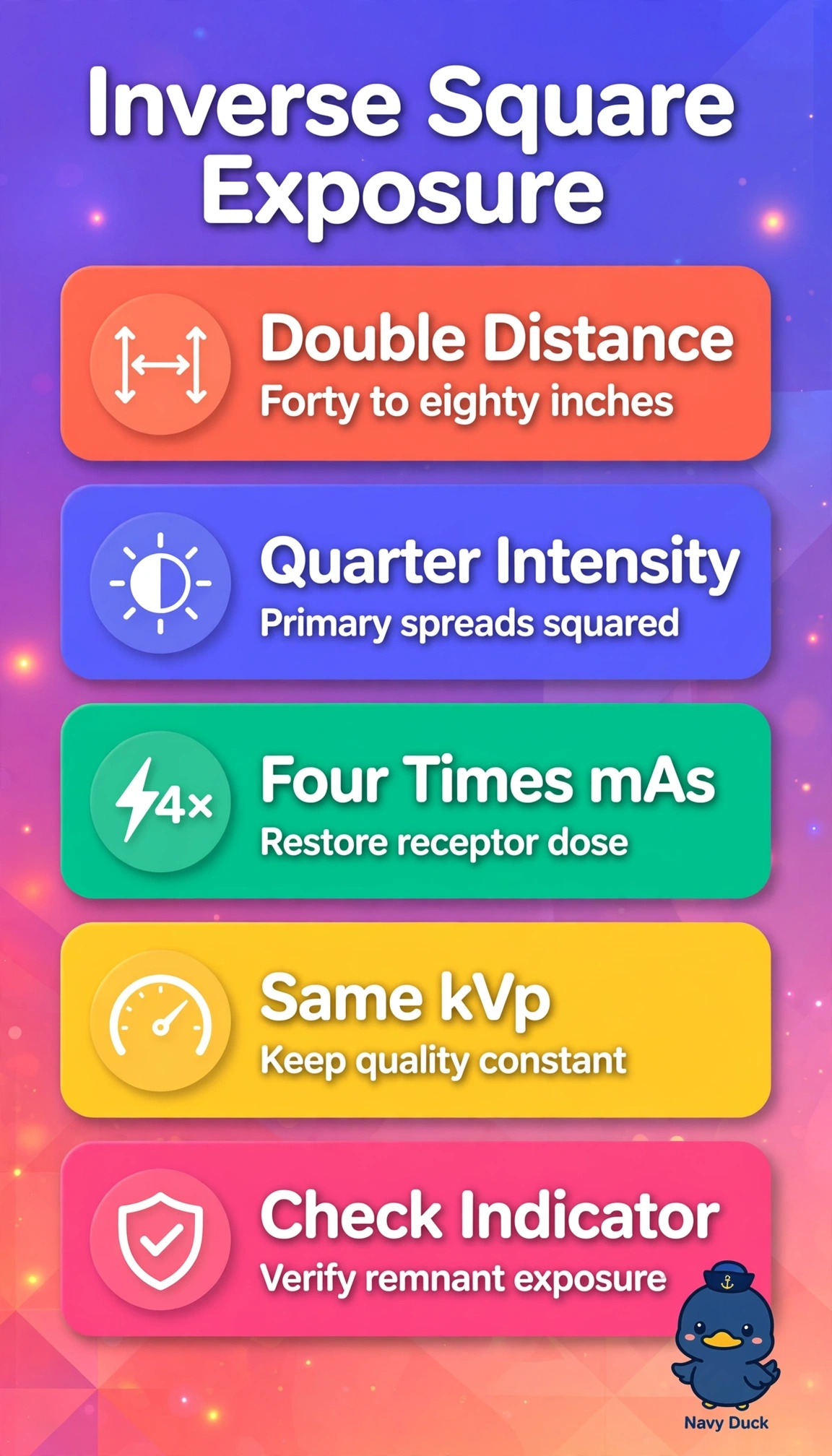
You beat distance with math, not just more punch. Doubling distance quarters intensity, so your fourfold fix keeps brightness steady.
Full Explanation
The correct application holds beam quality constant and increases quantity because intensity varies inversely with the square of distance, so doubling source-to-image distance from 40 to 80 inches reduces primary intensity to one-fourth at the receptor, requiring four times the mAs to restore the same remnant radiation exiting the patient. Doubling mAs fails by concept because it assumes a linear relationship and would leave the image at half the needed exposure, confusing direct proportionality with the squared falloff of divergent primary radiation. Increasing kVp to harden quality fails by concept because kVp and filtration change penetrability and contrast, not the geometric divergence, and would alter contrast and scatter fractions rather than precisely compensating quantity for distance. Halving mAs fails by concept because it reverses primary versus remnant logic; remnant radiation does not increase with distance, both primary reaching the patient and remnant reaching the receptor decrease by the square law, so reduction would severely underexpose. Exam caveat: isolate quantity factors like mAs and distance from quality factors like kVp and filtration, and practical check is to confirm SID, recalculate with the square ratio, and evaluate the exposure indicator before repeating.