
In a busy emergency department a 5-year-old needs a follow-up abdomen radiograph after reduction, parents worry about radiation, and the child is anxious, wiggly, and small for age with prior repeat exposures on record. Which patient-centered technique best applies Image Gently and Image Wisely principles to minimize exposure while ensuring diagnosis?
Select an answer to reveal the explanation.
Short Explanation
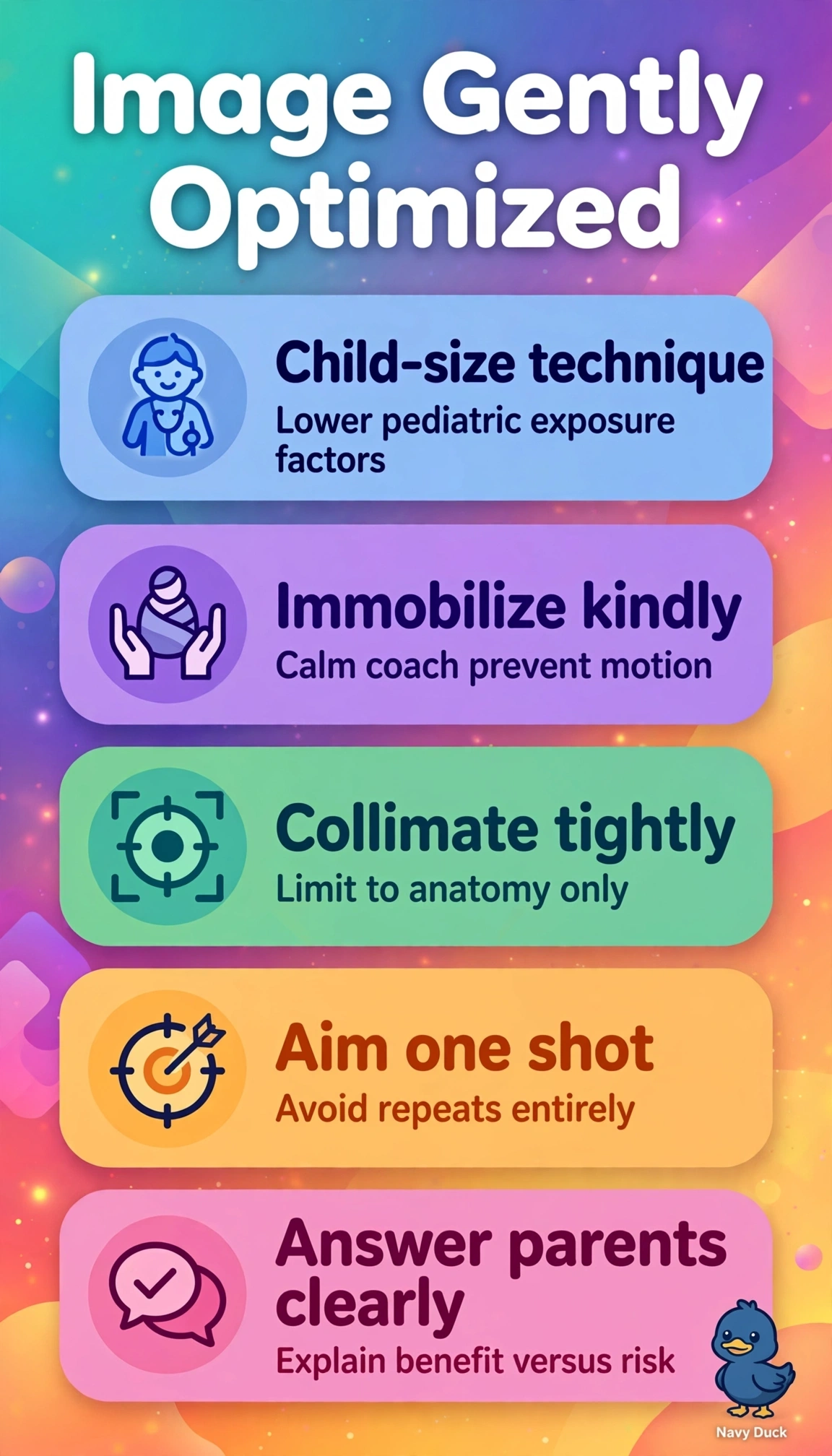
You're protecting a tiny, wiggly body without losing the answer. Tight collimation plus calm coaching honors Image Gently by getting it right the first time.
Full Explanation
The correct response integrates Image Gently and Image Wisely for a small anxious 5-year-old with prior exposures needing limited post-reduction follow-up by combining size-based pediatric low-dose technique, effective immobilization, tight collimation, and coaching to achieve a diagnostic single exposure without repeats. The standard-technique distractor is routine for average adults and correctly uses immobilization, tight collimation and coaching, but fails optimization because adult mAs/kVp overexposes a small child and ignores cumulative dose and parental concern. The comfort-focused distractor correctly uses pediatric dose, collimation and coaching, but fails motion control by omitting immobilization to reduce distress, which for a wiggly child increases blur and repeat probability and thus paradoxically increases total dose. The thoroughness-focused distractor correctly uses pediatric dose with immobilization, but fails justification and collimation by using wider coverage with routine two views for a targeted follow-up, unnecessarily enlarging irradiated volume despite prior exposures. Exam caveat is to distinguish a limited follow-up question from an initial full workup and choose the dose-sparing diagnostic answer, not the most comprehensive display. Practical check is to verify weight-based chart, visualize collimation lights, secure immobilizer with caregiver present, rehearse cooperation, and confirm diagnostic quality before discharge to avoid recall.