
A 9-year-old with a suspected elbow effusion after a playground fall is anxious, in pain, and unable to remain still, and the order requests upper-limb views that require precise positioning without motion. The parent can assist, the child can follow short breathing cues, and sandbags, tape, and sponges are available. Which respiration and positioning-aid strategy best produces diagnostic images in this child?
Select an answer to reveal the explanation.
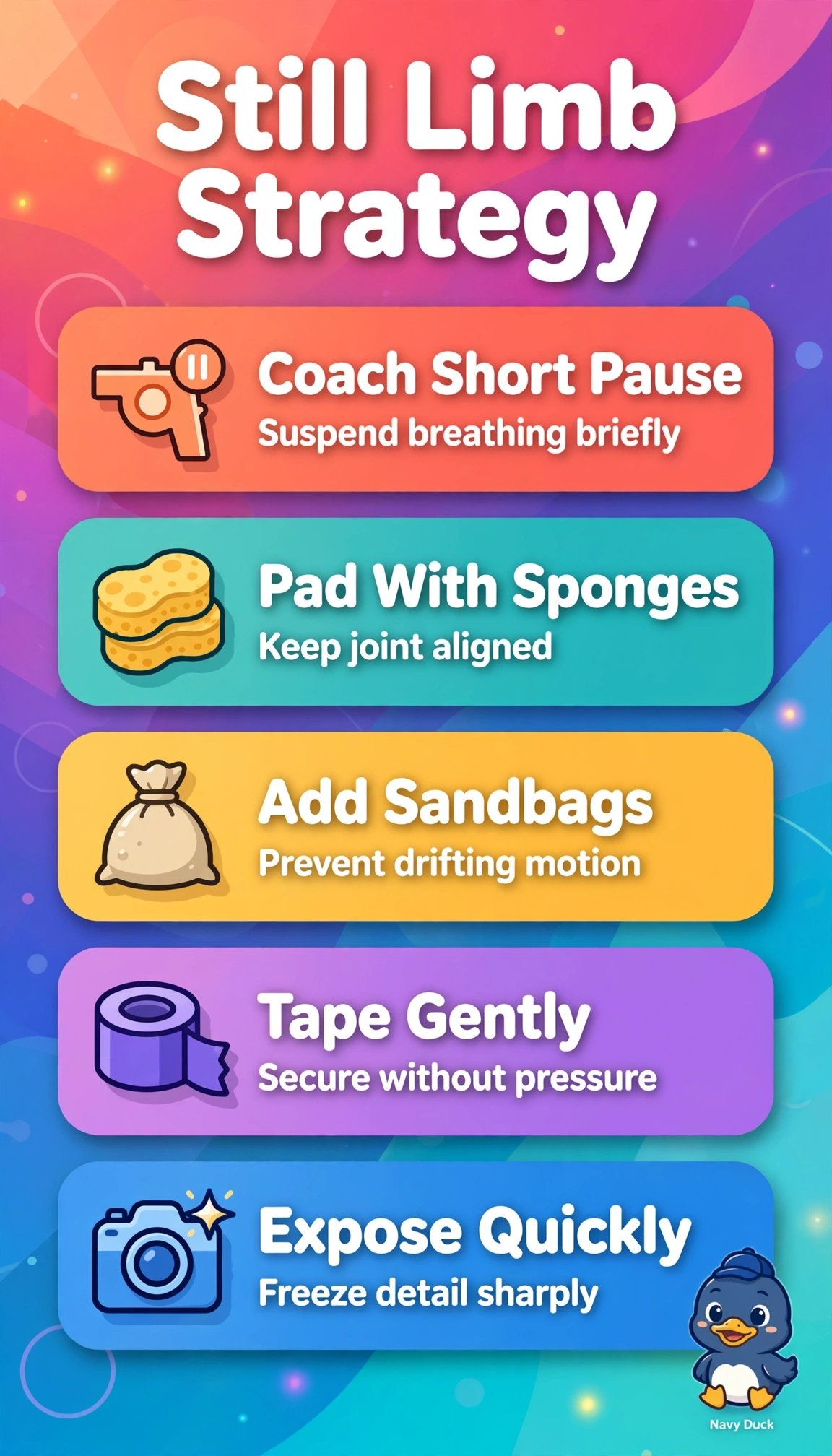
Short Explanation
You've got a wiggly kiddo, so you'll get sharper pictures when you use a quick breath-hold and nestle the elbow with sponges, sandbags, and tape like a cozy pillow fort. That gentle stabilization keeps your little patient comfy and freezes motion for a clear look at the joint.
Full Explanation
For an anxious 9-year-old in pain with suspected elbow effusion needing precise motion-free upper-limb views, short suspended respiration briefly eliminates respiratory and voluntary motion at a reproducible point the child can follow with short cues, while padded sponges, sandbags, and tape together provide stable comfortable non-human immobilization that supports the injured limb without pressure and reduces pain-triggered movement and repeats. The quiet shallow breathing strategy fails on motion control because continuous chest and shoulder excursion transmits to the upper limb and blurs fine fat-pad and joint detail that demands complete stillness, although it is appropriate for many thoracic examinations. The parental hand-support strategy fails on immobilization and protection because manual holding when effective aids are available gives inconsistent pressure and needlessly exposes the caregiver, whereas sandbags and tape with sponges maintain constant stabilization. The extended suspension strategy fails on capability because an anxious child in pain able to follow only short cues cannot sustain a prolonged hold, inviting gasping, motion, and loss of position, although it suits cooperative adults. Candidates should not transfer chest breathing rules to extremities where suspension ensures stillness rather than lung inflation and should prioritize non-human aids before manual holding. Before exposure rehearse one short cue, confirm padding is comfortable with tape secure but not compressive over the effusion, verify position and markers, then release the hold immediately.