
A 45-year-old outpatient is scheduled for an IV urogram using iodinated contrast in radiology. She reports hives and wheezing that required treatment during a prior contrast study and lists daily lisinopril, metformin, and ibuprofen. Protocol requires medication review for risk and possible premedication. Which medication history action best addresses premedication and contraindication screening for this contrast study?
Select an answer to reveal the explanation.
Short Explanation
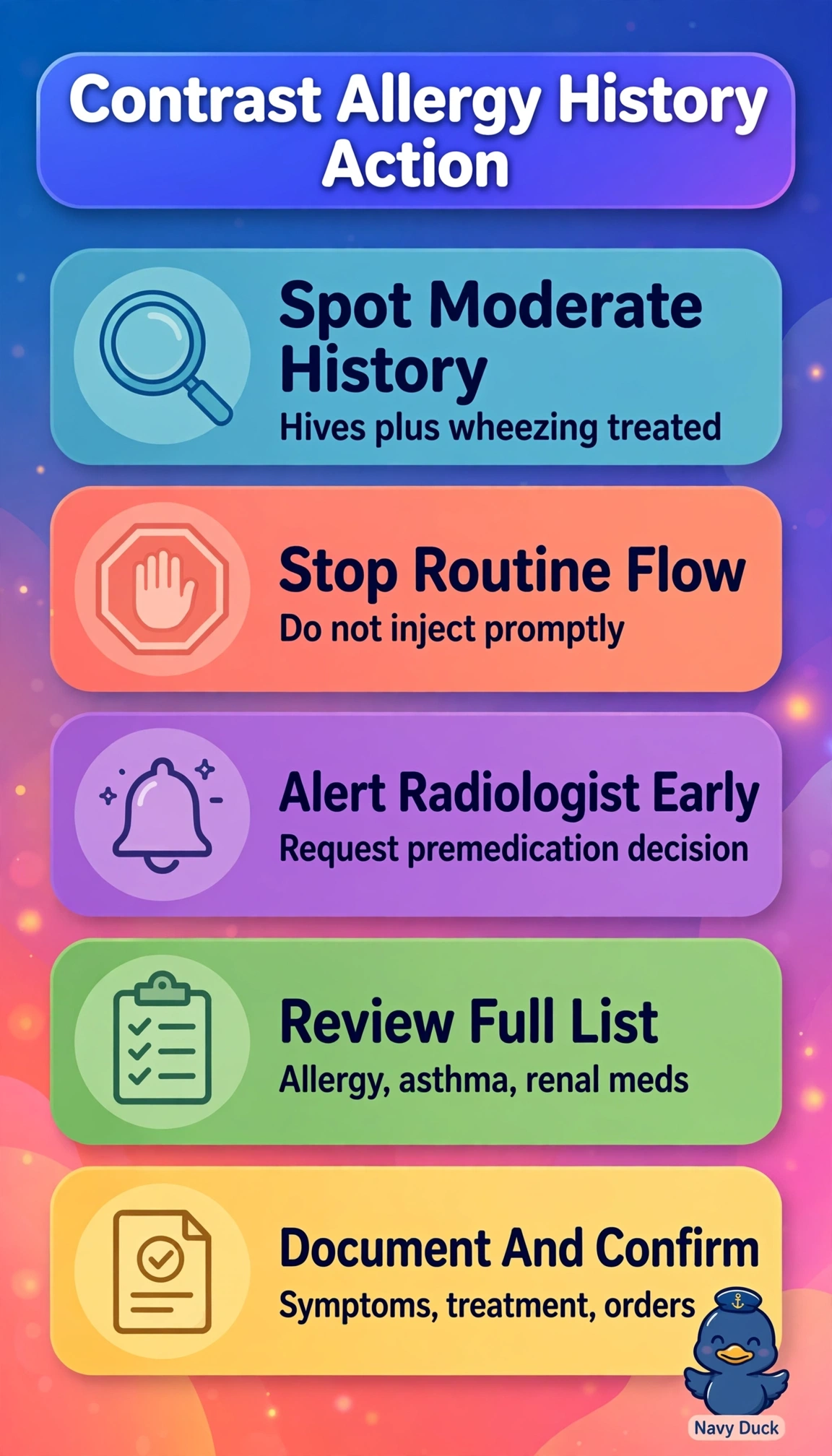
Past hives plus wheezing needing treatment is your red flag, not background meds. Escalating that history for premedication review keeps you ahead of a repeat reaction like checking weather before sailing.
Full Explanation
Hives with wheezing requiring treatment after prior iodinated contrast defines a moderate immediate hypersensitivity reaction with heightened recurrence risk on re-exposure, so the priority medication-history action for this elective IV urogram is flagging that reaction for radiologist review for corticosteroid premedication with antihistamine consideration and confirming allergy rescue medications, monitoring, and emergency readiness before contrast is given. Metformin review with recent eGFR and per-protocol hold guidance addresses contrast-associated acute kidney injury and lactic acidosis risk, but it targets chemotoxic renal risk rather than mast-cell-mediated hypersensitivity and leaves premedication unmet. NSAID review for ibuprofen-related renal vasoconstriction, hydration, temporary withholding, and alternate pain planning offers renal protection before iodinated load, yet withholding an NSAID neither prevents urticaria and bronchospasm nor substitutes for corticosteroid prophylaxis and misses the reaction-driven indication. ACE-inhibitor review for lisinopril-related hypotension, renal hypoperfusion, and volume status is relevant peri-contrast assessment, but stable blood pressure and hydration do not prevent anaphylactoid recurrence and omit the mandatory allergy flag. Exam caveat is to separate renal-risk from hypersensitivity-risk management because normal renal function, hydration, or blood pressure control never cancels reaction-based premedication. Practical check is documenting prior agent, phenotype, severity, treatment, time course, asthma/allergy medications, recent eGFR, hydration, consent, and premedication order with resuscitation equipment confirmed before transfer.