
A portable left knee image arrives in PACS without a side marker after a busy ED trauma case with two similar patients. The anatomy is diagnostic but permanent ID is incomplete and legal ownership is unclear. Which image identification action should the technologist take to meet legal documentation standards for digital imaging?
Select an answer to reveal the explanation.
Short Explanation
You're protecting both patient and license here. Permanent identification with side, patient, date, and initials is your legal signature, like signing a chart note.
Full Explanation
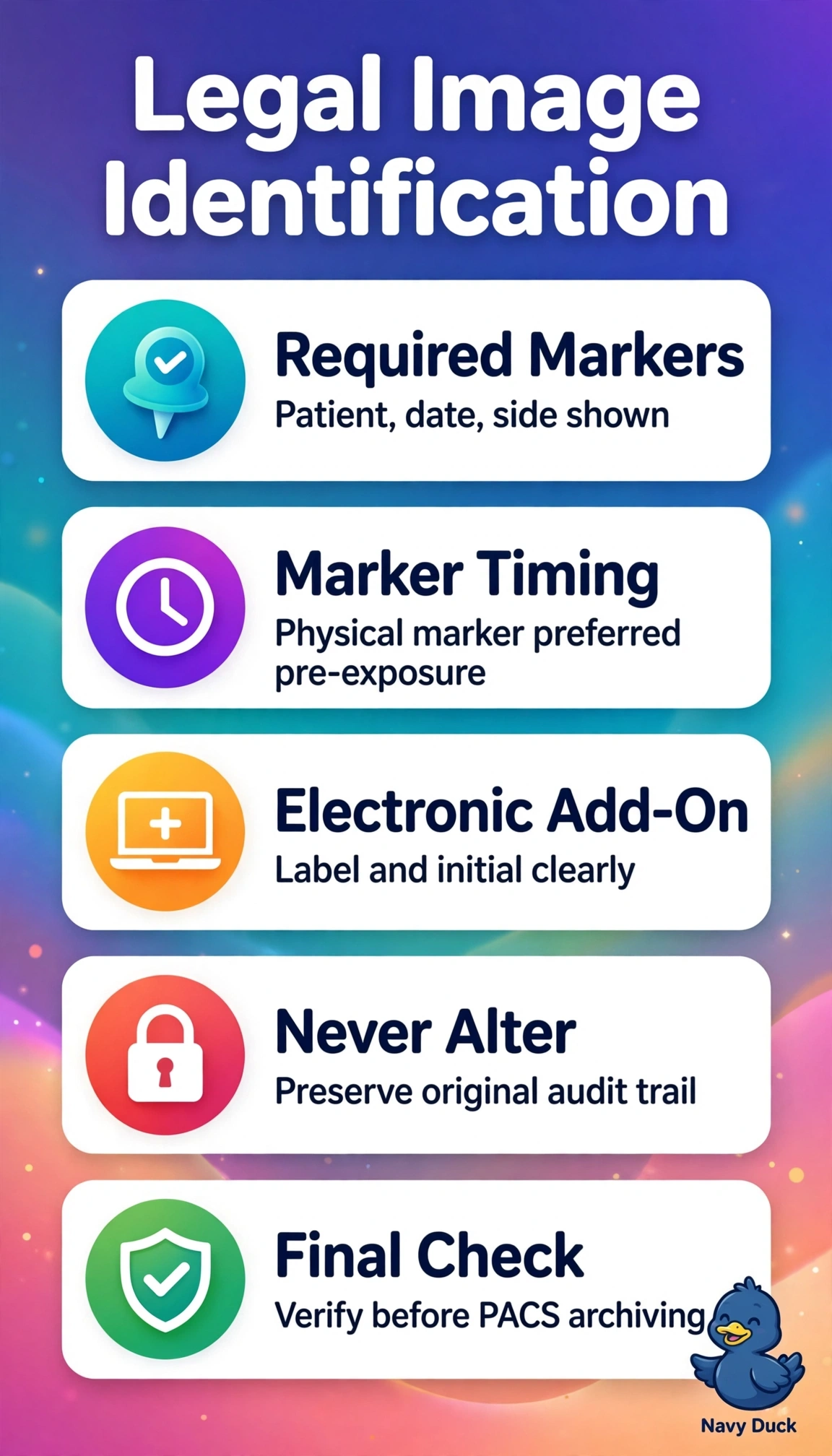
Legal standards require that a diagnostic image carry permanent, tamper-evident identification linking anatomy to the correct person before it becomes part of the medical-legal record, which in this trauma scenario means resolving the two-patient ambiguity and supplying a permanent, initialed side marker prior to final PACS commit. Confirming identity with requisition and accession ensures ownership when names or exams are similar, while an initialed electronic marker provides permanent laterality that cannot be confused with detector orientation or post-processing flip, satisfying documentation and liability requirements. Archiving now with intent to add the marker after final archiving fails on timing and permanence because once committed the record is considered final and addenda create audit and admissibility problems, even though demographics are correct. Adding a correct left marker based solely on the portable requisition without reconfirming identity fails on patient identification because requisitions can be mismatched during busy ED throughput and laterality alone does not prove ownership. Documenting laterality as an initialed annotation in the history or comments field fails on form and permanence because annotations are not legally recognized as markers and may not display, transfer, or persist with the image on all viewers. An exam caveat is that diagnostic anatomy appearance alone never substitutes for a marker, especially for knee or other symmetric structures where portable positioning and image flip can mislead, and questions often test whether the marker was initialed, permanent, and applied before archiving. A practical check is to pause final sign-off, reconcile patient, accession, anatomy, and marker at the workstation, then apply the initialed electronic marker and verify it displays correctly on PACS before release to the radiologist.