
A 74-year-old outpatient weighing 92 kg with diabetes is scheduled for contrast-enhanced CT urography. Labs show elevated creatinine, elevated BUN and eGFR 28, plus history of prior mild hives after contrast. Which contrast-appropriateness assessment best protects this patient before injection?
Select an answer to reveal the explanation.
Short Explanation
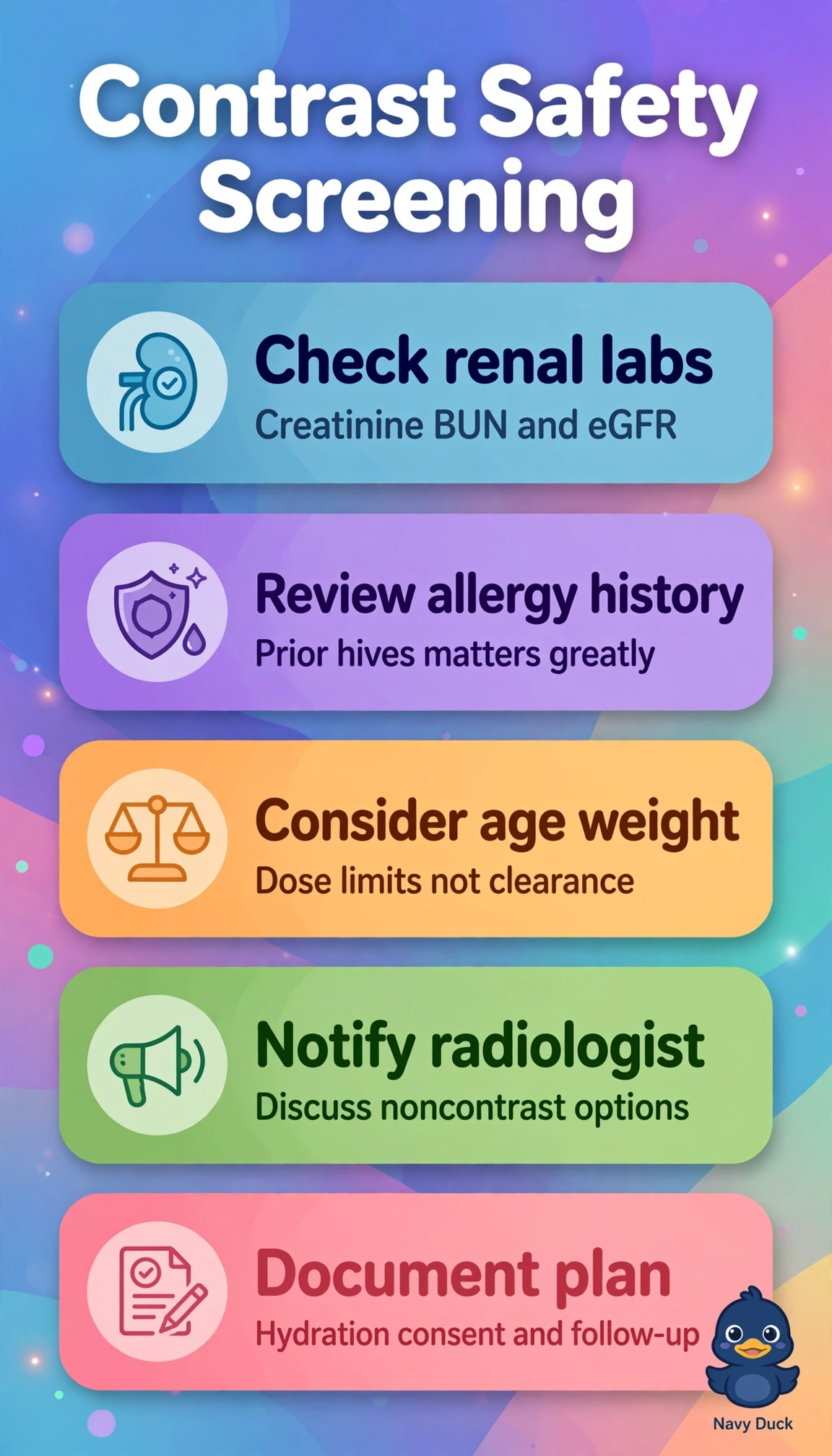
You’re weighing kidneys, allergy, age and weight together, not one number alone. Precontrast-screening means pausing and escalating when eGFR and history both flash warning.
Full Explanation
The correct assessment reflects combined renal and hypersensitivity risk requiring deferral and escalation, since eGFR 28 indicates stage 4 severe impairment with elevated creatinine and BUN in a 74-year-old diabetic patient at high risk for contrast-induced kidney injury, while prior hives signals a contrast reaction that may recur more severely on re-exposure, so routine iodinated contrast for CT urography cannot proceed without radiologist-directed alternative planning with medication review and monitoring. The approach that optimizes hydration and premedication but still proceeds as scheduled fails on contrast stewardship because supportive measures do not overcome the need to withhold routine dosing when eGFR is below 30. The approach that defers for renal dysfunction to plan noncontrast imaging fails on allergy safety because omitting hives history leaves premedication, observation, and emergency preparedness unaddressed even when contrast is deferred. The approach that defers only for hives to plan premedication fails on nephroprotection because it does not treat severe renal impairment as an independent contraindication to iodinated load. An exam caveat is that eGFR below 30 with diabetes, advanced age, and abnormal creatinine is treated as a hard stop for routine contrast without specialist approval rather than a hydration-only precaution. A practical check is to confirm current eGFR and creatinine trend, nephrotoxic and diabetes medications, detailed allergy timing and severity, hydration status, and documented radiologist approval with alternative plan before injection.