
A newly certified radiographer observes a senior technologist arriving impaired and preparing to perform portable examinations on critically ill patients. The newcomer feels pressured to stay silent to preserve team harmony and job security. Which response best upholds the ARRT Standards of Ethics?
Select an answer to reveal the explanation.
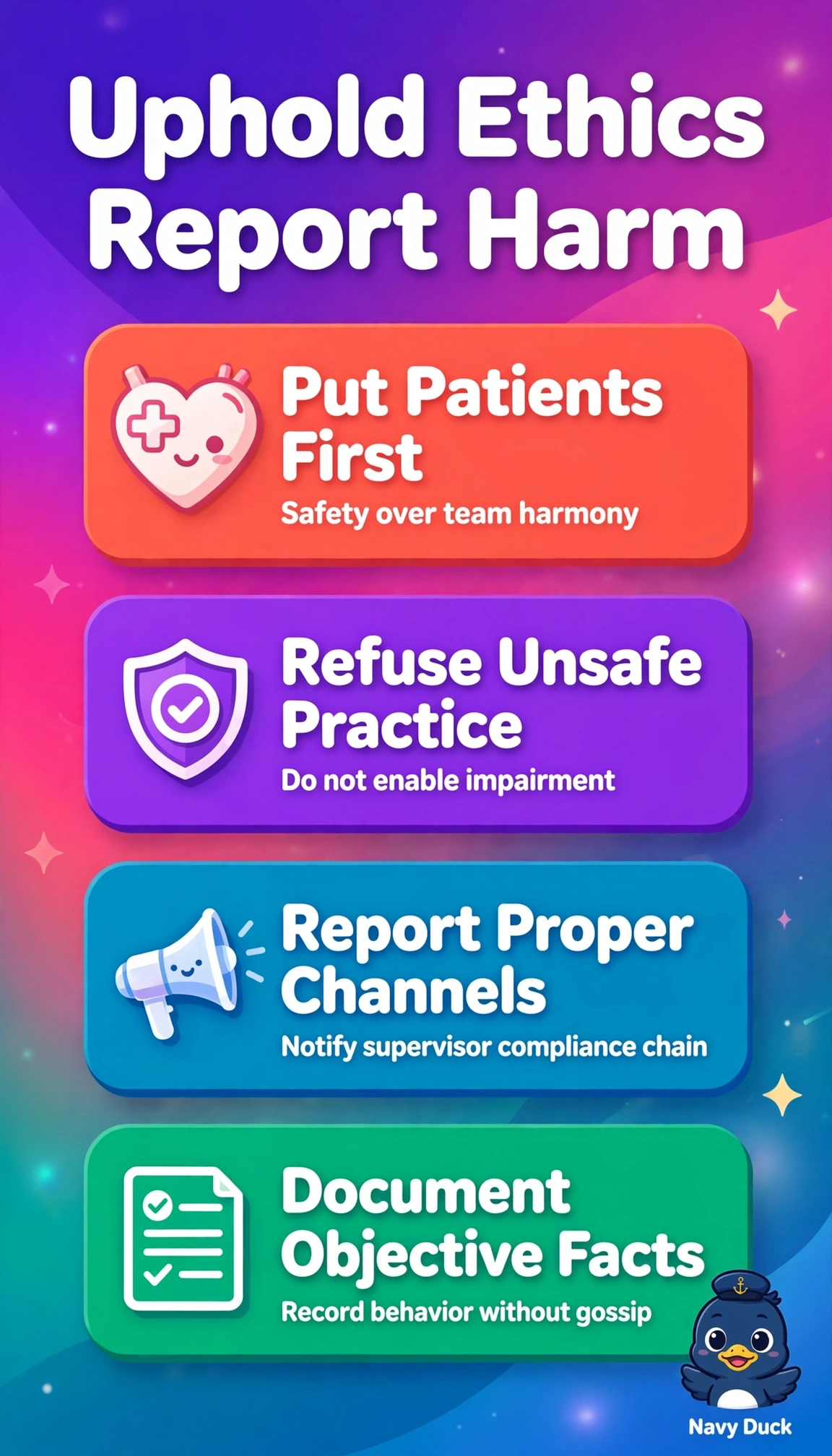
Short Explanation
You're protecting patients first, even when it's uncomfortable. Speaking up through proper channels keeps your integrity and their safety ethics-anchored together.
Full Explanation
The correct response reflects the ARRT Standards of Ethics duty to protect patients, report observed impairment, and refuse to engage in unsafe practice, which outweighs concerns about team harmony or job security, especially with critically ill patients undergoing portable examinations where vigilance and competence are critical. Reporting after finishing portables to avoid delaying care sounds patient-centered and efficient, but it fails immediacy and nonparticipation by permitting an impaired technologist to treat vulnerable patients while the report is deferred. Refusing unsafe assignments while documenting privately and requesting reassignment captures self-protection and accountability, but it fails the affirmative duty to escalate through the supervisory chain because a personal record does not trigger supervisory assessment, removal from duty, or patient safety intervention. Notifying the charge nurse promptly while refusing unsafe work captures escalation and refusal, but it fails the required channel because lateral communication to nursing does not substitute for reporting a technologist fitness concern through radiology supervision and institutional policy. An exam caveat is that test items often include attractive answers involving nursing notification, private documentation, or completing urgent cases first, yet ARRT ethics requires immediate supervisory reporting plus refusal to participate, with no exception for seniority, staffing pressure, or loyalty. A practical check is to stop, decline the unsafe assignment, notify the supervisor or house supervisor per policy, complete an incident report objectively without diagnosis, and ensure critically ill patients are reassigned to fit, credentialed staff.