
A 15-bed rural clinic uses teleradiology for after-hours coverage, and a night technologist sends a portable chest to the remote radiologist but the images appear in the wrong patient folder with missing laterality markers. The modality worklist was bypassed and demographics were typed manually during a busy call shift. Which informatics action best ensures accurate DICOM routing and confidentiality for teleradiology interpretation?
Select an answer to reveal the explanation.
Short Explanation
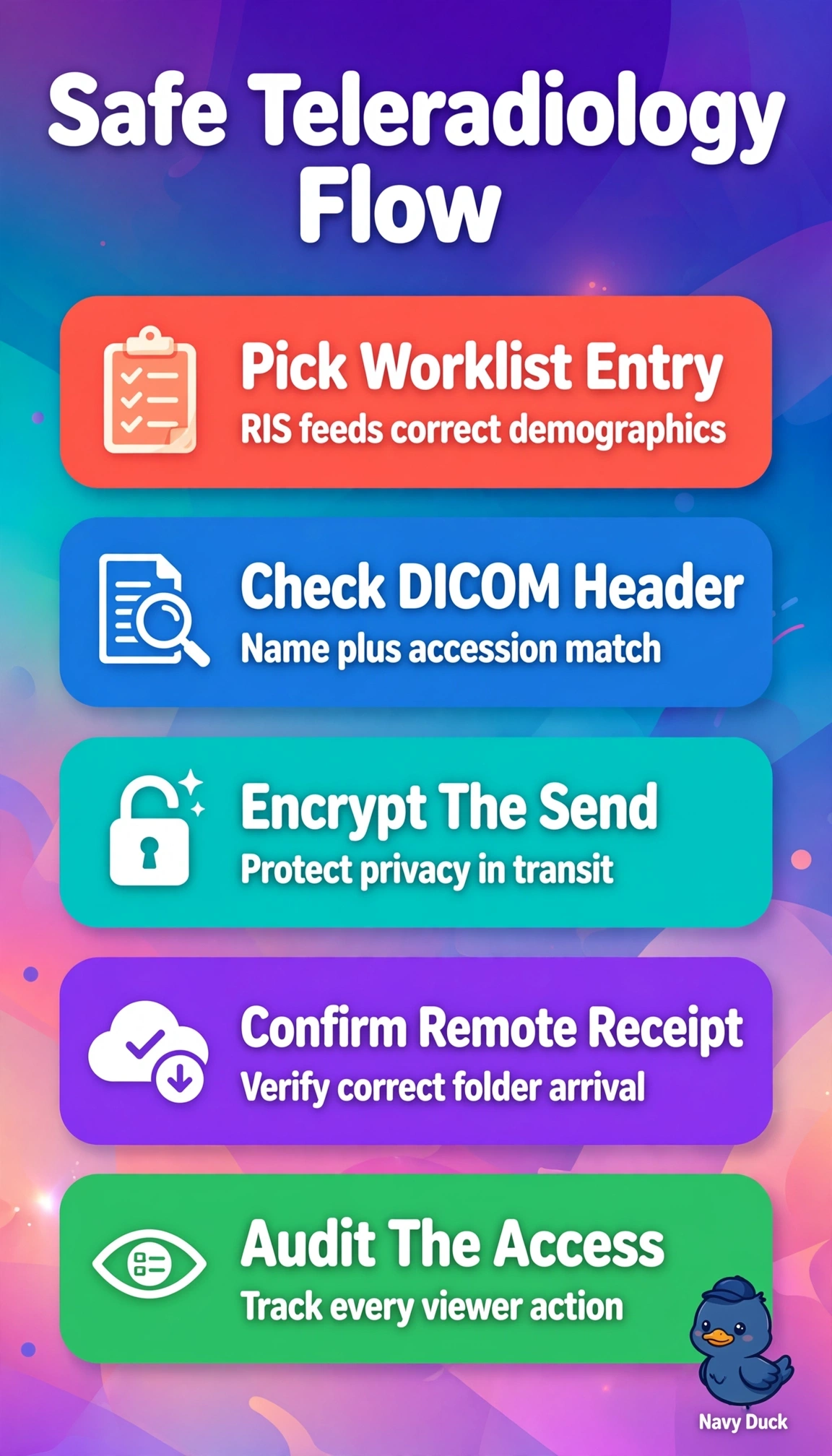
You’re only as safe as the header riding with the pixels. Pulling demographics from the worklist locks identity to the image, and encryption keeps that packet private on its night drive.
Full Explanation
The correct action pairs RIS-driven modality worklist population of DICOM headers with encrypted teleradiology transmission because automatic transfer of patient, accession, and study attributes eliminates transcription errors that caused wrong-folder routing when demographics were typed manually, while DICOM-compliant routing delivers the portable chest to the intended remote PACS work queue with intact identifiers and laterality markers preserved for interpretation, and encryption maintains confidentiality between the rural clinic and remote radiologist. Manual verification before encrypted transmission improves diligence and confidentiality but fails on data-integrity automation because retaining manual entry and bypassing worklist reconciliation leaves wrong-patient and mismatched-accession errors likely despite secure transport. Holding worklist-populated images locally for morning on-site review achieves header accuracy but fails on timely remote workflow because it never routes the study to the after-hours teleradiologist, defeating coverage and delaying care. Routing worklist-populated studies for AI triage alone achieves accurate headers and secure transport but fails on definitive interpretation workflow because triage does not substitute for formal remote radiologist readout. An exam caveat is to distinguish secure transport from correct identity and destination, since encryption alone never corrects misidentification or misrouting. A practical check is to confirm worklist retrieval, match accession, MRN, and laterality to wristband and order, and verify arrival in the expected remote queue with transfer acknowledgment.