
A 19-year-old patient with type 1 diabetes becomes sweaty, shaky, and confused 20 minutes into a delayed scoliosis series in a busy outpatient center, a glucometer is available, the patient can still swallow, and no trauma or seizure activity has occurred. The supervising technologist suspects hypoglycemia. Which immediate response should the radiography team provide for this diabetic reaction?
Select an answer to reveal the explanation.
Short Explanation
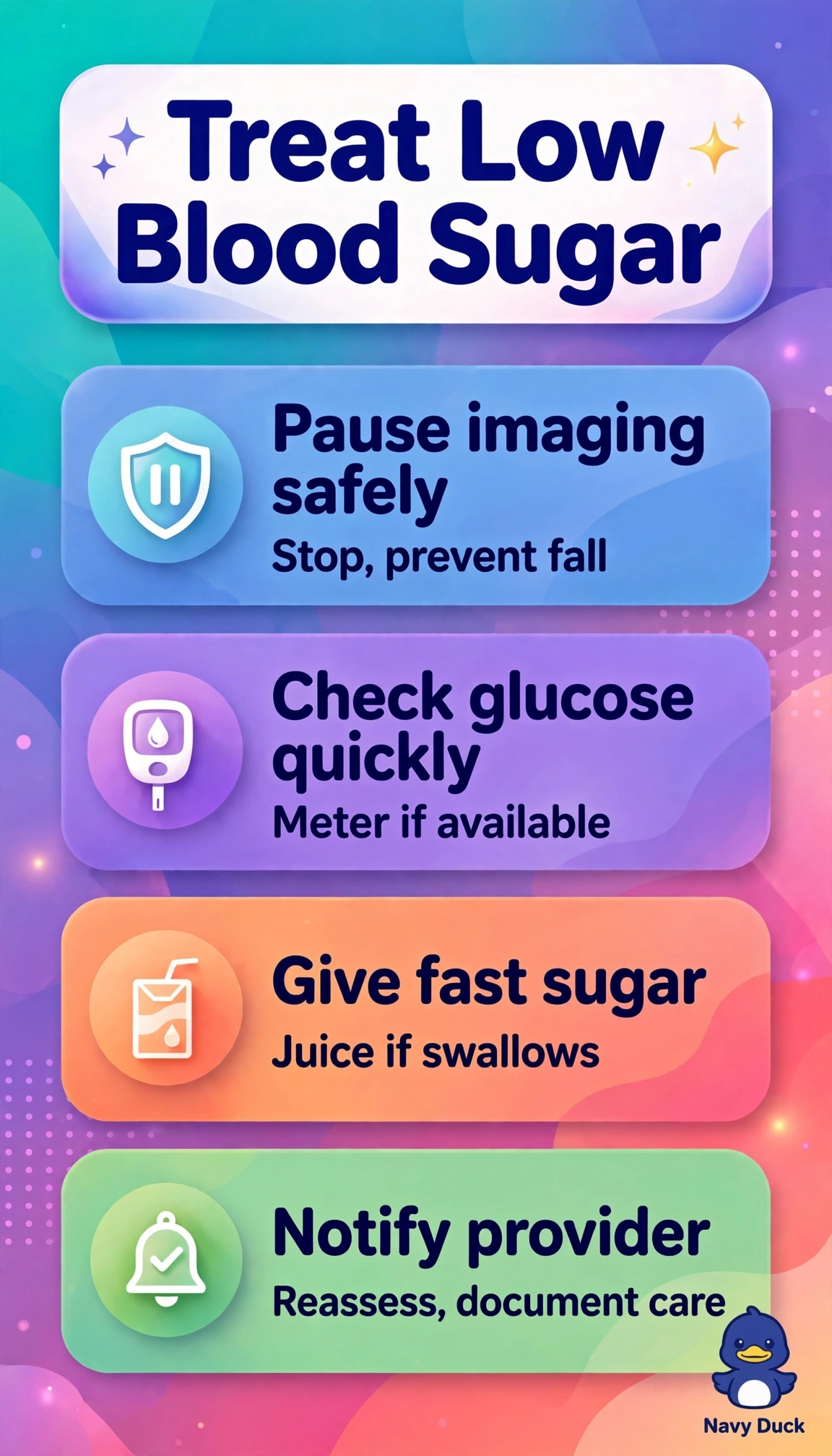
When you're seeing those shaky, sweaty signs, your patient's tank is running on empty and you've got to pause. You'll stop the exam, check glucose if you can, and give fast-acting oral glucose before you even think about resuming.
Full Explanation
The correct response aligns with hypoglycemia management for a conscious patient who can swallow: halt radiation exposure and fall risk by stopping the examination, use the available glucometer to confirm low glucose when feasible without delaying treatment, administer fast-acting oral glucose such as glucose tablets or juice per department protocol, and reassess mental status and glucose before resuming imaging. The insulin-based response fails by reversal of physiology because rapid-acting insulin lowers glucose further and is appropriate for hyperglycemia, which would worsen sweating, shakiness, and confusion in this hypoglycemic presentation. The glucagon with oral restriction response fails by escalation to severe-disease protocol because intramuscular glucagon and strict withholding of oral intake are reserved for unconscious, seizing, or unable-to-swallow patients with aspiration risk, whereas this patient can still swallow and therefore should receive oral carbohydrate. The protein-rich solid snack response fails by kinetics because protein and complex carbohydrate absorb too slowly to reverse acute neuroglycopenia, while fast-acting simple carbohydrate is required for immediate correction, with complex carbohydrate useful only for maintenance after recovery. An exam caveat is to distinguish hypoglycemia from hyperglycemia cues and to prioritize stopping the examination and treating first over completing images in a busy schedule. A practical check is to follow protocol, stay with the confused patient, confirm swallowing safety, document glucose values and interventions, and notify the supervising technologist and ordering provider before resuming.