
A radiology aide spills a high-level disinfectant used for ultrasound probes on the counter and floor in a small procedure room, and coworkers disagree about wiping it quickly with paper towels. Which safety action guided by the Safety Data Sheet should staff take first for the chemical spill?
Select an answer to reveal the explanation.
Short Explanation
You're letting the sheet lead before you wipe. Ventilation plus right PPE keeps a small spill from becoming an exposure.
Full Explanation
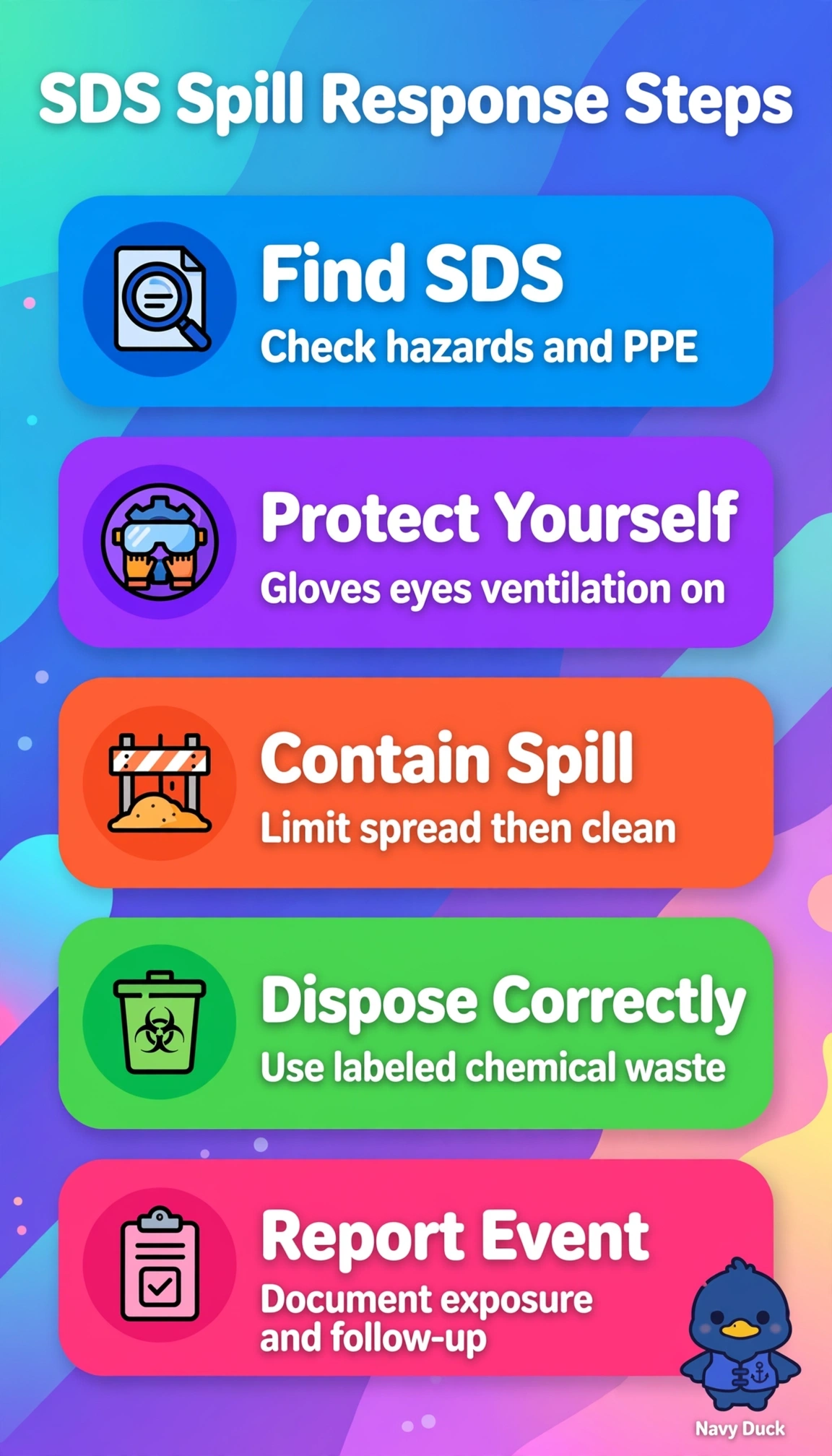
The correct action is right because high-level disinfectants for ultrasound probes, such as glutaraldehyde, ortho-phthalaldehyde, or hydrogen peroxide-peracetic acid blends, carry product-specific skin, eye, respiratory, and sensitization risks, so the Safety Data Sheet must set glove material and breakthrough time, eye and respiratory protection, ventilation, compatible containment and absorbents, cleaning, and hazardous waste disposal before contact. Ventilating and absorbing with standard exam gloves and paper towels fails on compatibility because routine gloves may permeate, paper towels may be unsuitable, and air exchange and vapor precautions are product-specific. Cordoning for routine mopping with hospital disinfectant fails on decontamination because adding another cleaner does not neutralize spilled chemistry, while mops, regular trash, or drains can spread vapors and violate disposal rules. Donning spill-kit gloves to immediately contain and absorb fails on sequencing because protection, containment, and disposal cannot be assumed without first reading the Safety Data Sheet, especially with counter plus floor contamination where vapors concentrate. For exams, separate chemical-spill from biological-spill procedure and do not prioritize fast wiping when the stem stresses disagreement, high-level disinfectant, and Safety Data Sheet guidance. As a practical check, pause at the doorway, keep others out, retrieve the sheet by binder or QR code, follow hazards, first aid, accidental release, exposure controls, and disposal sections, then verify ventilation, correct gloves and eye protection, sealed labeled waste, and hand hygiene with monitoring.