
A 62-year-old inpatient after a fall has left lower lateral rib pain below the diaphragm, can sit upright on a stretcher with back support but breathes shallowly, and cannot lift the arm overhead without pain. Which respiration phase and positioning-aid setup best visualizes below-diaphragm ribs while limiting motion and discomfort?
Select an answer to reveal the explanation.
Short Explanation
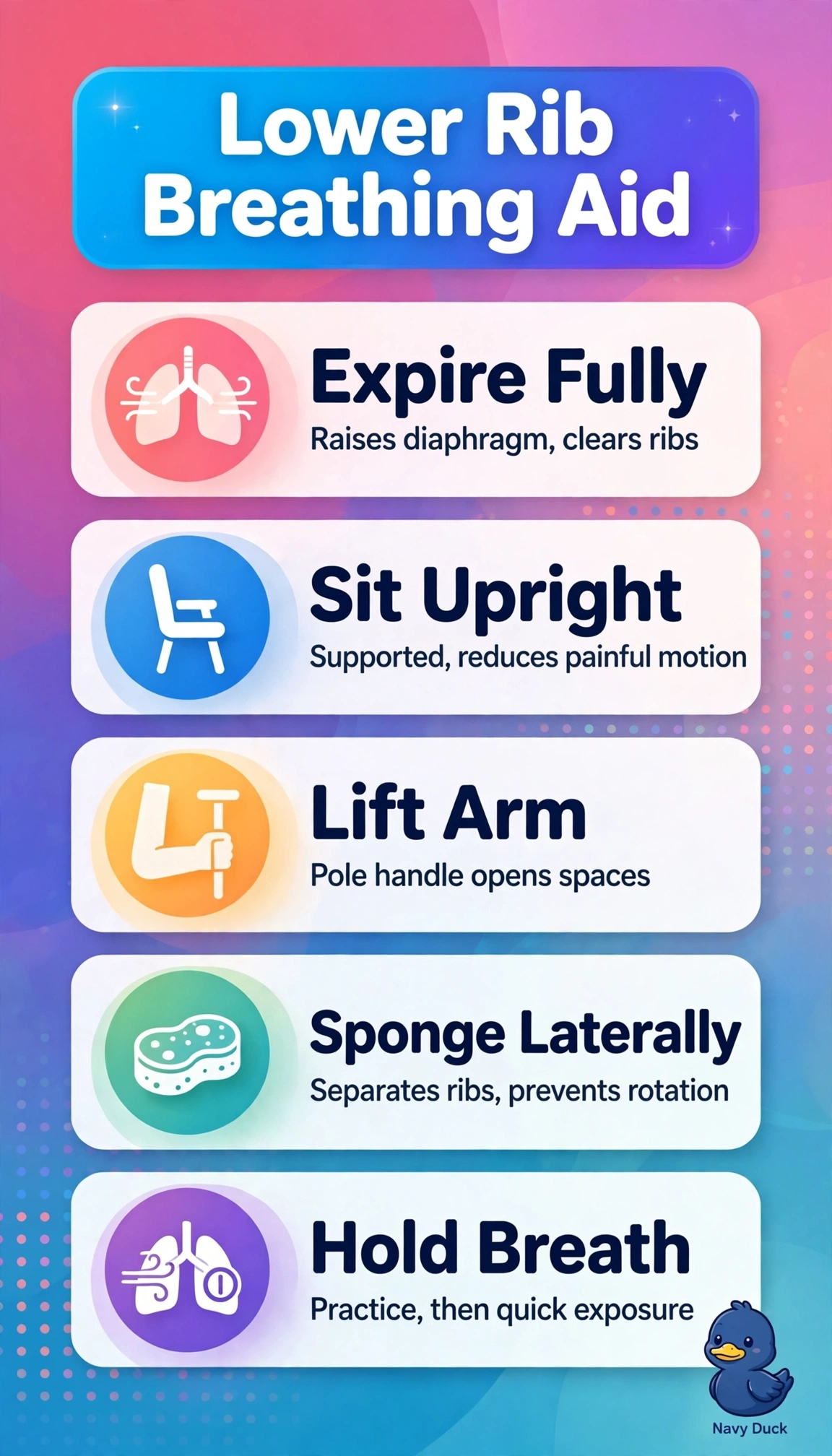
Low ribs hide when lungs are full, so you want them up while the diaphragm drops. Expiration plus upright support and gentle arm lift spreads the interspaces nicely, like parting curtains to see the wall.
Full Explanation
Below-diaphragm ribs from about 8 to 12 are best shown on expiration because the diaphragm rises and lung markings do not overlie the area, improving visualization of subtle fractures. Upright positioning with back support reduces lordosis and motion compared with unsupported sitting, while elevating the affected arm with a pole handle and lateral sponge opens the axillary interspaces and separates ribs without forcing painful overhead abduction. Full inspiration fails by respiration concept because inflated lung superimposes over lower ribs and depresses the diaphragm, obscuring the region despite good positioning aids. Supine flat with the arm across the abdomen fails by positioning concept because ribs overlap, the diaphragm position is less favorable, and unsupported pain increases motion despite correct expiration. Both arms at the sides without aids fails by separation concept because the scapula and soft tissue crowd the lateral ribs and interspaces narrow, reducing fracture conspicuity despite correct respiration and upright support. Exam caveat is that upper above-diaphragm ribs use inspiration while lower below-diaphragm ribs use expiration, and mixing them is a frequent error. Practical check is to coach two practice expiratory breath-holds, secure the support and handle within reach, and confirm the affected side is true lateral without rotation.