
A technologist compares two DR detectors for low-dose chest work using identical kVp and mAs, needs wide latitude for mediastinum and lungs, and wants lower quantum noise at the same exposure. Which digital imaging characteristic best predicts improved low-dose performance?
Select an answer to reveal the explanation.
Short Explanation
You want more mileage from every photon you already paid for in dose. Choosing higher efficiency means DQE turns the same exposure into cleaner signal with less mottle.
Full Explanation
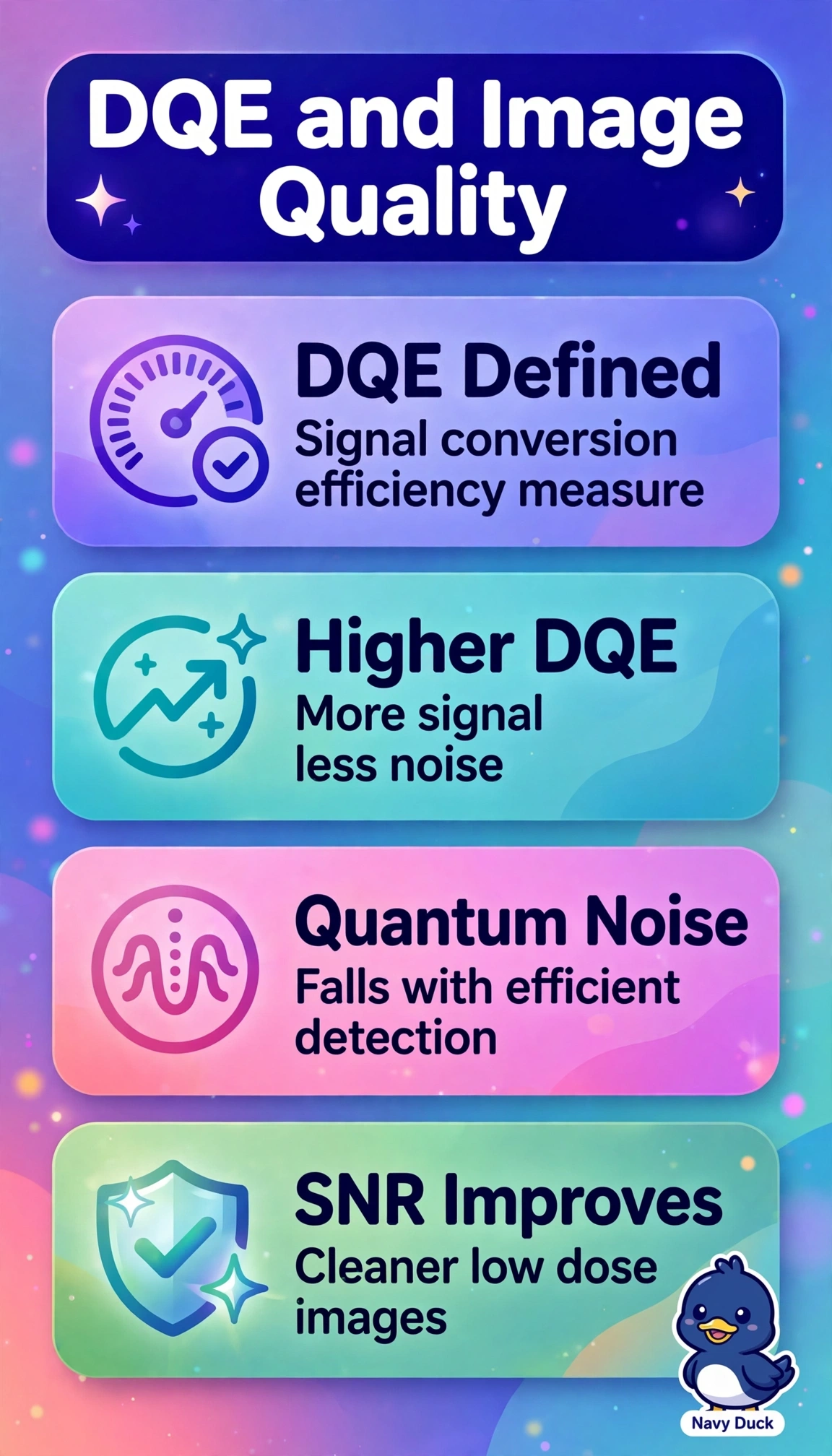
Detective quantum efficiency describes how efficiently the detector converts incident x-ray signal into useful image signal, so higher DQE means less quantum noise and higher signal-to-noise ratio for the same patient exposure, which is the decisive factor for low-dose chest performance with fixed technique. Greater bit depth improves gray-scale precision and representation of signal but does not create signal or reduce quantum mottle when photon number is unchanged. Wider dynamic range allows the detector to respond to a broader range of exposures without saturation, which aids latitude for lungs and mediastinum, but range alone does not improve conversion efficiency or remove photon starvation noise. Lower signal-to-noise ratio is by definition worse image quality, reflecting relatively more noise than signal, and cannot indicate better efficiency. Exam caveat: separate acquisition efficiency from display precision and exposure latitude when comparing detectors. Practical check: compare DQE curves, keep technique constant, and assess noise in uniform regions before judging dose-saving claims.