
An outpatient with chronic shoulder pain is scheduled for fluoroscopic shoulder arthrography with joint injection of iodinated contrast followed by aspiration if fluid is encountered. The radiologist asks the radiographer to set up and assist using sterile technique and time-out. Which assistance approach best supports safe arthrographic joint injection and aspiration?
Select an answer to reveal the explanation.
Short Explanation
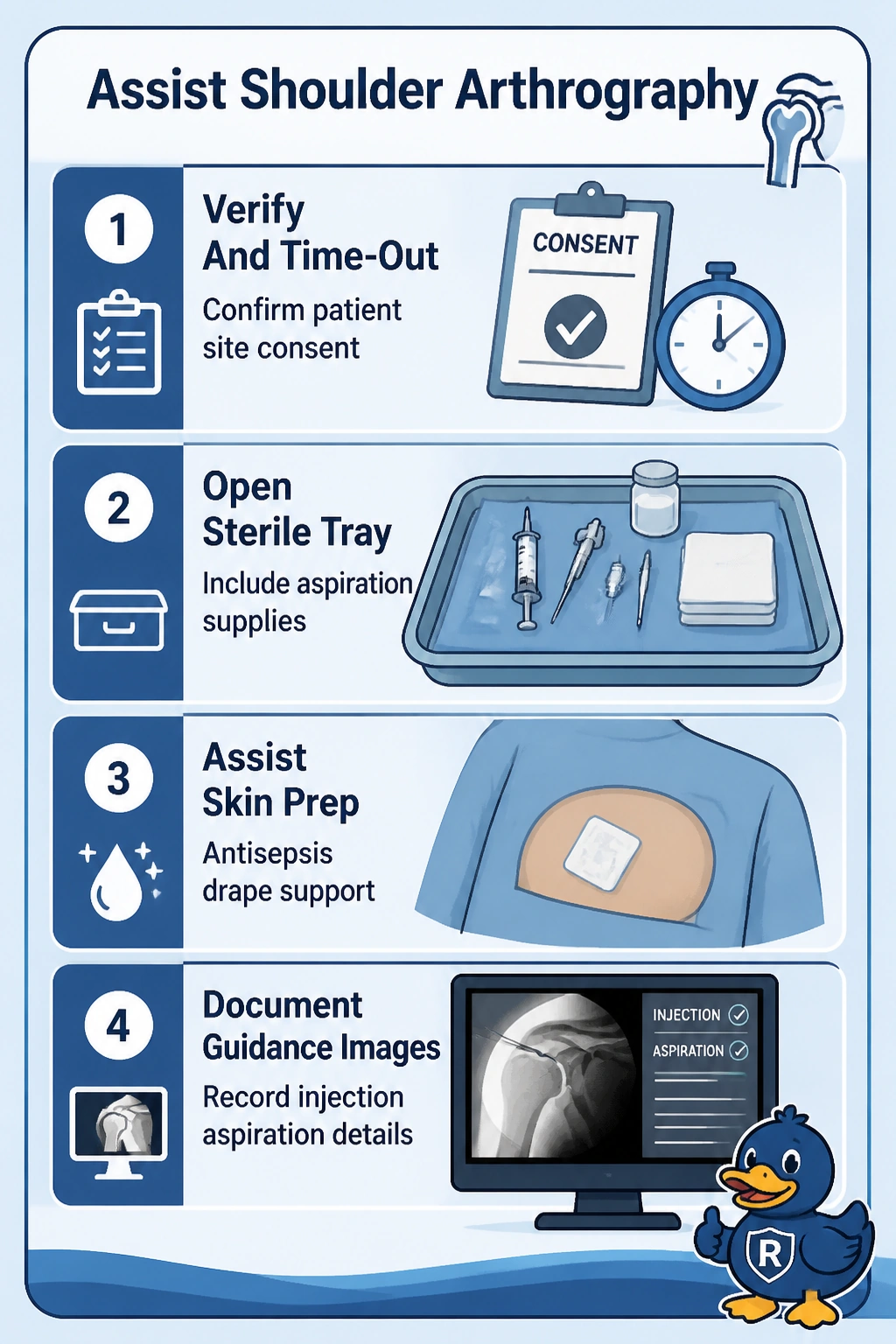
You're the radiologist's extra hands, not the injector in this story. Keeping your tray sterile, consent verified, and prep documented keeps the sterile-field intact and the roles clear.
Full Explanation
The correct assistance combines sterile preparation, medication safety, patient verification and active procedural support required for fluoroscopic shoulder arthrography with conditional aspiration: sterile tray and skin prep reduce joint infection risk, verification of iodinated contrast agent, dose and expiration with allergy screening plus consent and time-out prevents wrong-patient, wrong-site and adverse drug events, while hands-on help during needle placement under fluoroscopy with documentation ensures accurate intra-articular delivery and a complete record. One plausible setup that includes time-out and aspiration supplies but skips contrast and allergy verification fails by medication safety concept because without explicit contrast verification allergy, renal risk and wrong-concentration image degradation cannot be excluded. Another setup with a tray holding contrast only fails by contingency planning concept because the stem specifies aspiration if fluid is encountered, which demands sterile syringes, specimen containers and labeling immediately available, otherwise sampling is delayed or sterility is compromised. A further setup in which the assistant leaves to prepare post-procedure positioning fails by intraprocedural support concept because prioritizing aftercare imaging leaves the radiologist without requested assistance during critical needle guidance and injection. Exam caveat is to match every element of injection plus possible aspiration rather than choosing a routine arthrogram-only workflow that looks familiar. Practical check is to confirm during time-out the patient, shoulder side, consent, contrast name and expiration, allergies, sterile integrity and that aspiration supplies are open and within reach before skin puncture.