
An 82-year-old outpatient using a walker feels dizzy after standing from the dressing room bench, is diaphoretic, and wears a back-opening gown for a lumbar spine exam on a high table. The hallway is busy and the room is cool. Which vital-sign monitoring with fall prevention, comfort, and modesty measure best protects this patient?
Select an answer to reveal the explanation.
Short Explanation
You've got a wobbly moment where safety beats speed. Staying close, rechecking vitals, and covering up keeps dignity intact like a seatbelt hugs you snug and safe with fall-prevention.
Full Explanation
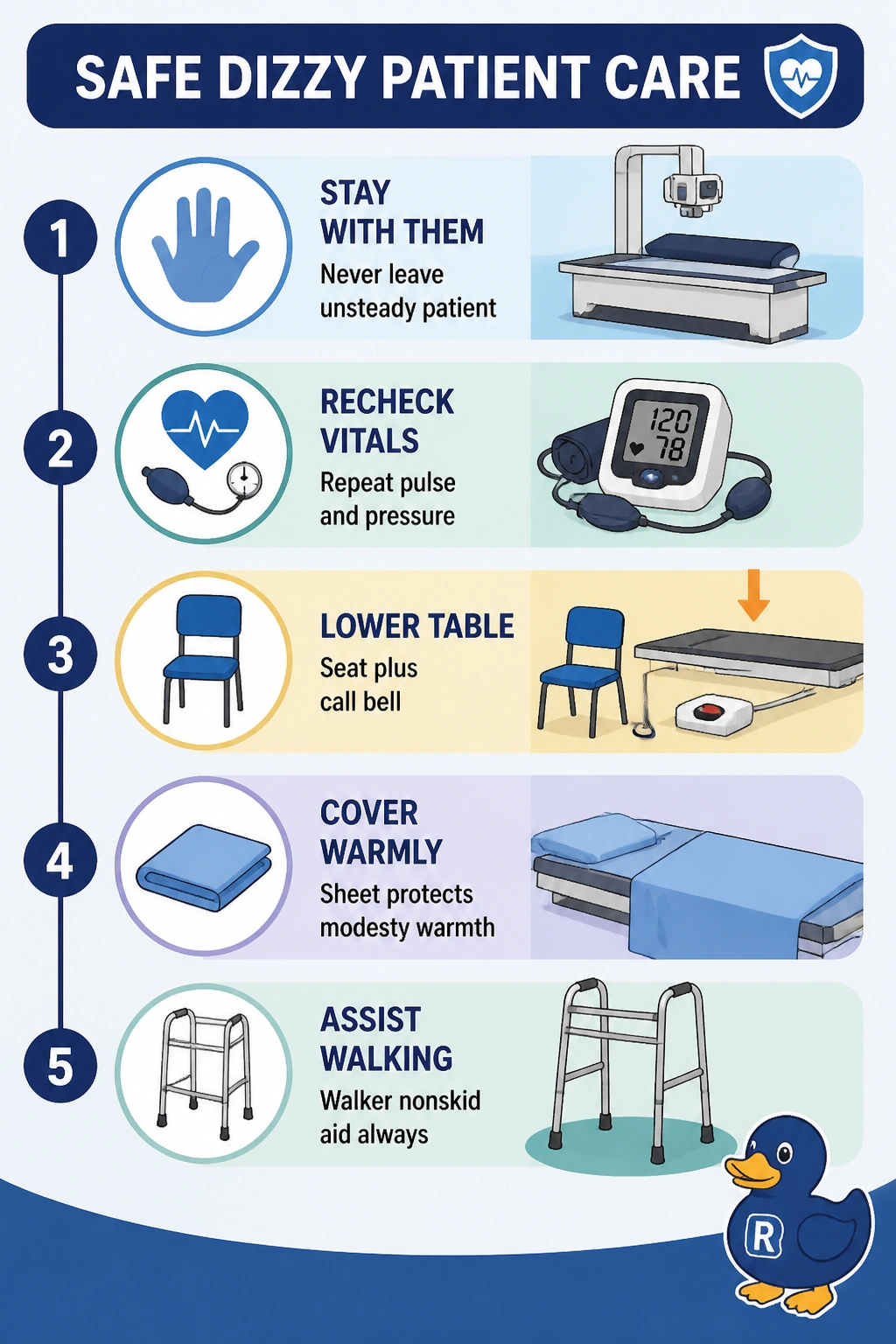
The correct approach is right because an 82-year-old walker user with dizziness after standing and diaphoresis is at high risk for orthostatic hypotension, dysrhythmia, and fall with injury, so staying with the patient and seating immediately prevents syncope, rechecking pulse for rate and rhythm plus blood pressure for orthostatic change assesses perfusion and stability, covering the back-opening gown with a sheet preserves modesty in a busy hallway and warmth in a cool room, and lowering the high table to its lowest locked position with the call bell in reach completes fall prevention and safe help. Keeping the table raised for spine access fails by fall prevention and safe environment, since working height for lumbar examination prioritizes workflow over safety for an unsteady older adult facing a high transfer. Supporting continued standing with the walker fails by presyncope management, since upright posture sustains cerebral hypoperfusion and fall risk despite support, whereas seating interrupts orthostatic stress for reliable reassessment. Rechecking pulse and respirations fails by orthostatic and circulatory assessment, since respirations do not detect hypotension or rate-rhythm change, making blood pressure essential after postural symptoms. An exam caveat is lumbar access never justifies uncovering or unsafe height, with covering adjusted only briefly when stable, supervised, and examiner present. A practical check is stay at bedside with patient seated, lock walker and table wheels, lower table fully, keep sheet, blanket and bell in reach, repeat pulse and pressure after rest, and assist transfer only after symptoms resolve, vitals stabilize, and provider is notified.