
A 14-year-old is referred for suspected idiopathic scoliosis with a visible thoracic rib hump and no prior spinal hardware. She can stand erect without support and the physician requests standing frontal and lateral views of the entire spine to measure curvature. Which scoliosis series protocol should the technologist use to assess curvature while limiting anterior breast dose?
Select an answer to reveal the explanation.
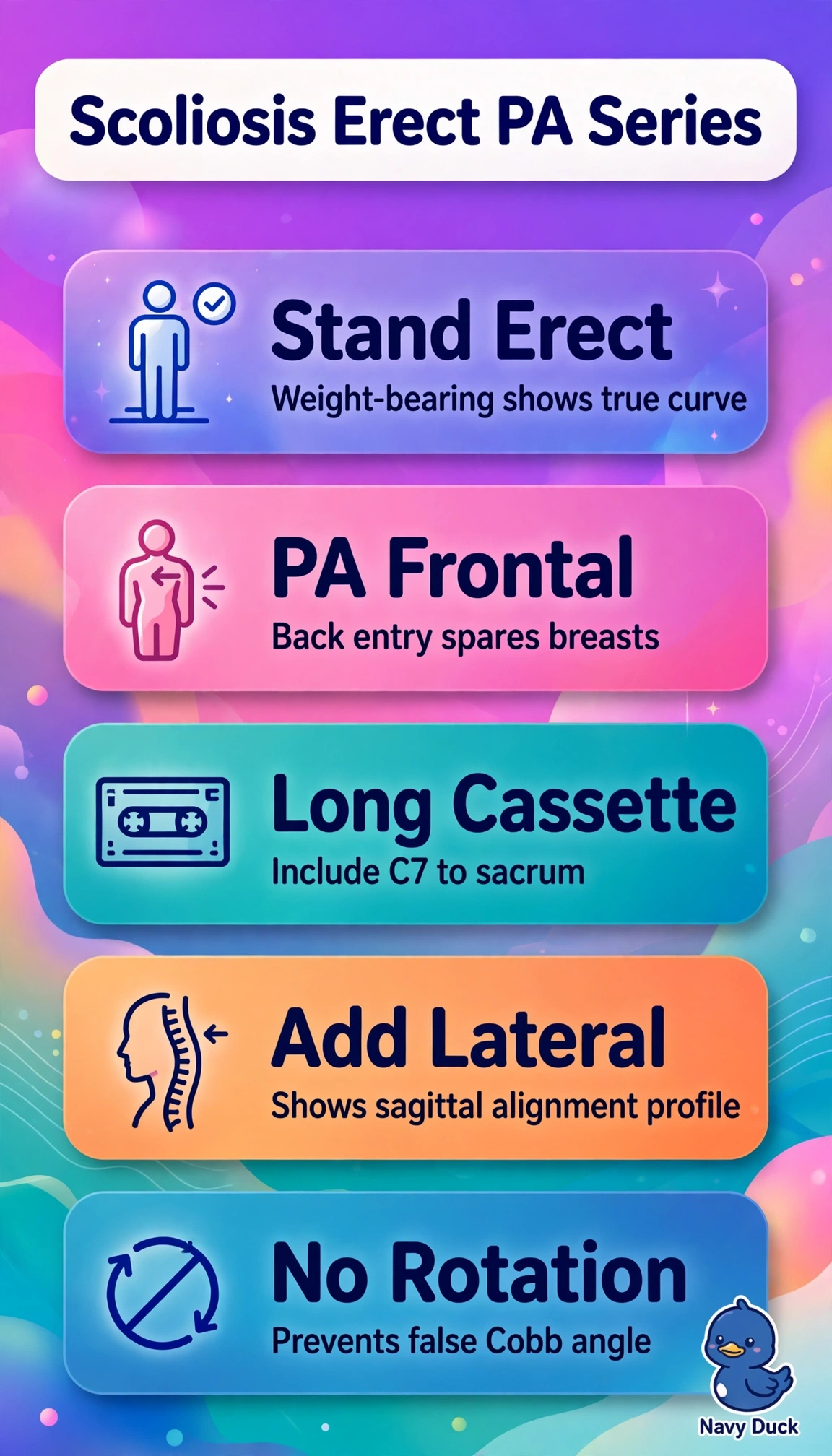
Short Explanation
You caught the dose-saving twist for a young spine. Going PA is like turning your back to the sun, keeping shielding smart while the whole curve stays measurable.
Full Explanation
Standing PA full-spine imaging displays the scoliotic curve under physiologic load for Cobb measurement while the entrance dose falls on the back, substantially reducing breast and thyroid exposure compared with AP, and the lateral completes sagittal alignment without rotation that would falsely alter curvature. The standing AP full-spine approach also shows weight-bearing alignment but places the tube anteriorly so the breasts receive entrance exposure, failing the dose-reduction requirement despite otherwise similar positioning. The supine AP approach reduces motion and is comfortable with flexed joints but unloads the spine so curves measure smaller than standing and anterior entry still irradiates breast tissue, missing both weight-bearing and dose goals. The bending plus spot approach evaluates flexibility and regional detail for surgical planning but does not provide the baseline erect frontal and lateral long-spine survey requested and adds exposures without full-spine comparability. Exam caveat: use PA erect as default for adolescent scoliosis surveys unless the surgeon orders AP or bending series, and practical check is to align midsagittal plane without rotation, arms relaxed, iliac crests level, and include C7 to sacrum.