
During evening portables, you find a leaking chemotherapy drug bag in a patient room plus an open bottle of high-level disinfectant for probes, with strong odor and a small spill on the floor. Housekeeping is delayed and the nurse asks for help containing the area safely. Which hazardous material action best reflects chemical, chemotherapy, and Safety Data Sheet principles?
Select an answer to reveal the explanation.
Short Explanation
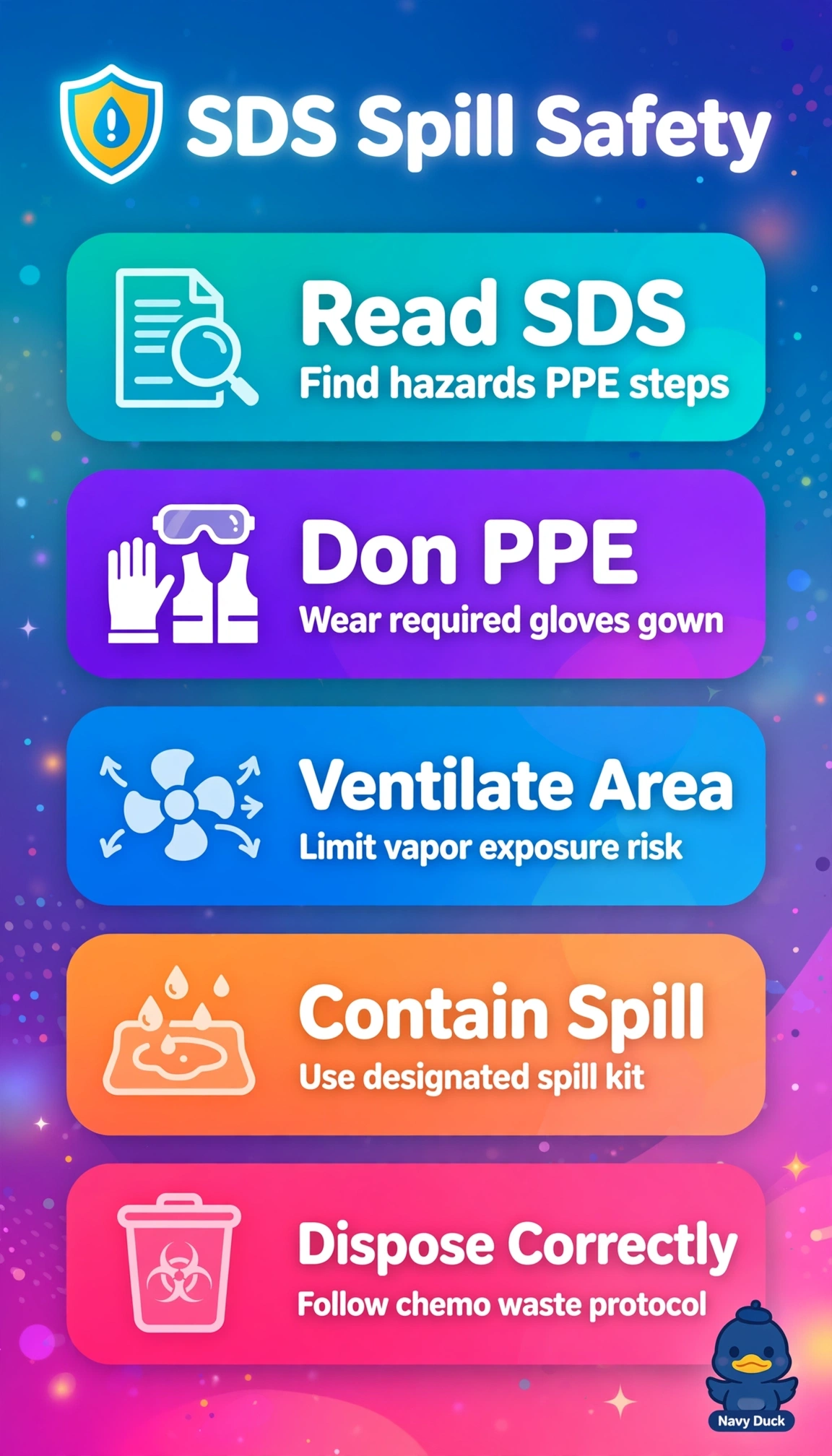
You're letting the official instructions lead instead of guessing with dangerous chemicals. Checking the SDS is like reading the recipe before handling hot peppers. It tells you the exact PPE and cleanup.
Full Explanation
The correct action is right because leaking chemotherapy drugs are cytotoxic with strict containment and disposal requirements while high-level disinfectants for probes are volatile irritants with strong vapors and floor contamination, so Safety Data Sheets must guide required PPE, ventilation, spill kit contents, contact time, and waste handling separately for each agent rather than treating them as interchangeable. Applying the chemotherapy spill kit to both spills fails on chemical specificity because disinfectant spills need their own absorbent, deactivation, ventilation, and disposal steps and a chemotherapy kit does not address vapor control or manufacturer-directed neutralization. Managing both spills from unit training and memory with a standard kit fails on Safety Data Sheet authority because current product sheets, not recall, legally define PPE, first aid, spill procedure, and segregation when two different hazard classes occur together with odor and active leakage. Securing the room to await delayed housekeeping fails on timely containment because standards require immediate PPE-protected ventilation and agent-specific containment instead of deferring cleanup while vapors concentrate and cytotoxic liquid spreads. An exam caveat is that when the stem emphasizes two agents plus strong odor plus delayed support, the test is dual-protocol SDS management, so avoid attractive answers that complete most steps but homogenize kits, omit SDS review, or substitute isolation for active protocol-driven cleanup. A practical check is to locate paper or digital Safety Data Sheets, verify chemotherapy and disinfectant kits are stocked and unexpired, don directed gloves, gown, eye and respiratory protection, ventilate without recirculation, cap the disinfectant if safe, bag cytotoxic waste per labeling, and notify nursing and safety through the facility chain.