
An 82-year-old inpatient feels dizzy when standing for an upright knee exam, has a history of falls, wears a loose gown, and needs transfer from wheelchair to table. Which vital-signs monitoring with fall-prevention and modesty approach best protects this patient during the transfer?
Select an answer to reveal the explanation.
Short Explanation
You're keeping this visit steady and dignified from start to finish. Consistent orthostatic checks plus locked equipment and covered gowning catch dizziness early while preventing slips and exposure.
Full Explanation
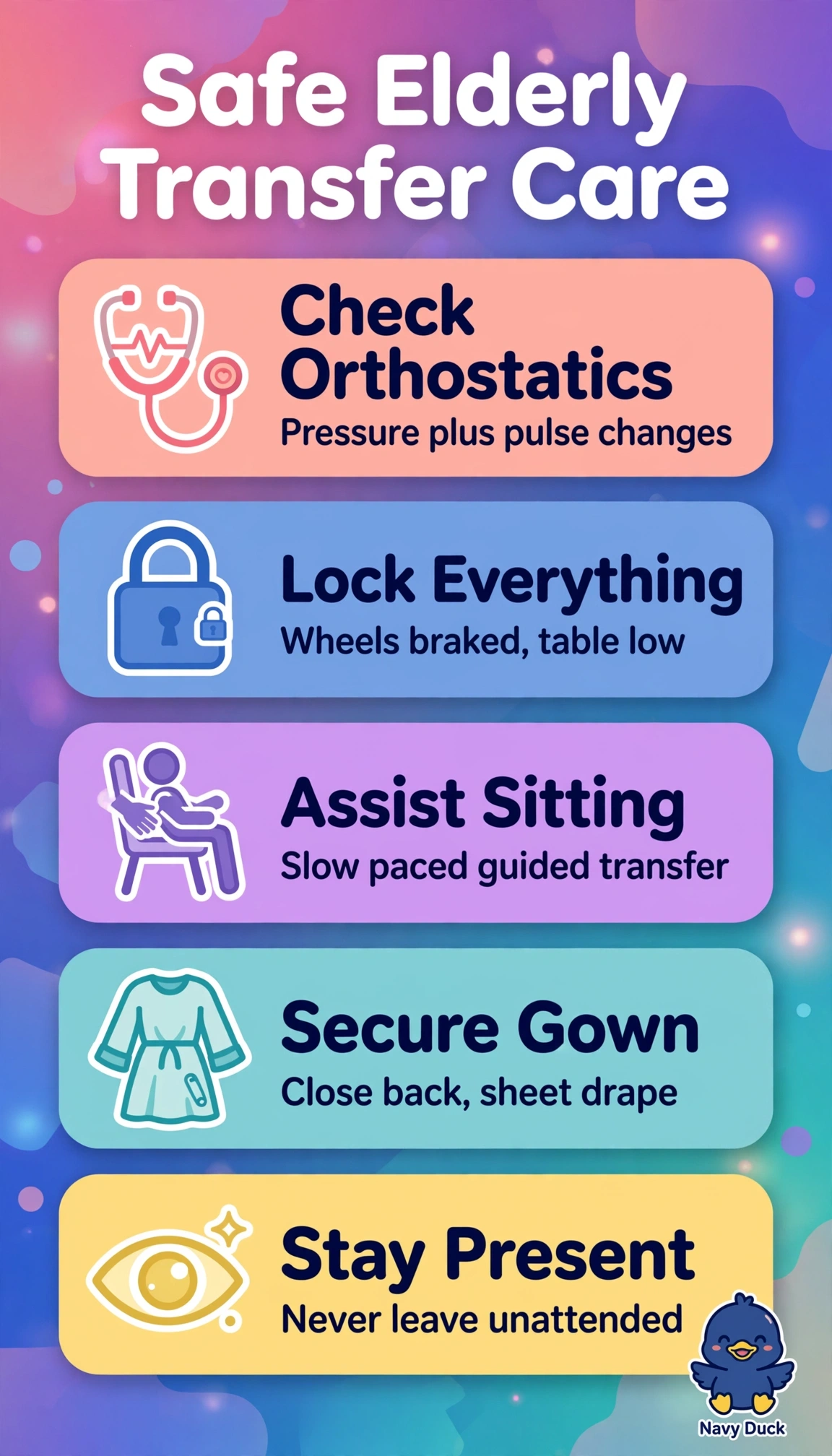
The correct approach is right because dizziness on standing in an 82-year-old inpatient with fall history requires orthostatic blood pressure and pulse to detect postural hypotension and guide safe positioning, while locking wheelchair wheels and lowering the examination table to a low stable height reduces transfer distance and roll-away risk, hands-on assistance to sit compensates for impaired balance and weakness, and securing gown closure before movement preserves modesty and prevents loose fabric from snagging or exposing the patient during transfer. The seated-only pressure approach fails by monitoring concept because a single seated measurement cannot reveal an orthostatic drop and would falsely reassure despite active positional symptoms that require supine-to-sit-to-stand comparison. The hip-height table approach fails by fall-prevention concept because even with locked wheels and assistance, a higher transfer surface increases climbing effort, center-of-gravity shift, and fall impact in a dizzy older adult who needs the lowest safe height. The deferred-gown approach fails by modesty-safety concept because waiting until after transfer leaves the patient exposed and managing loose fabric during the highest-risk movement when both hands should be free for support. Exam caveat: do not select a routine efficient method when the stem adds dizziness, advanced age, and fall history, as those modifiers demand orthostatic assessment and maximal transfer precautions over standard workflow. Practical check: verify both wheel locks engaged, table locked low, gown secured, assistive device and call light in reach, and recheck pulse and symptoms after sitting before permitting standing for upright knee views.