
A 34-year-old outpatient is referred for evaluation of left optic canal narrowing to rule out stenosis. She can lie prone comfortably, can extend her neck, and has no acute facial trauma or precautions. The order requests a nontrauma orbit series emphasizing the optic foramen without superimposition of the opposite orbit. Which orbit projection should the technologist perform to best demonstrate the optic foramen?
Select an answer to reveal the explanation.
Short Explanation
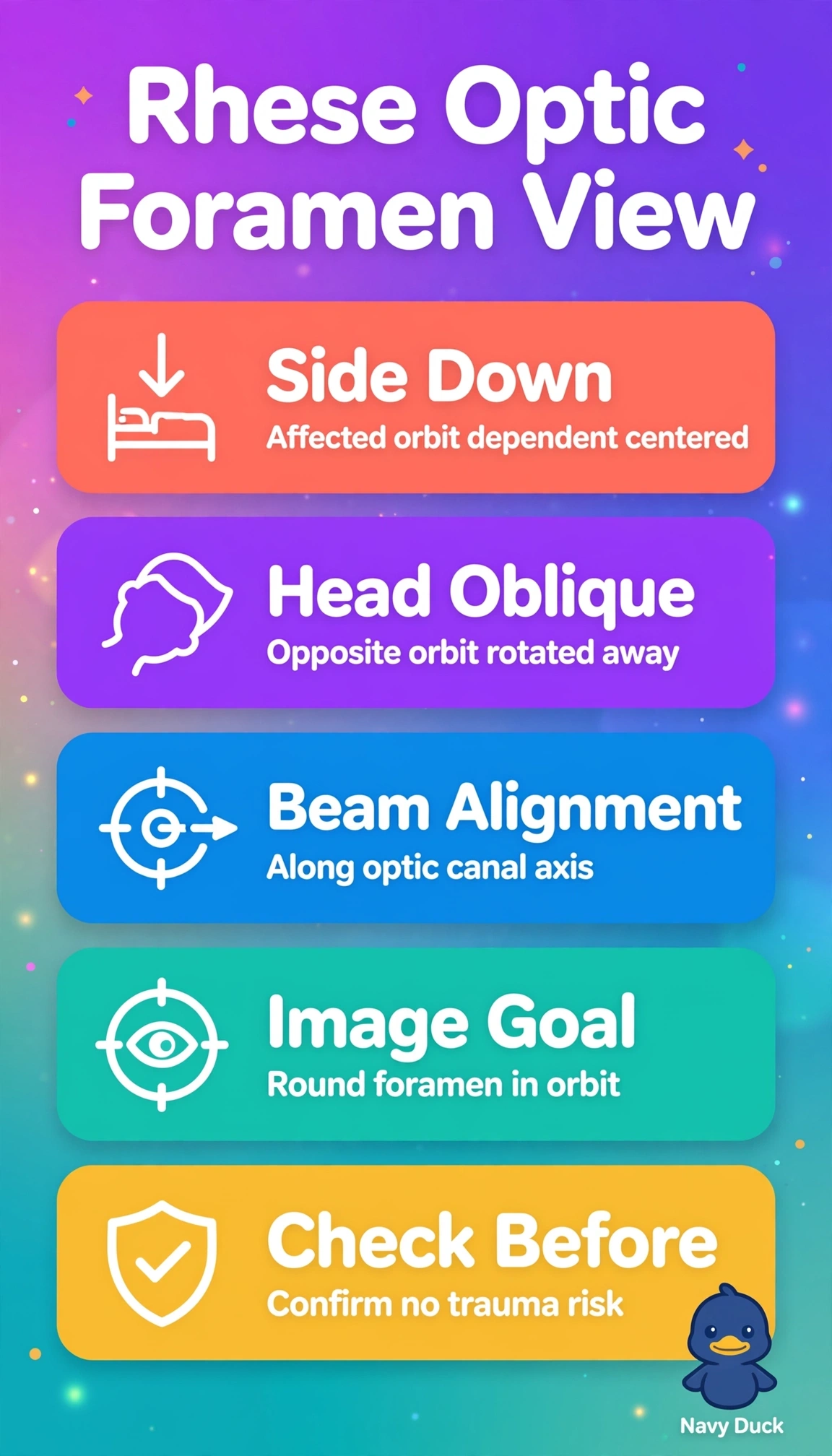
You're sighting down a narrow straw, so you've got to line up exactly behind it to see through. The Rhese view angles the beam along the optic canal for that sharp, round foramen.
Full Explanation
The parieto-orbital oblique Rhese projection is designed specifically to project the optic foramen en face by directing the beam along the long axis of the optic canal while the affected orbit is dependent and centered, which moves the opposite orbit and clinoid structures out of superimposition and opens the foramen within the orbital shadow. The parietoacanthial Waters approach fails by concept because it is optimized for facial bones and maxillary sinuses with petrous ridges projected below the antra, not for aligning with the optic canal, so the foramen remains obscured. The PA axial Caldwell approach fails by concept because it is optimized for anterior ethmoid and frontal sinuses and superior orbital rims with petrous ridges lowered, not for tunnel views of the apex, so it does not isolate the optic canal. The lateral facial bone approach fails by concept because it profiles the sella, nasal bones, and orbital roofs in superimposition, which is useful for trauma screening but does not demonstrate the foramen without overlap. For the exam, remember Rhese equals optic foramen and foramen equals affected side down and centered, and in practice verify no trauma contraindication, center carefully to the dependent orbit, and check that a sharply defined round lucency appears within the orbit before releasing the patient.