
In a crowded ED, a radiographer performs a painful ankle series on an alert adult who repeatedly says stop and pushes the cassette away, but the technologist holds the foot still and completes the exposure to avoid delay. The patient later files a claim for harmful unconsented touching. Which legal doctrine best classifies intentional harmful contact without consent in this radiography case?
Select an answer to reveal the explanation.
Short Explanation
You spotted the key point: the technologist intentionally continued despite your clear refusal. Holding you still to complete the examination is battery, not an accidental failure to use reasonable care.
Full Explanation
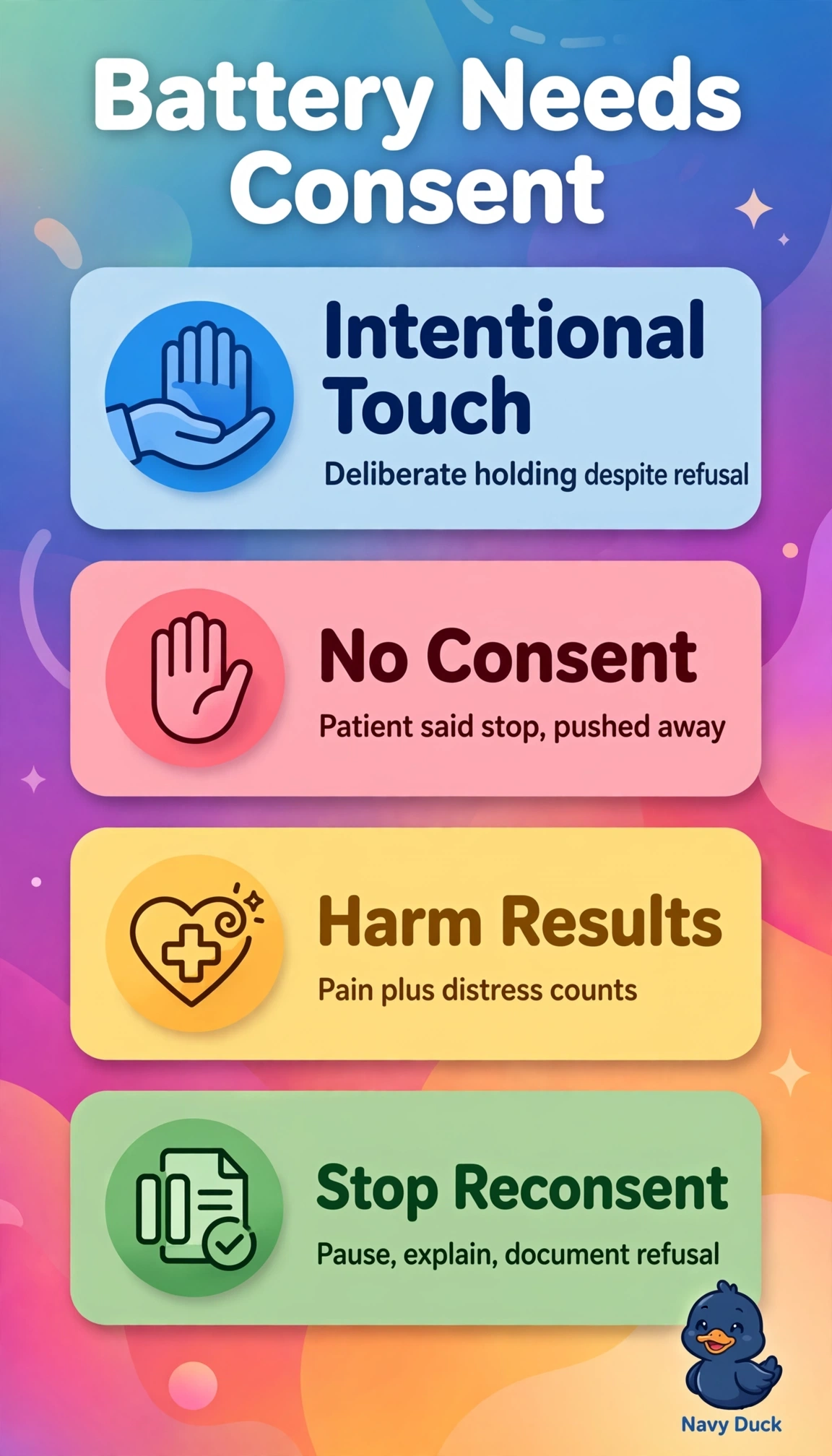
Battery is intentional harmful or offensive touching without consent or privilege. Holding an alert, competent adult still to complete an examination after a clear refusal fits this doctrine, even if the technologist acted to avoid delay rather than out of malice; harm can include pain and emotional distress beyond the underlying injury. Negligence applies to an unintentional failure to use reasonable care for safety, so it does not capture the deliberate decision to override the patient’s refusal. Respondeat superior may make an employer liable for an employee’s actions within the scope of employment, but it addresses the hospital’s responsibility rather than classifying the technologist’s contact. Res ipsa loquitur is an evidentiary rule that can permit negligence to be inferred when an event ordinarily would not occur without negligence and the defendant controlled the instrumentality; it does not classify intentional unconsented contact. An exam caveat is to distinguish an intentional tort from a negligence-based claim. In practice, stop the examination, explain the procedure, document the refusal, and obtain valid consent or a lawful order before proceeding.