
An adult outpatient arrives in fluoroscopy for a right shoulder arthrogram for suspected labral tear, with consent signed, allergies reviewed, and a sterile arthrography tray prepared. The radiologist will perform the joint injection and possible aspiration under fluoroscopic guidance with your assistance. Which sterile assisting step best supports safe joint injection and aspiration?
Select an answer to reveal the explanation.
Short Explanation
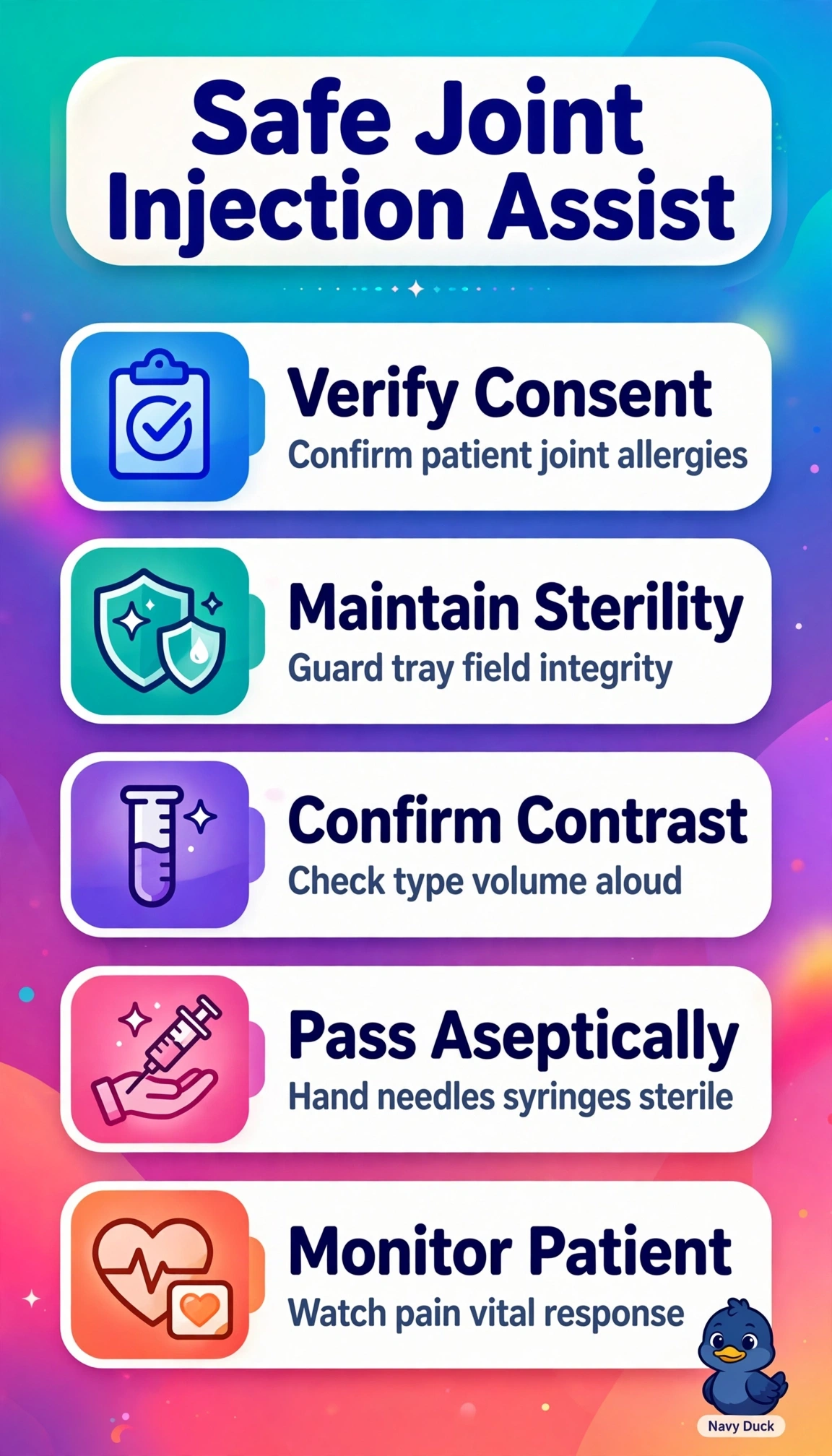
You've got the radiologist's back by guarding sterility and double-checking contrast. Keeping the sterility intact is like guarding a clean kitchen counter during cooking. That teamwork prevents infection and wrong-contrast errors.
Full Explanation
Fluoroscopic arthrography requires strict aseptic technique because contrast and instruments enter a sterile joint space, so the technologist maintains the sterile field, performs time-out verification of patient, site, and contrast, and passes needles, syringes, and dressings without contamination while monitoring the patient. Confirming contrast type and volume aloud prevents medication error and documents the injection and any aspirated fluid handling per protocol. Positioning in internal rotation with traction does not facilitate glenohumeral access and risks pain, independent injection of anesthetic exceeds technologist scope and bypasses radiologist responsibility for the puncture, and adding extra contrast on personal judgment ignores prescribed volume and increases pain and leakage artifact. Exam caveat: ARRT expects you to assist, not perform the joint puncture, and to prioritize consent, site marking, and sterile technique. Practical check: before the radiologist punctures, verbally confirm patient identity, joint, allergies, and contrast with the tray label visible.