
On a busy orthopedic floor, you must move a 95-kg postoperative adult with limited weight-bearing from bed to wheelchair for hip radiographs, with one aide available, a slippery floor sign nearby, and a full-body sling lift parked in the hall. Which transfer approach best protects the patient and staff through safe ergonomics?
Select an answer to reveal the explanation.
Short Explanation
You chose brains over back strain that day. Mechanical lift does the heavy work like a forklift for fragile cargo.
Full Explanation
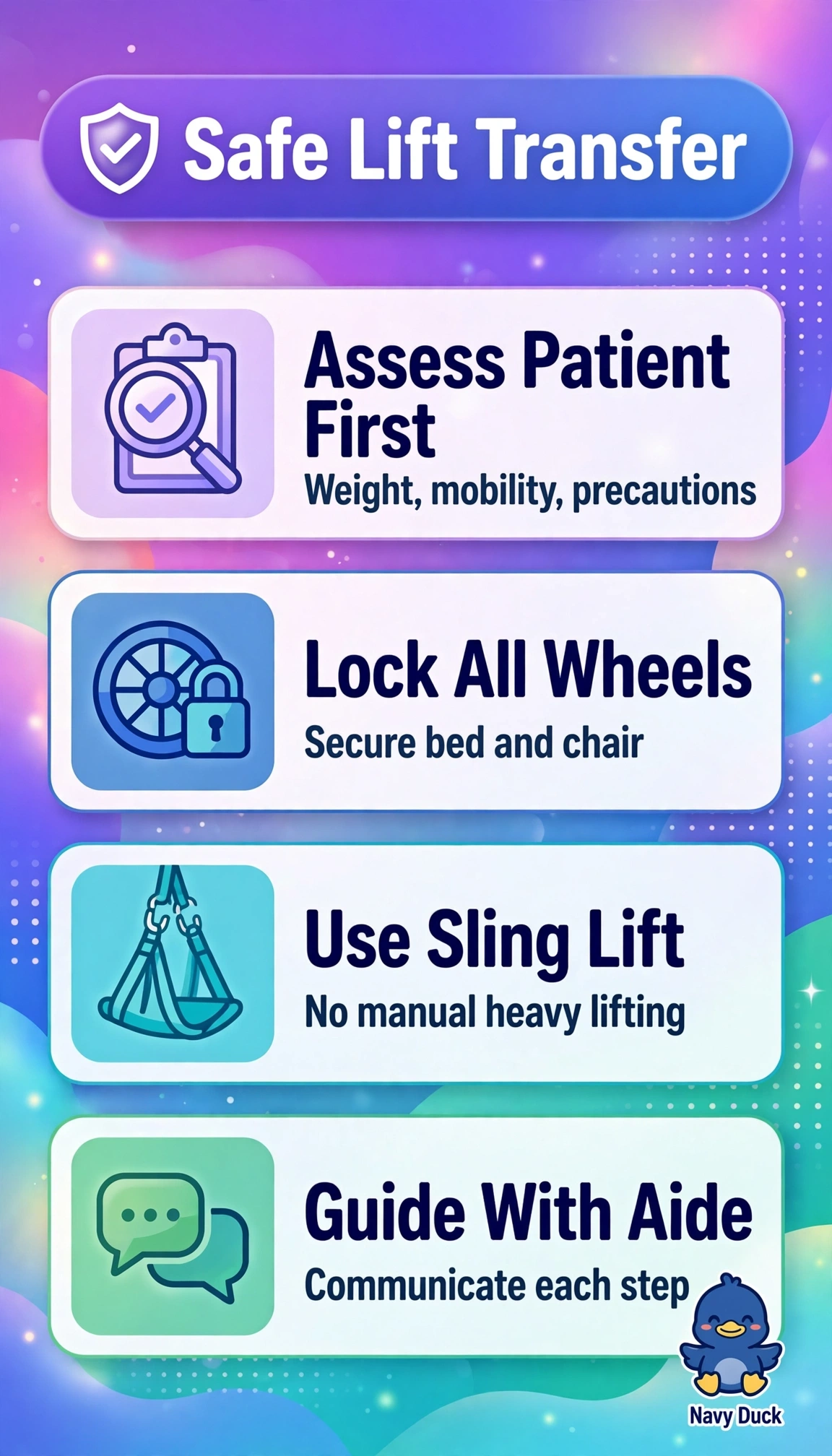
The correct approach aligns with safe handling for a 95-kg postoperative patient with limited weight-bearing because a full-body sling lift eliminates spinal loading and shear while aide assistance maintains sling positioning, hip precautions and dignity, locked wheels prevent bed-chair displacement, and clear explanation reduces anxiety and sudden movement. The assisted pivot transfer with gait belt is otherwise sound for patients who can bear weight, but it fails here on the weight-bearing concept because it demands leg strength, balance and controlled pivoting that this patient cannot provide, creating fall and staff back injury risk. The sit-to-stand lift is otherwise appropriate on orthopedic units, but it fails on equipment-selection concept because it requires partial weight-bearing, trunk control and ability to follow commands rather than full non-weight-bearing support. Proceeding with the correct lift directly over the slippery area is otherwise competent technique, but it fails on environmental-safety concept because safe ergonomics requires rerouting, delaying until cleaned, or using mats and spotters rather than transporting a suspended load over a low-friction surface. An exam caveat is that questions often include one aide and a nearby lift to signal that help and equipment are available, so do not choose manual methods to save time when weight and precautions exceed limits. A practical check is to verify sling size and weight rating, inspect straps and hooks, lock all wheels, ensure arms are crossed and the hip is supported, and confirm the travel path is dry and clear before lifting.