
An adult outpatient refuses a wrist radiograph after the technologist already positioned the wrist and is holding the tube ready, but the technologist exposes the image anyway without consent to avoid a repeat visit. The patient later claims unlawful touching and harm from unnecessary exposure. Which legal doctrine best classifies the intentional unauthorized exposure and resulting claim?
Select an answer to reveal the explanation.
Short Explanation
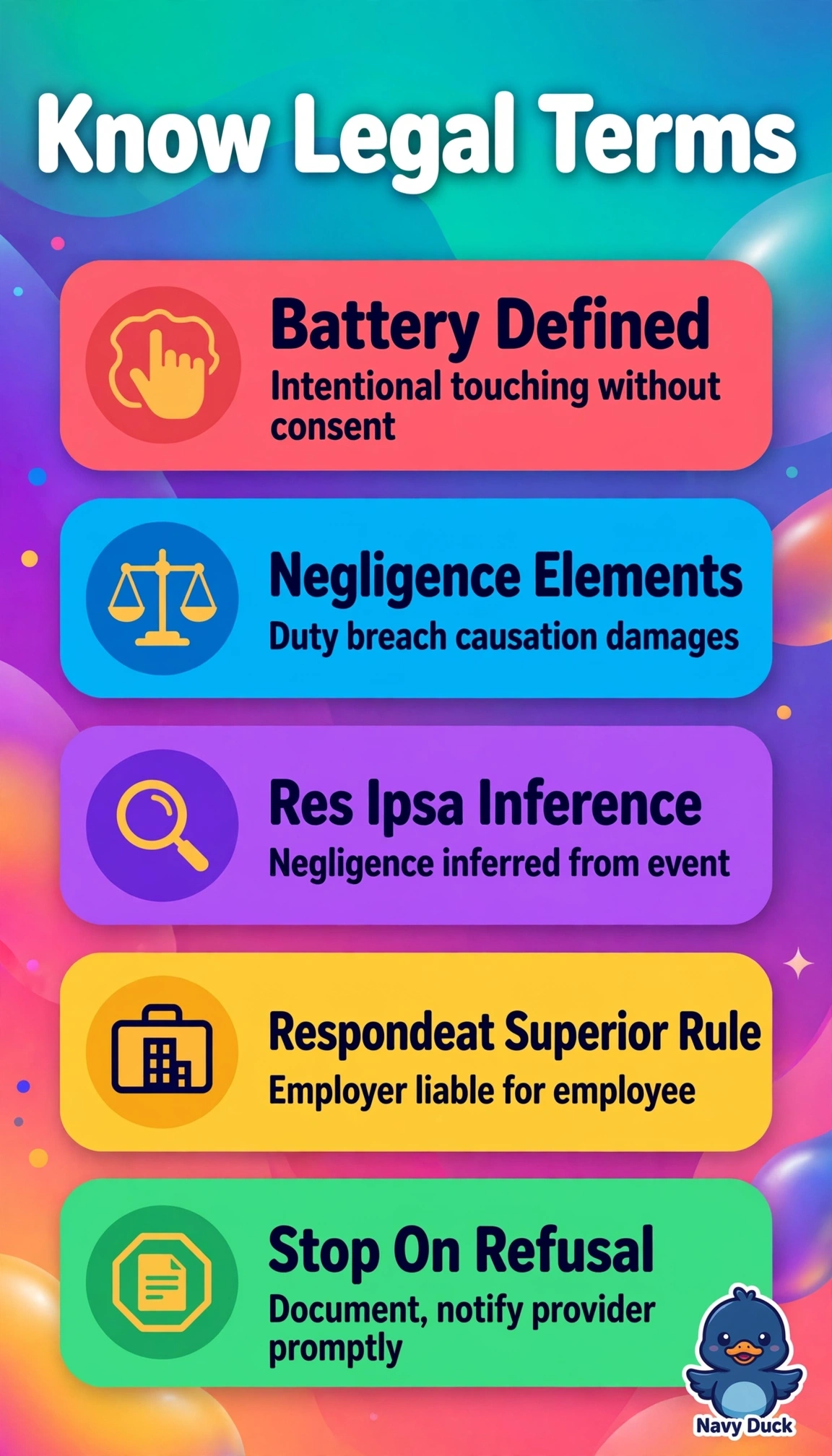
Consent is your legal permission slip, and proceeding after refusal crosses a bright line. Unauthorized exposure fits battery because intent plus touching without permission is the core issue.
Full Explanation
Battery is the intentional harmful or offensive touching of another without consent or lawful justification, which applies when imaging proceeds after explicit refusal, while negligence addresses breach of the standard of care such as unnecessary radiation exposure and requires duty, breach, causation, and damages. Res ipsa loquitur is an evidentiary doctrine allowing negligence to be inferred when an injury ordinarily would not occur without negligence, the instrumentality was in the defendant’s control, and the plaintiff did not contribute, not a cause of action for employer liability. Respondeat superior holds an employer vicariously liable for an employee’s acts within the scope of employment, not the classification of the unauthorized touching itself. Malpractice is professional negligence requiring proof of all elements including causation and damages, and lack of consent alone does not automatically prove those elements. The exam caveat is to separate intentional torts from negligence doctrines and employer liability, and the practical check is to stop immediately when consent is withdrawn, document refusal, notify the ordering provider, and follow facility policy for informed refusal.