
A high-volume emergency department performs portable chests and supine abdomens on adults ranging from small to bariatric, with new technologists frequently selecting inconsistent kVp and mAs that cause repeats. Leadership wants reproducible exposures with automatic adjustment for patient size. Which technique chart approach best provides consistent image quality across varied body habitus?
Select an answer to reveal the explanation.
Short Explanation
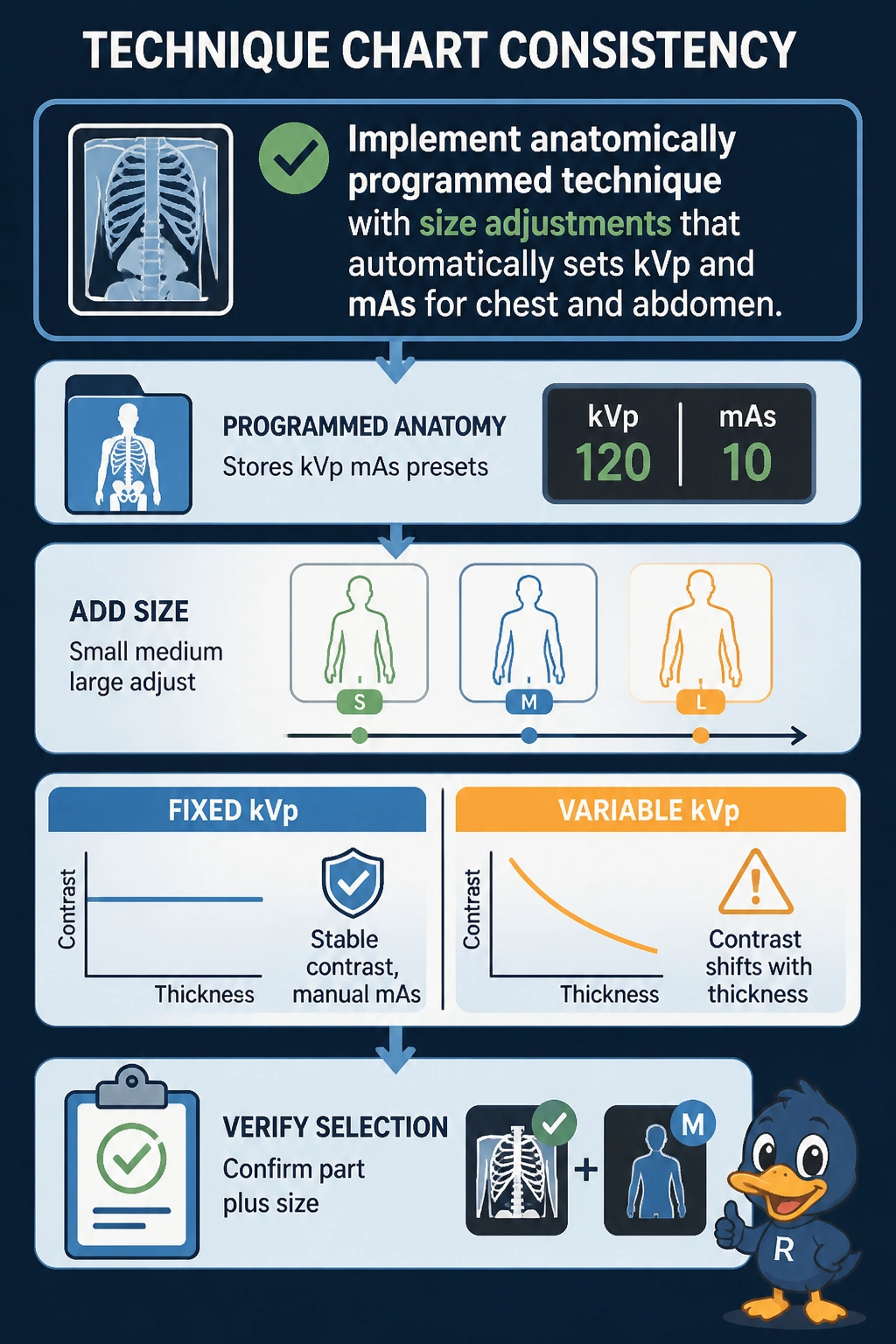
You are taming chaos with consistency! Preprogrammed anatomy plus size buttons lets the system do the math, so programmed technique wins for varied ED patients.
Full Explanation
Anatomically programmed radiography stores optimized kVp, mAs, and processing for each body part and adds patient-size selections that adjust for attenuation, which produces reproducible contrast and density across small to bariatric adults and reduces operator variability ideal for high-volume emergency portable work with new staff. Implementing programmed technique with size adjustment therefore meets both reproducibility and habitus compensation requirements. A fixed kVp chart with manual mAs scaling provides consistency in contrast but requires accurate thickness measurement and manual calculation for every patient, so it remains more operator-dependent and less automated than programmed selections for varied portable conditions. A variable kVp chart with fixed mAs changes contrast as kVp rises with thickness, producing inconsistent image contrast and latitude across habitus sizes despite maintaining density, which conflicts with consistency goals. Relying on independent manual technique without a chart maximizes variability and repeat risk, especially with inexperienced operators, and fails the leadership requirement for standardization. Exam caveat is to associate programmed with anatomy plus size buttons and fixed versus variable with contrast consistency, and practically verify the selected body part and size chamber before exposure.