
A 10-year-old outpatient arrives with a guardian for a right forearm radiograph for fall pain. The electronic order reads left forearm, the wristband matches the requisition name and birthdate, and the guardian insists the right arm is swollen. The technologist has two other waiting patients and a full schedule. Which identity and order verification action best meets ethical and legal standards?
Select an answer to reveal the explanation.
Short Explanation
You’re right to pause and protect the child before any exposure. Reconciling the side mismatch upholds valid consent and keeps your verification legally sound, even under schedule pressure.
Full Explanation
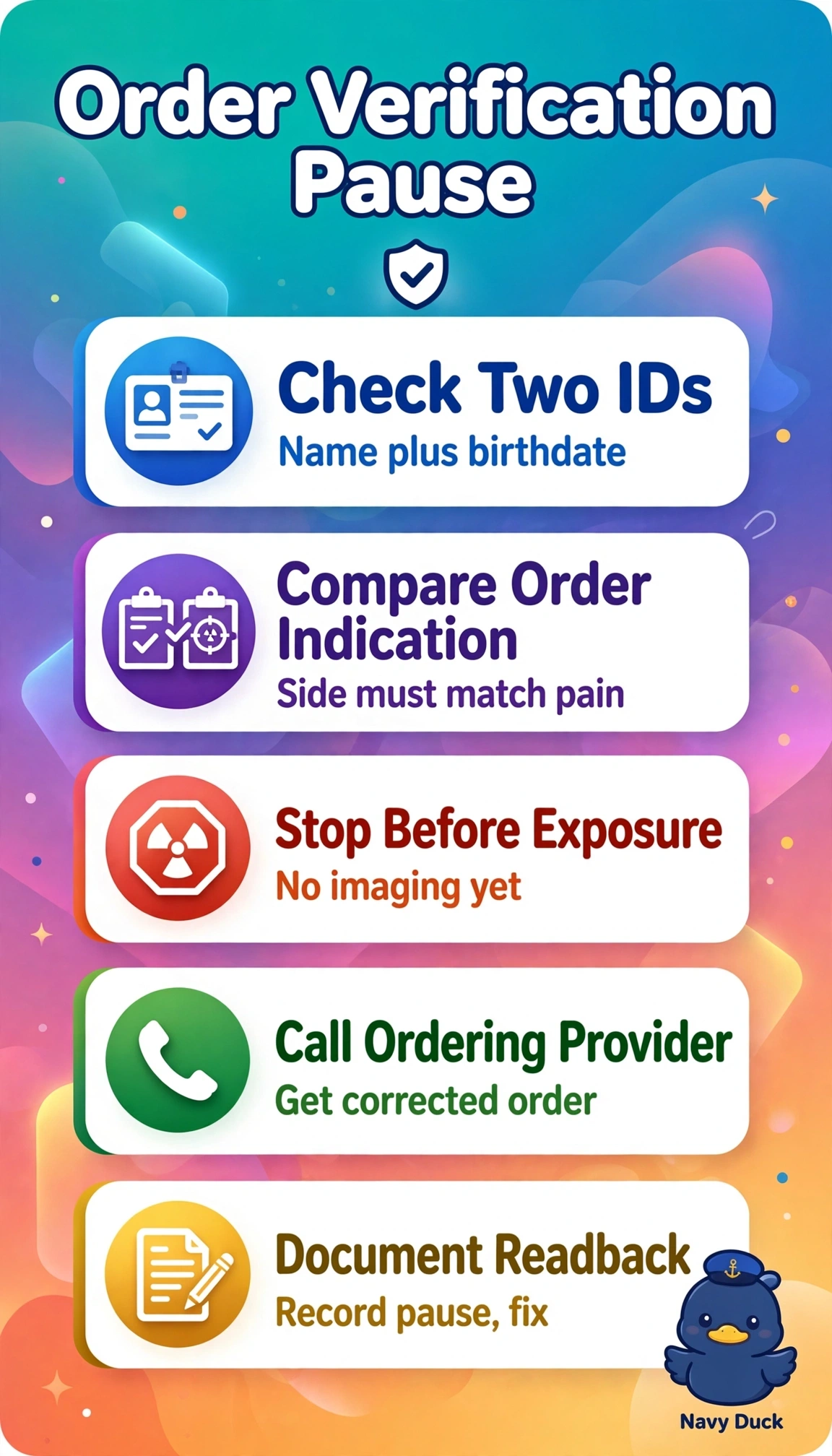
Pausing imaging and reconciling the mismatch with the ordering provider before exposure is required: a left-right conflict between the written order and the reported symptoms is a hard stop. A matching wristband confirms identity, not the correct side, and schedule pressure does not change your duties of nonmaleficence, patient advocacy, ALARA, correct-site imaging, and practice within scope. Using two identifiers and imaging the painful right forearm based on the guardian’s history applies identity checks and clinical correlation, but the guardian cannot amend the order; provider clarification and a corrected order are needed to authorize the opposite side. Imaging the ordered left forearm after identity verification respects the written order, but ignores the reported right-sided pain and swelling and risks wrong-site imaging of a likely unaffected side. Pausing and referring the family to the ordering clinic avoids wrong-site exposure, but shifts reconciliation onto the family rather than having you promptly contact the provider, delaying pediatric care and worsening throughput. An exam caveat: laterality, examination type, and indication still require reconciliation even when name and birthdate match; neither guardian insistence nor workload justifies proceeding. A practical check is to stop and keep the child unexposed, contact the provider using closed-loop communication to confirm the indication and side, obtain the corrected order, document the discrepancy and resolution, and complete a final time-out for identity, order, and side.