
A 6-year-old with a suspected forearm fracture arrives with worried parents asking about radiation, and the ordering provider requests two views. Your department promotes Image Gently, the child can cooperate if coached, and gonadal shielding is not near the field. Which approach best aligns with pediatric and Image Gently principles while ensuring diagnosis?
Select an answer to reveal the explanation.
Short Explanation
You kept it gentle and precise for that little arm. Justification shines when every image truly earns its place.
Full Explanation
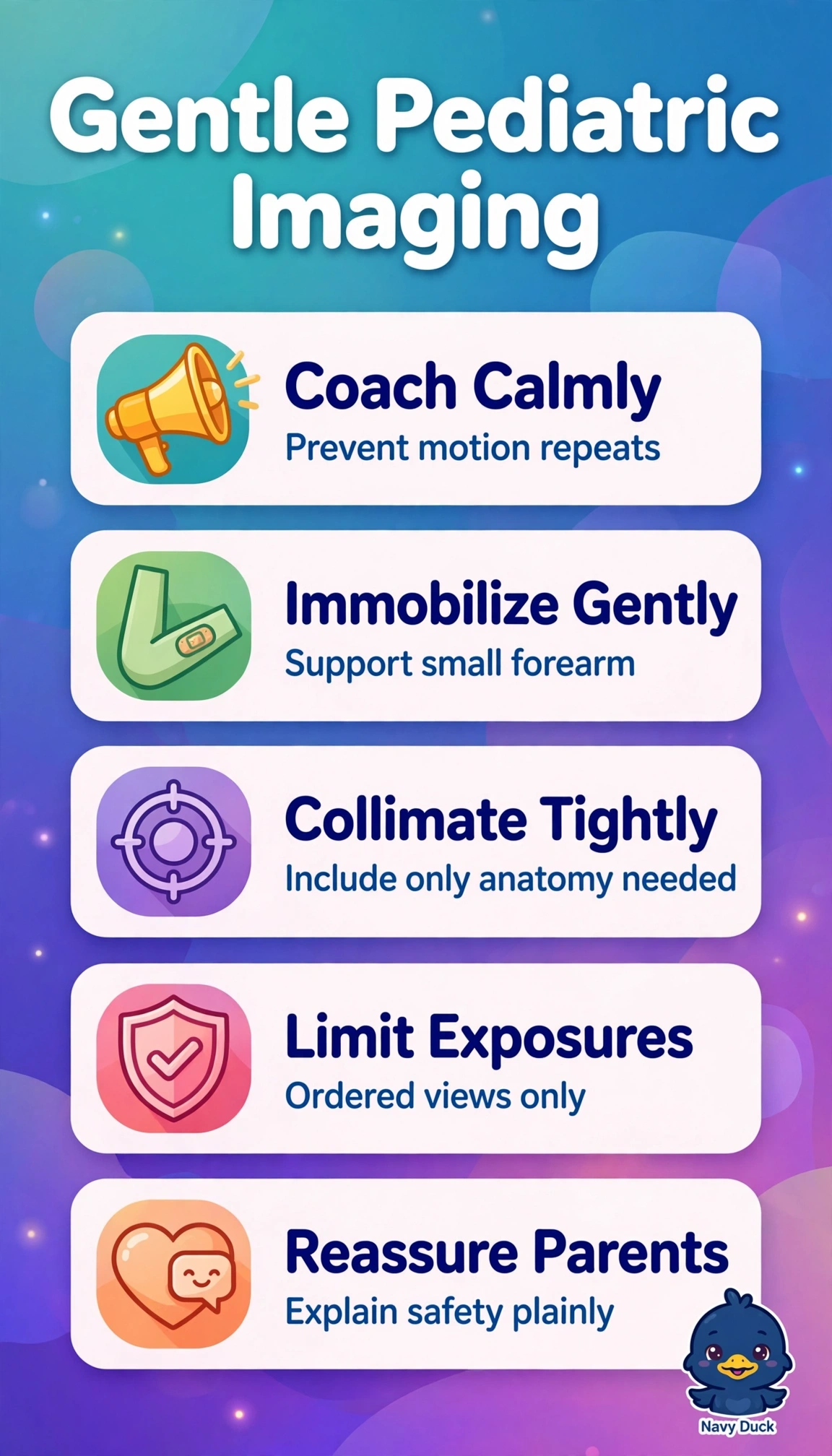
The correct approach embodies Image Gently justification and optimization because coaching plus immobilization secures stillness in a cooperative 6-year-old, tight forearm collimation restricts dose to diagnostic tissue, and limiting exposure to the two ordered views provides AP and lateral evaluation sufficient for most buckle and greenstick fractures without excess dose. Adding a routine oblique and contralateral comparison violates justification because extra views increase tissue dose and are not indicated without an order or equivocal findings suggesting physeal injury, where added imaging requires provider direction rather than routine thoroughness. Using standard adult forearm factors violates optimization because children need size-adjusted low-dose technique with appropriate kVp and reduced mAs, and adult penetration overexposes more radiosensitive growing tissue while ignoring pediatric charts. Applying routine gonadal shielding when the pelvis is well outside the forearm field violates appropriate shielding practice because distant gonadal dose is negligible and current guidance discourages routine shielding that provides no benefit and may compromise positioning. For exams, remember that more views do not equal better care under ALARA, and adult technique is never acceptable for a child when pediatric settings exist. As a practical check, select the age-specific technique, demonstrate stillness coaching, verify tight collimation and sponge immobilization on the light field, and reassure parents with a brief low-dose benefit explanation before exposure.