
An 82-year-old inpatient weighing 95 kg needs lateral transfer from stretcher to x-ray table for a hip study, cannot bear weight, has a healing sacral pressure injury, and your facility requires no-lift policy with staff back protection. Which safe patient handling device should the transfer team select to maintain ergonomics?
Select an answer to reveal the explanation.
Short Explanation
You've got a no-lift slide, not a stand-up situation, so floating beats lifting. Your back will thank you because air-assisted gliding cuts friction while protecting fragile skin.
Full Explanation
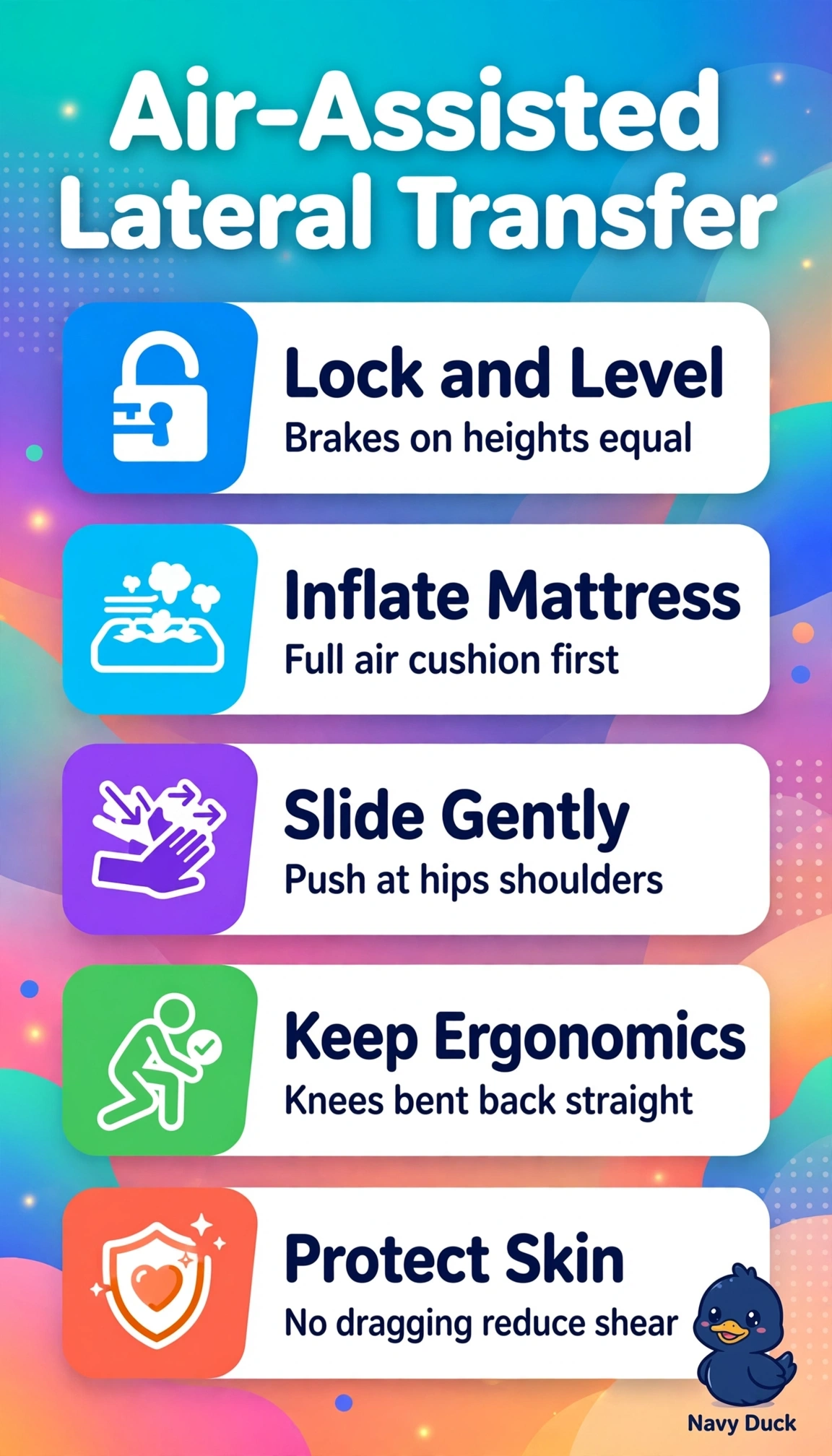
The air-assisted lateral transfer mattress is correct because it creates a powered cushion of air that floats the 95-kg supine patient across the stretcher to x-ray table gap without weight bearing, lifting, or dragging, which complies with the no-lift policy, keeps staff spinal loads within ergonomic limits, and minimizes shear and pressure over the healing sacral injury while maintaining supine alignment for the hip study. The powered sit-to-stand aid fails by weight-bearing concept because it requires the patient to bear weight through the hips, knees and feet and actively step sideways, which is impossible and unsafe when the patient cannot bear weight for a hip study. The ceiling lift with a sling under the sacrum fails by tissue-viability concept because suspending full body weight through fabric positioned directly beneath the sacrum concentrates pressure, friction and shear on the healing pressure injury and risks deterioration despite otherwise achieving a no-lift transfer. The low-friction slide sheet with manual pull fails by ergonomics concept because although it reduces friction for a supine lateral move, it still requires caregivers to exert high pull forces to move a 95-kg adult, which exceeds safe handling limits and violates the no-lift and back-protection requirement. Exam caveat is to distinguish powered air-assisted gliding from any manual slide or draw-sheet technique, as only the inflated system qualifies as a no-lift assist for a heavy non-weight-bearing patient. Practical check is to lock both surfaces at equal height, bridge the gap, fully inflate until the mattress floats freely, glide using handles rather than lift, and reassess sacral skin before and after the move.