
A 74-year-old inpatient after a left-brain stroke coughs when drinking thin liquids and pockets food in the cheeks. The patient is alert, can sit upright in a chair, and has no bowel obstruction signs. Speech therapy and radiology plan a fluoroscopic aspiration assessment with varied food textures. Which fluoroscopic swallowing protocol best evaluates the aspiration risk?
Select an answer to reveal the explanation.
Short Explanation
You’re watching the throat in action, not just the tube it goes down. A modified barium swallow lets you test different textures and catch that cough in the act.
Full Explanation
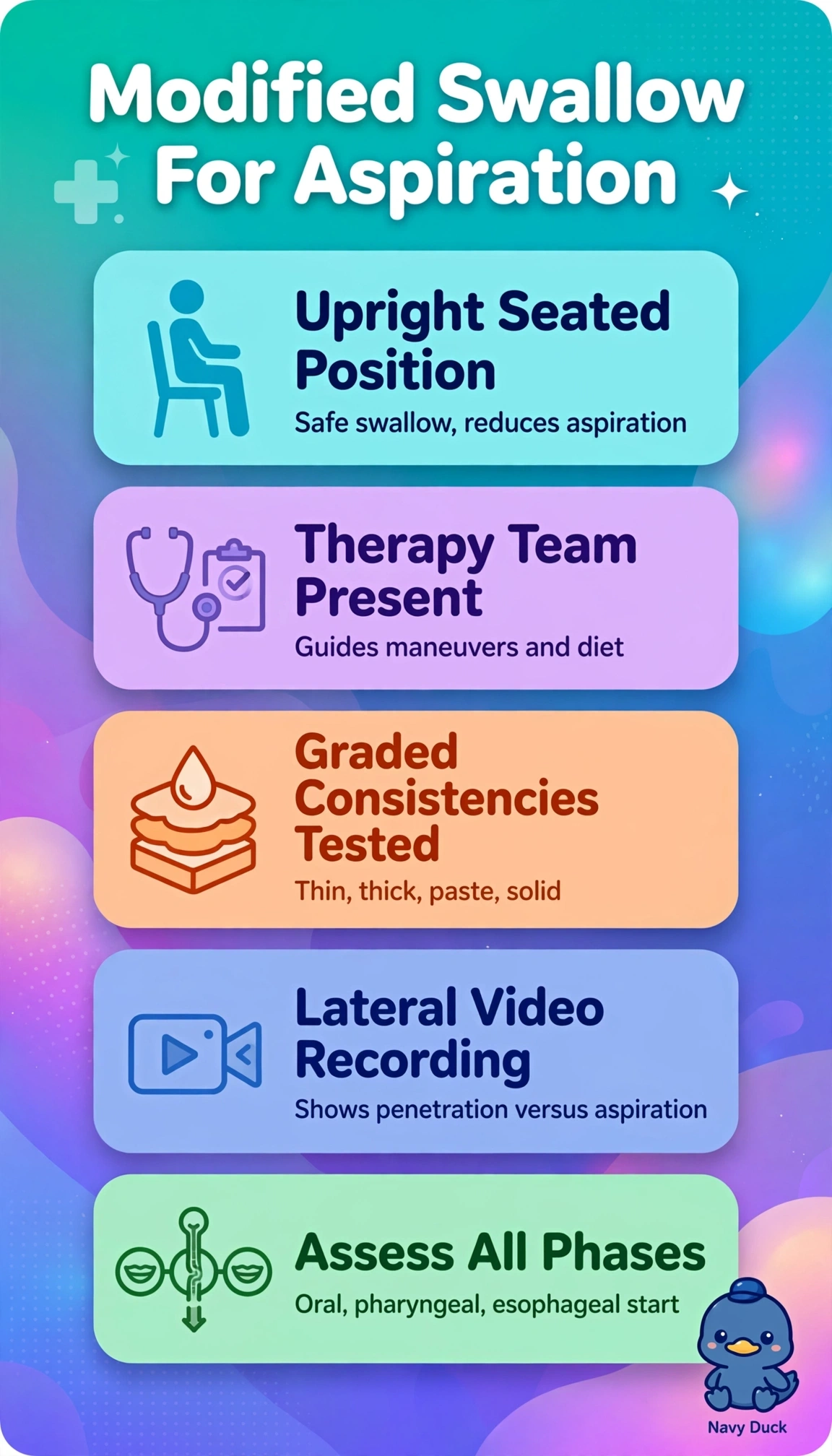
The modified barium swallow with speech therapy is correct because coughing on thin liquids suggests impaired laryngeal protection, while cheek pocketing suggests impaired oral control and bolus formation after a left-brain stroke. In lateral view, trials of thin, thick, and paste consistencies visualize oral, pharyngeal, and upper esophageal phases, assess penetration, aspiration, residue, and timing, and allow testing of postures, maneuvers, and diet changes in an alert patient able to sit upright. The gastroenterology-led barium swallow with these textures fails by team concept: aspiration rehabilitation, cueing, compensatory strategies, and diet recommendations call for speech therapy expertise rather than a motility or reflux team. The speech therapy study directed at reflux fails by target concept: assessing esophageal transit and reflux does not systematically test airway protection or answer aspiration-pneumonia risk. The same speech therapy study performed while recumbent fails by positioning concept: supine positioning removes gravity-assisted clearance, increases aspiration risk, and does not replicate this patient’s achievable upright mealtime posture. An exam caveat is to match modality, indication, and personnel; timed esophagrams and upper gastrointestinal series assess transit and anatomy rather than oropharyngeal aspiration, despite also using fluoroscopy and barium. A practical check is to confirm 90-degree chair positioning, speech therapist coaching throughout, multiple recorded swallows per consistency, suction availability, and documentation of diet level, strategies, and supervision needs before leaving radiology.