
An ED teen with a swollen wrist presents with a guardian. The armband reads one name, the requisition orders a left ankle radiograph for ankle pain, and the teen points to the right wrist as the injury. The guardian urges imaging the painful wrist now. Which verification step correctly reconciles identity, order, and clinical indication before exposure?
Select an answer to reveal the explanation.
Short Explanation
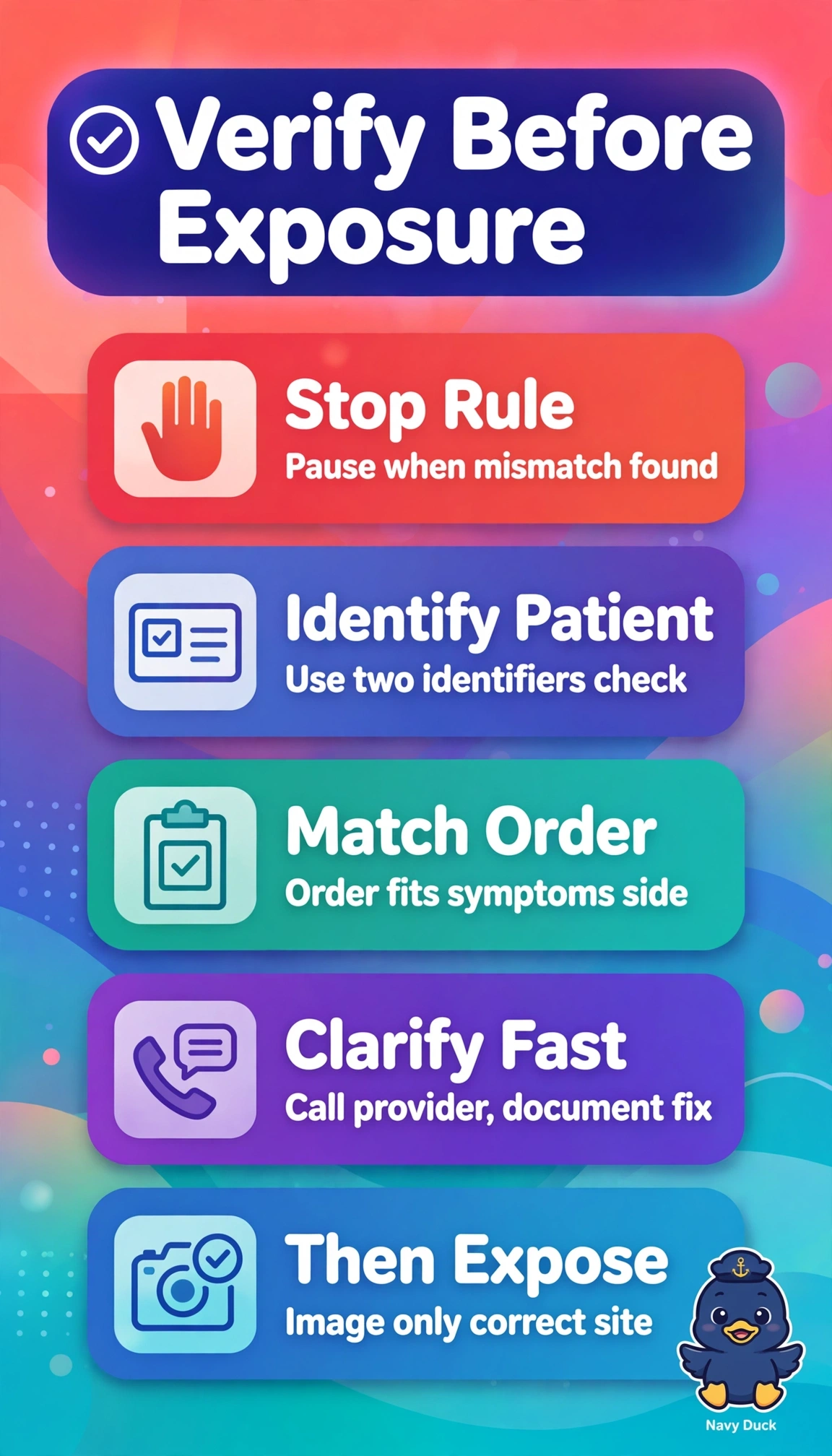
You’re hitting pause when pieces don’t line up, and that’s exactly right. Two identifiers plus order-to-symptom match protects against wrong-patient or wrong-site error, so verification comes before any exposure.
Full Explanation
Safe practice requires positive identification with at least two identifiers, comparison of the written order including examination and laterality to the clinical indication and patient complaint, and clarification of any discrepancy with the ordering provider before exposure, with documentation and no imaging until resolved. Imaging the painful wrist on one identifier and verbal approval bypasses identification and order control despite appearing patient-centered, because guardian urgency never authorizes changing an order. Imaging the ordered ankle despite wrist pain follows the order literally while ignoring indication mismatch, so it fails by risking wrong-site imaging and missing the true injury. Imaging both sites satisfies both parties but performs an unordered examination and adds unjustified dose, so it fails by violating justification and order requirements despite thoroughness. Exam caveat is that ARRT prioritizes stopping and clarifying over efficiency when identity, order or laterality conflict. Practical check is to re-ask name and birthdate, read back the order, assess the complaint, call the provider, and document the resolution.