
A 50-year-old inpatient is scheduled for fluoroscopic lumbar myelography for leg weakness, with consent signed and labs showing normal coagulation. The radiologist plans prone oblique positioning, contrast injection via lumbar puncture, then Trendelenburg tilting and CT follow-up. The nurse asks what assistance and monitoring you will provide. Which peri-procedural support plan best reflects myelography, lumbar puncture, and epidural injection principles?
Select an answer to reveal the explanation.
Short Explanation
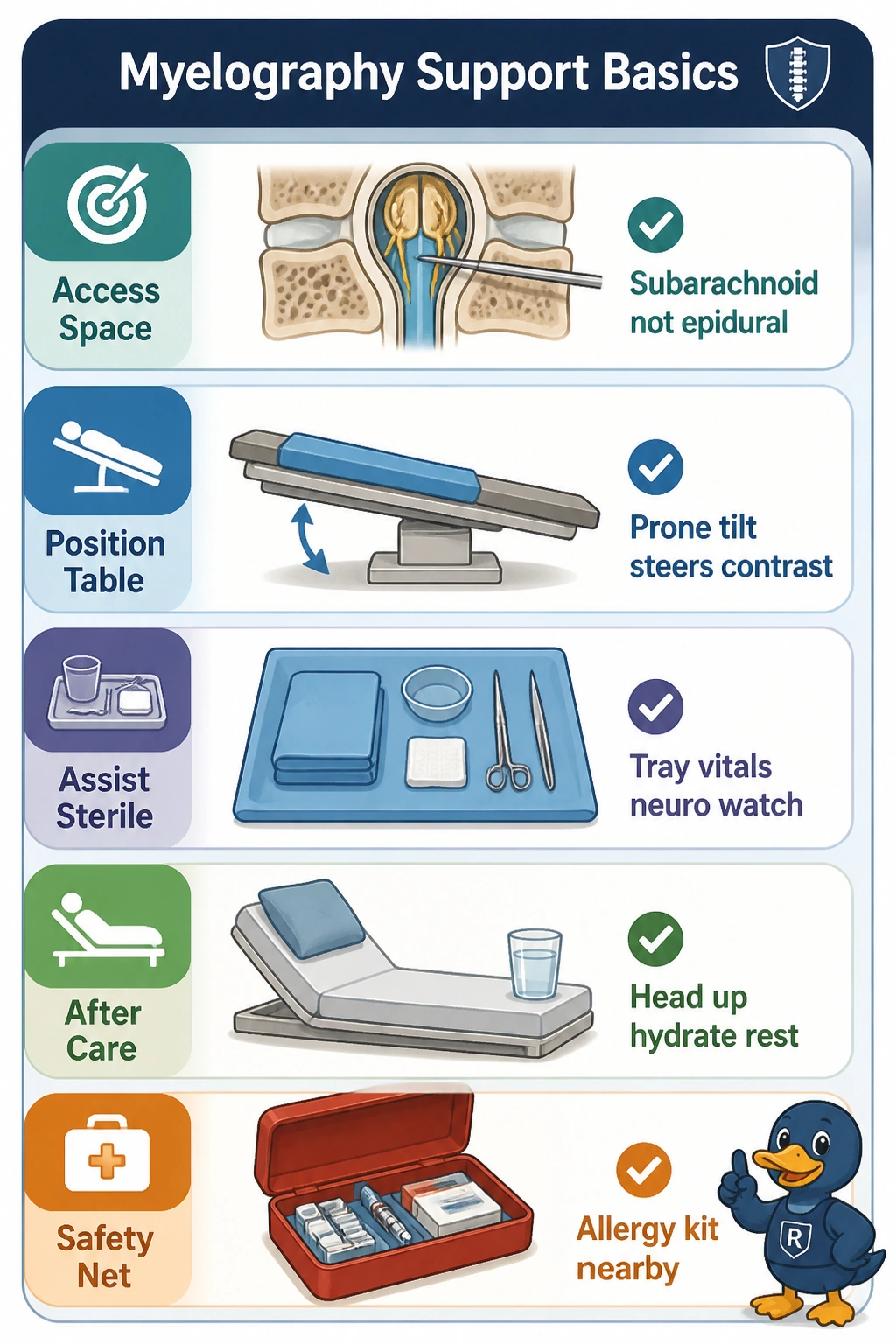
You're keeping the field sterile and the head high. Head-up hydration after myelography eases recovery and protects the brain.
Full Explanation
Myelography requires sterile lumbar puncture assistance with prone or prone-oblique positioning to access the subarachnoid space, careful table tilting under fluoroscopy to distribute water-soluble contrast, neurologic and vital monitoring for allergy or respiratory changes, and post-procedure head elevation with hydration and rest to reduce headache and contrast-related irritation, differing from epidural injections that target the epidural space without dural puncture. The supine knee-flexed flat positioning approach describes comfort for some punctures but misses the myelography distribution need and post-myelography head-up requirement, as prolonged flat positioning after intrathecal contrast does not prevent headache and may worsen nausea. The upright seated immediate ambulation approach risks excessive contrast migration and orthostatic symptoms and fails sterile fluoroscopic table control and post-procedure rest principles. The lateral decubitus vigorous exercise approach misunderstands contrast clearance because exercise does not safely eliminate intrathecal contrast before CT and increases fall and headache risk while ignoring monitoring. Exam caveat is to distinguish subarachnoid myelography and lumbar puncture from epidural placement and to recall contrast is steered by tilt. Practical check is to verify consent, allergies, coags, and medications, keep emergency equipment ready, and give clear head-up, fluids, voiding, and headache-report instructions.