
A 19-year-old inpatient comes to radiology for erect PA and lateral chest to evaluate a possible small pneumothorax. She slouches, lifts her shoulders, and takes shallow breaths at varying depths. A radiolucent sponge and coaching time are available. Which respiration instruction and positioning aid use best demonstrates full lung expansion for this chest study?
Select an answer to reveal the explanation.
Short Explanation
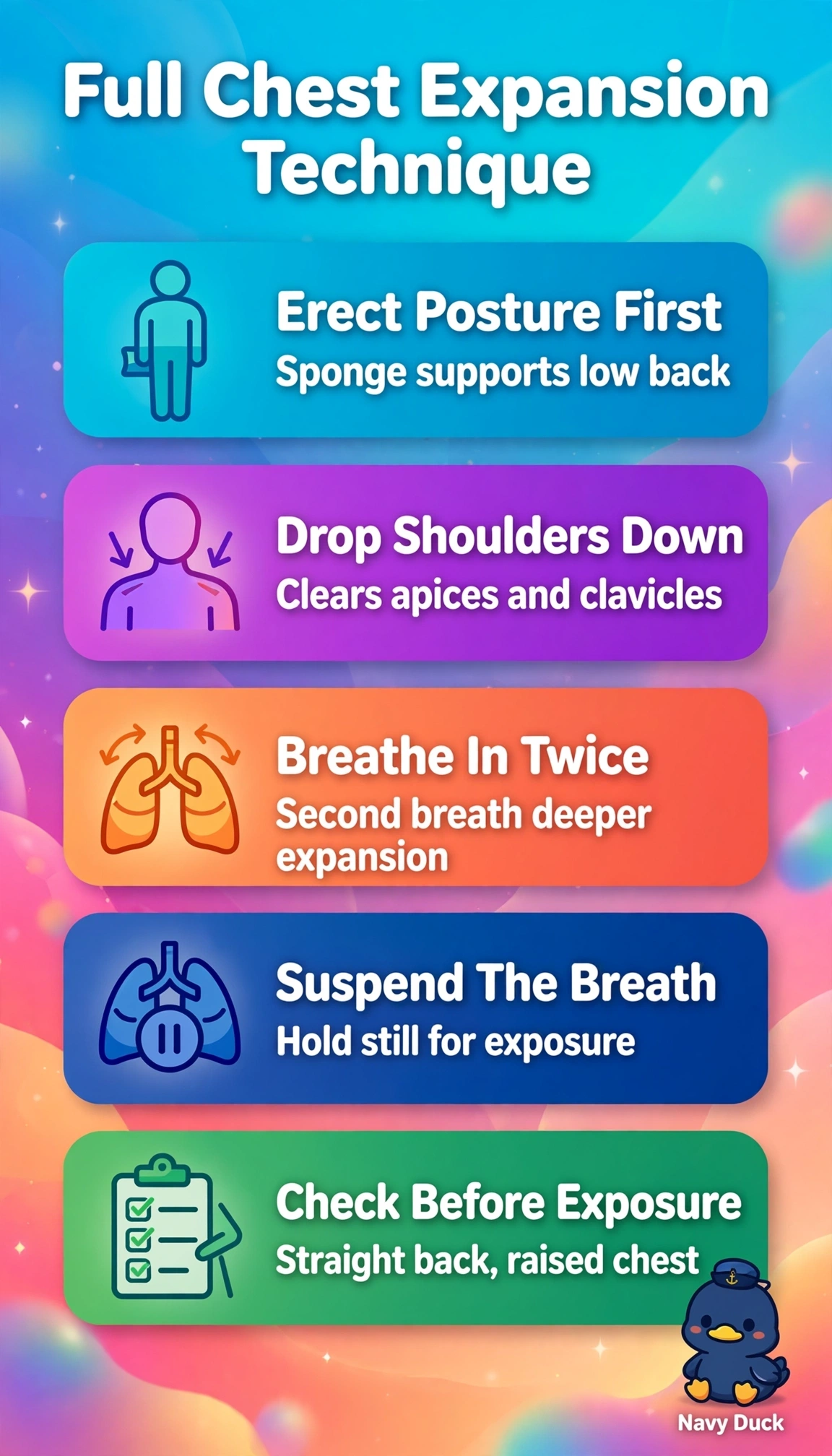
You've got a wobbly, shallow breather, so you're coaching depth plus posture. A second sustained inspiration with suspension opens alveoli evenly like fully inflating a balloon before tying it.
Full Explanation
Full lung expansion on erect PA and lateral chest requires suspended maximal inspiration judged by posterior rib count, aeration, and sharp costophrenic angles, which best displays lung markings and a subtle pleural line when small pneumothorax is questioned, and a second full inspiration after coaching is essential here because shallow breathing at varying depths makes the first effort unreliable, while a radiolucent sponge behind the low back sustains erect posture to correct slouching and shoulder elevation that would cause kyphotic foreshortening, clavicular overlap, and basal underaeration. Coaching full expiration with correct back support is valid for dedicated expiratory pneumothorax views that accentuate visceral pleural separation but fails this scenario because deflation directly opposes the requested full expansion and hides basal detail. Coaching a second full inspiration with the sponge between the hands on hips is routine for reducing rotation and steadying the PA position but misses the postural defect by stabilizing the arms rather than supporting the lumbar spine against slouching. Coaching only a first inspiration with correct back support improves erect posture but retains variable underinflation without rehearsal, risking a nondiagnostic low-volume study. For exams, distinguish expiratory pneumothorax accentuation from inspiratory expansion demonstration, and in practice verify lateral erect alignment, confirm understood suspension, and check rib expansion before exposure.