
A patient with a 3 cm cancer in the upper outer quadrant of the right breast is simulated for whole-breast treatment with regional nodal irradiation. The physician asks the therapist to explain why the contoured nodes are on the right side of the chest. Which lymphatic drainage pathway most commonly accounts for the first-echelon nodal target?
Select an answer to reveal the explanation.
Short Explanation
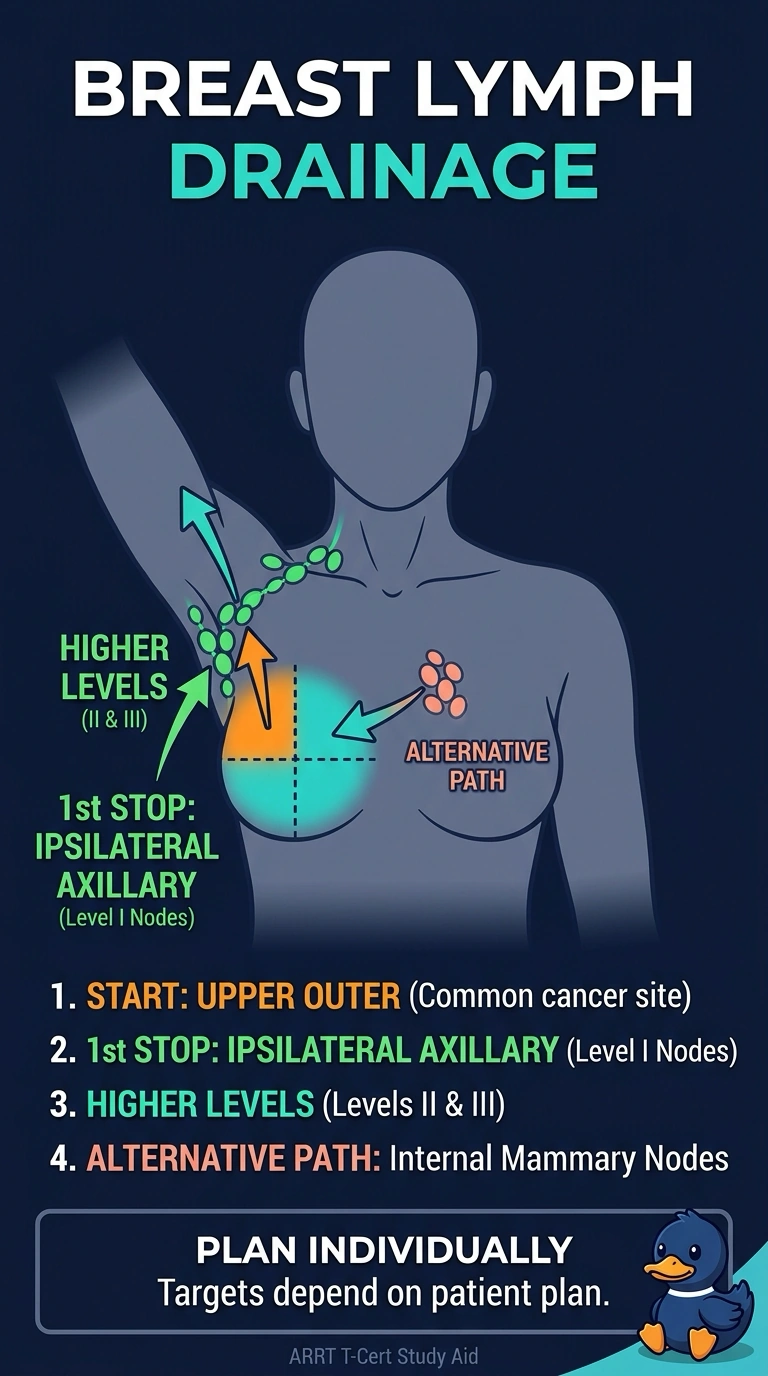
Your lymphatic drainage is like a neighborhood route: fluid from the upper outer breast most often reaches the ipsilateral axillary nodes first, usually level I. That’s why your regional nodal plan may include nodes on the same side, depending on the prescribed targets.
Full Explanation
Breast lymphatic drainage is predominantly ipsilateral. The upper outer quadrant most commonly drains first to axillary nodes, often at level I, although drainage patterns vary and other pathways, including the internal mammary chain, may be involved. From the axilla, lymph can drain to higher axillary levels and the supraclavicular nodes. The internal mammary chain is an important drainage pathway, particularly for medial breast regions, but it is not the usual first-echelon route for the upper outer quadrant. Supraclavicular nodes are not the first drainage station for every breast quadrant, and contralateral axillary drainage is not the usual pathway. Regional nodal targets are selected by the physician based on the clinical situation and treatment plan; they should not be inferred from tumor location alone.