
After the morning CT simulator warm-up and air calibration finish without error, the therapist runs the linac daily output constancy check and the reading sits outside tolerance for the second morning in a row. Which step in the daily quality-assurance routine should come next before any patient is treated?
Select an answer to reveal the explanation.
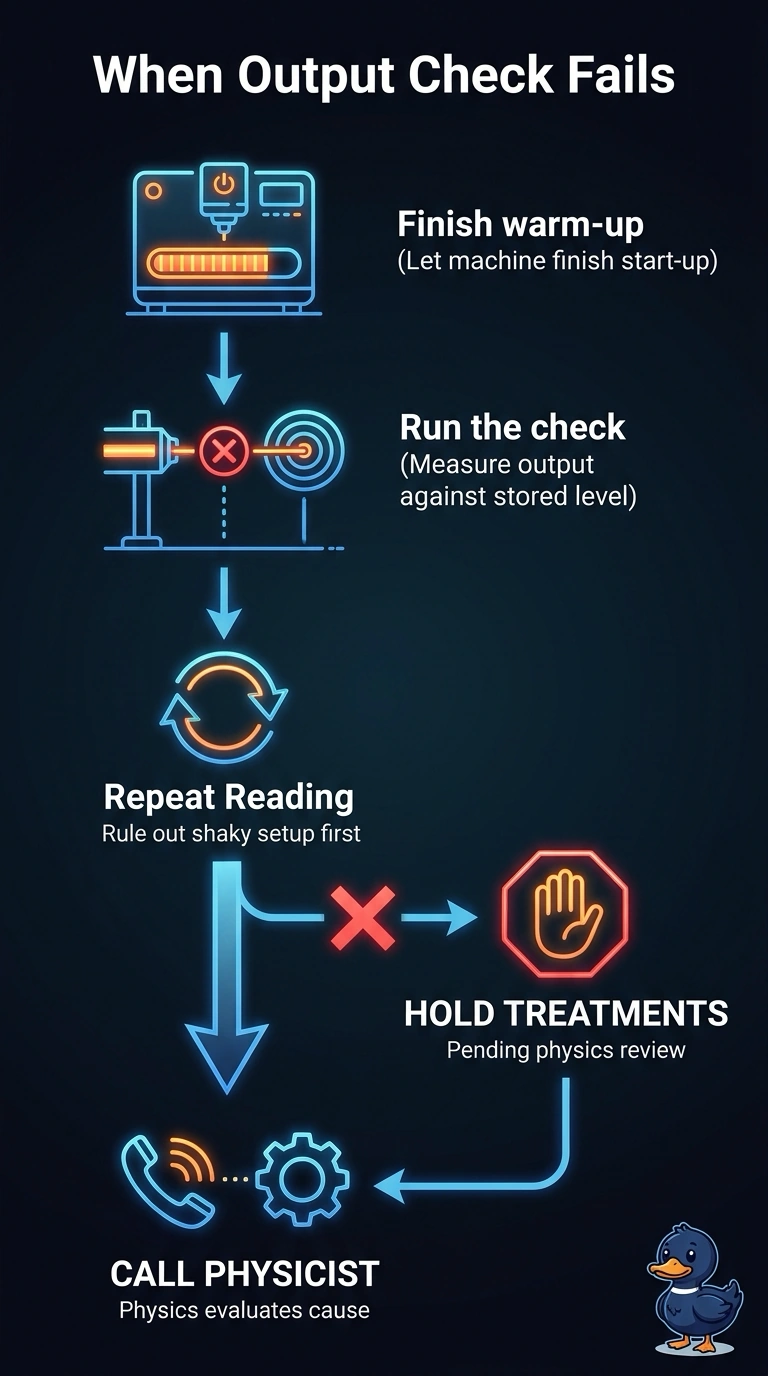
Short Explanation
Repeat the measurement to confirm the setup—you don’t want to treat a shaky reading like a settled fact. If it’s still outside tolerance, hold treatments and notify the medical physicist; this check helps ensure the machine is within tolerance before any patient is treated.
Full Explanation
Repeat the measurement to check for a setup or measurement error; if the out-of-tolerance result persists, hold treatments and notify the medical physicist. Because the deviation has occurred on two consecutive mornings, proceeding without resolving it could expose patients to an unverified output. Repeating also helps establish whether the initial reading reflects a measurement issue or a persistent deviation. The option that repeats the check, holds treatments, and documents the result for routine QA review does not promptly notify the medical physicist; documentation is useful but does not replace timely escalation. The option that repeats the measurement and notifies the physicist but releases treatments after recording the deviation fails to maintain the hold while the result remains unresolved. The option that reviews the two-day trend, holds treatments, and requests physicist assessment appropriately recognizes the concern but skips repeating the measurement to verify the setup. Exam caveat: local action levels and escalation pathways may require additional checks, but they do not justify treating through an unresolved out-of-tolerance result. Practical check: confirm the QA instrument, setup, and measurement conditions before repeating, then document both readings and the notification.