
A patient midway through a chest treatment course tells you one of the alignment marks has faded and that she has been adding her own dot at home so she can line up more easily. She asks whether that helps the team. Which instruction about the faded mark and her own dot keeps her daily setup consistent?
Select an answer to reveal the explanation.
Short Explanation
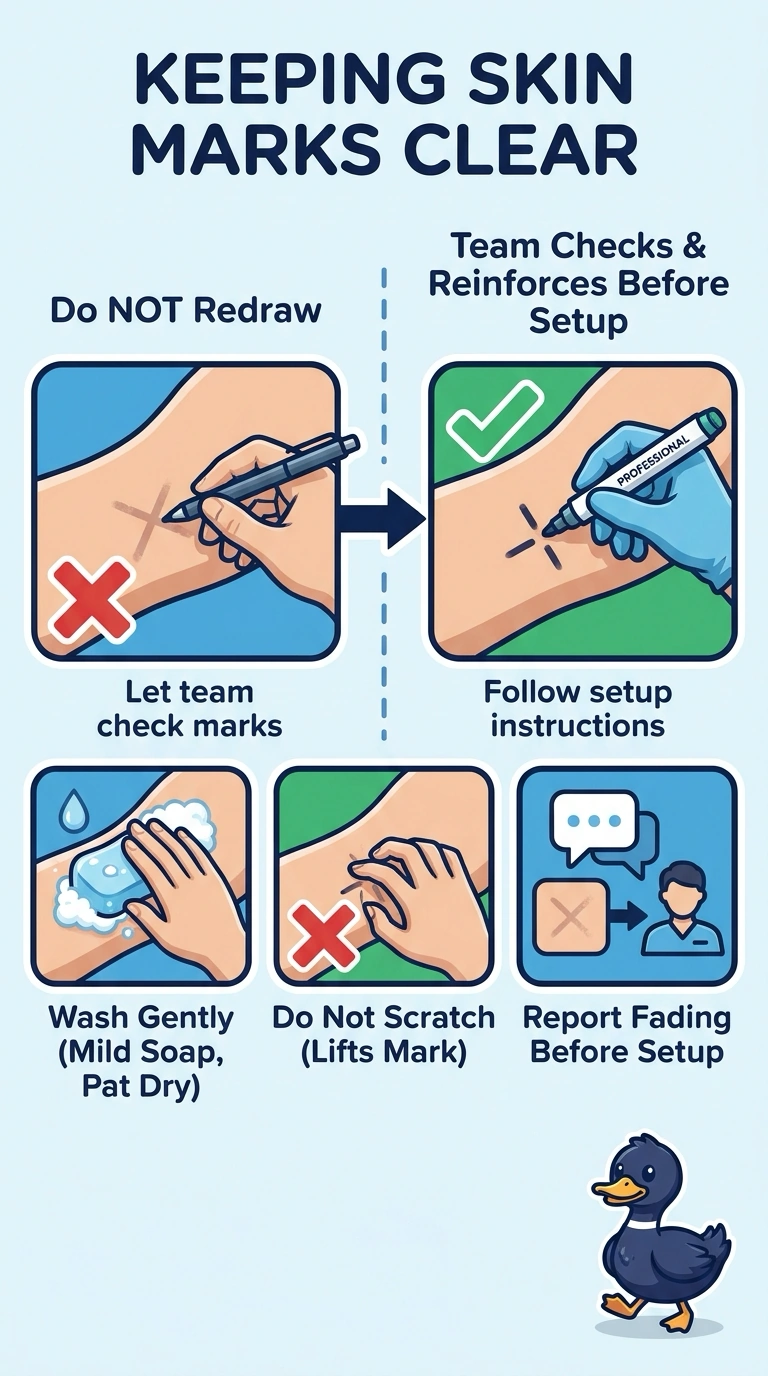
Please don’t add your own dot; let the team check and refresh any faded alignment mark before setup. It’s like using the original map pin—a dot you draw at home could be slightly off and make your daily position inconsistent.
Full Explanation
The correct instruction prevents a patient-drawn mark from becoming an independent setup reference and ensures the treatment team checks and reinforces the faded mark before setup. That keeps the external reference consistent with the approved treatment position and lets staff identify any discrepancy rather than relying on a mark placed at home. Using the intact marks for the current setup may be a reasonable temporary measure when marks remain visible, but deferring assessment until after treatment misses the need to check the faded mark before that day's setup. Comparing the patient's dot with the treatment record uses a sensible verification step, yet it still treats a patient-made mark as a candidate reference; the team should assess and replace or reinforce marks under its own procedure instead. Image guidance is commonly used to verify patient position, but documenting fading and waiting for imaging to show a shift does not ensure the faded external mark is checked and reinforced before setup. Exam caveat: image guidance and skin marks are complementary, and local protocols determine how marks are maintained; neither makes an unverified home mark appropriate. Practical check: before positioning, confirm the remaining marks are legible and that the therapist has assessed the faded site and reinforced or remade it according to departmental protocol.