
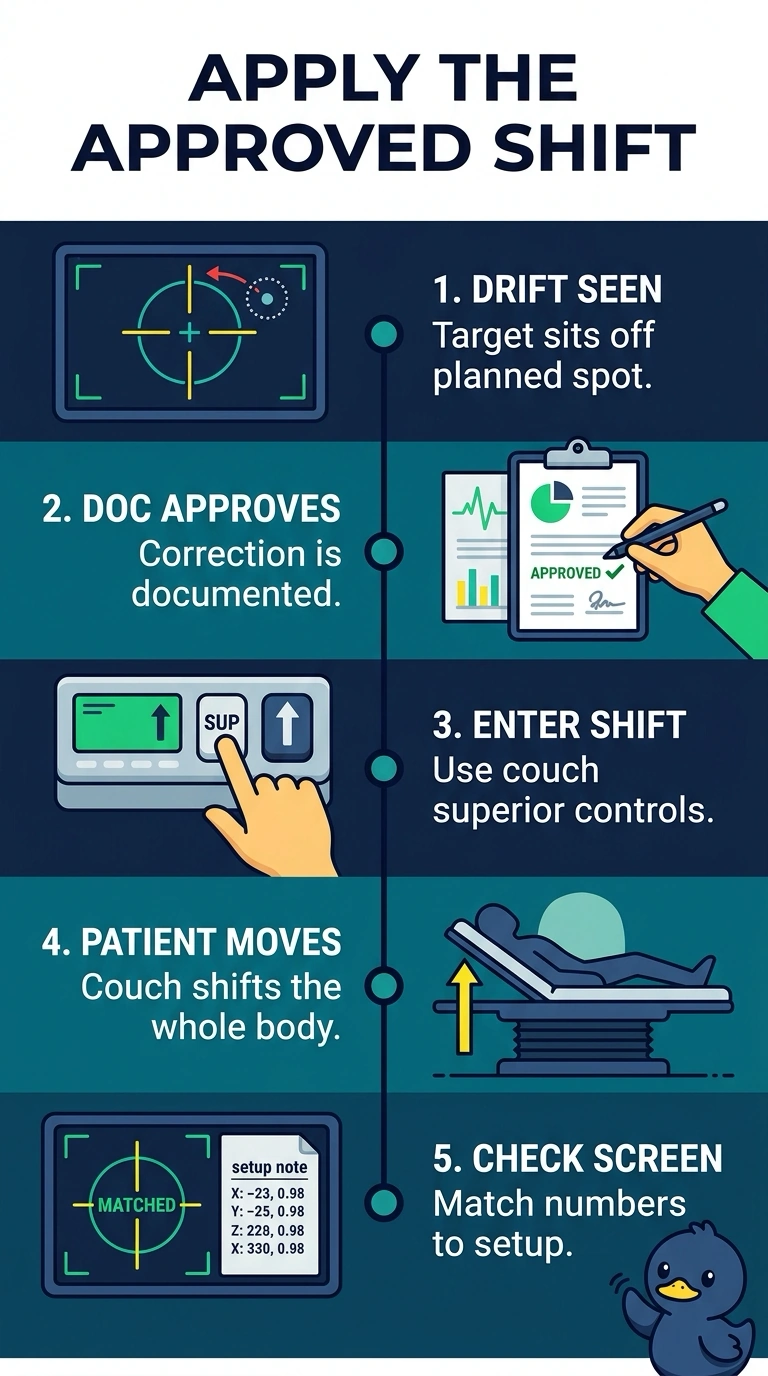
Daily imaging on a pelvic plan shows the target sitting superior to the planned isocenter. The physician approves a superior correction, and the shift is documented on the setup note while the patient stays on the couch. Which console operation should you perform to deliver this approved correction?
Select an answer to reveal the explanation.
Short Explanation
You’ll enter the approved superior shift with the console couch controls, then check the new position on screen. It’s like moving the whole couch to line the target up with the plan, rather than changing the beam.
Full Explanation
Image guidance works by moving the patient back to the isocenter the plan was built around; console couch-shift controls are a standard way to do this when authorized by the department's procedure. Entering the documented shift moves the patient as a whole, keeps the field size and beam angles as prescribed, and leaves a number you can check against the setup note. Adjusting the jaw settings changes the treatment field instead of correcting the patient's position, so the delivered geometry would no longer match the plan. Rotating the collimator changes the aperture's orientation around the beam axis and cannot translate the target back to isocenter. Having new skin marks placed and restarting the set-up would not apply the approved couch correction. Some systems require the shift to be entered and confirmed in a particular sequence, so follow your department's image-guidance procedure. After entering the shift, read the numbers on the screen and compare them with the setup note before the beam is released.